


At 8pm on a Tuesday, currency expert Michael Image sits in a 3m-by-3m room near Hong Kong's bustling bar district, gnawing on a pen and discussing financial terms -- in Chinese.
"Say `tong ji' (
"Tong ji," repeats Image, inadvertently altering the tones to mean "fugitive" and drawing a correction from Jiang.
The parry-and-blow is part of an hour-long class Image, 30, has been taking every week since 2004, six months after London-based Standard Chartered Plc transferred him to Hong Kong to advise clients on ways to reduce their foreign-exchange risk.
In China, the era when overseas executives could rely on translators is ending. Authorities now require top executives at securities firms to pass written and oral exams in Mandarin and Chinese managers expect meetings to be conducted in their own language.
"An executive can probably get by without speaking Mandarin, but the one who does will have a much better chance of succeeding," said Helen Cheung, a director at Executive Mandarin, the language school where Image studies. "It makes you seem more intelligent, more involved than the foreigner who just sits there and smiles."
Goldman Sachs Group Inc is learning that lesson. The firm's plan to appoint Richard Ong, a Malaysian-born Chinese, to head its venture in China was derailed by concerns he wouldn't be able to pass the test, required of all "senior managers, directors and supervisors" since November. Instead, New York-based Goldman promoted Zha Xiangyang (
Goldman spokesman Edward Naylor declined to comment on how the bank is responding to the test. Ong, who holds an MBA from the University of Chicago, also declined to comment, Naylor said.
"If the boss of a securities company in China doesn't know the language, how could we expect him to communicate effectively with the staff, the government and investors?" said Xu Weijuan, who heads the department that preps bankers for the test at the Securities Association of China. "He wouldn't even understand the notices we post on policy changes."
Goldman and UBS AG are the only global investment banks that have management control of ventures allowed to underwrite share sales in China, and so are most affected by the exam requirement. Firms including Citigroup Inc and JPMorgan Chase & Co are seeking to create similar ventures after China's benchmark stock index rose fivefold in the past two years.
Philip Partnow, a managing director at UBS's Beijing venture, is the only Western banker who's passed. He declined to comment for this story.
Most overseas managers are learning Chinese voluntarily.
Image, who studied psychology at Oxford University and heads Standard Chartered's currency-product team, said his language skills helped him break the ice at a recent meeting where Chinese executives spoke to each other in their own language. When Image introduced himself in Mandarin, they were stunned.
"Just knowing what's going on during meetings, being able to nod at the right time and interject makes a big difference," Image said. "They're more open and willing to deal with me."
At Executive Mandarin, the number of investment bankers studying Chinese has risen 30 percent in the past year, said Cheung, 39.
Chinese is one of the toughest languages to learn, said Qing Zhang, a professor of linguistics at the University of Texas.
Cheung estimates a non-native would have to study Mandarin full-time for five years to pass the securities exam. Since the test began in 2005, fewer than 10 foreigners have passed, according to a list of successful candidates posted on the Securities Association's Web site.
China's approach is unusual. Neither Japan nor Hong Kong test top managers at securities firms. In both places, specialists such as analysts and fund salesmen must pass job-specific tests that can be taken in English.
"The government may be trying to raise the status of spoken and written Chinese as an international business language," said Zhang, 38. "The message is: If you want to do business here, you have to learn our language."
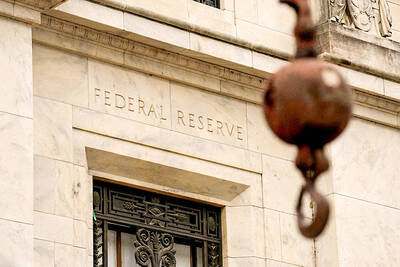
DAMAGE REPORT: Global central banks are assessing war-driven inflation risks as the law of unintended consequences careens around the world, spiking oil prices Central banks from Washington to London and from Jakarta to Taipei are about to make their first assessments of economic damage after more than two weeks of conflict between the US and Iran. Decisions this week encompassing every member of the G7 and eight of the world’s 10 most-traded currency jurisdictions are likely to confirm to investors that the specter of a new inflation shock is already worrying enough to prompt heightened caution. The US Federal Reserve is widely expected to do exactly what everyone anticipated weeks ahead of its March 17-18 policy gathering: hold rates steady. The narrative surrounding that
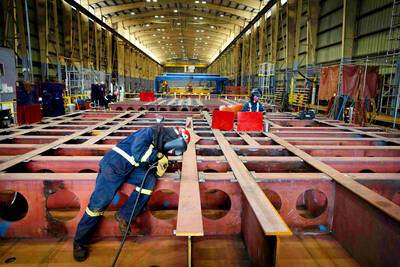
At a massive shipyard in North Vancouver, Canadian workers grind metal beams for a powerful new icebreaker crucial to cementing the country’s presence in the increasingly contested arctic. Icebreakers are specialized, expensive vessels able to navigate in the frozen far north. And “this is the crown jewel,” said Eddie Schehr, vice president of production at the Seaspan shipyard. For Canadian Prime Minister Mark Carney, who heads to Norway next Friday to observe arctic defense drills involving troops from 14 NATO states, Canada’s extreme north has emerged as a strategic priority. “Canada is and forever will be an Arctic nation,” he said ahead of
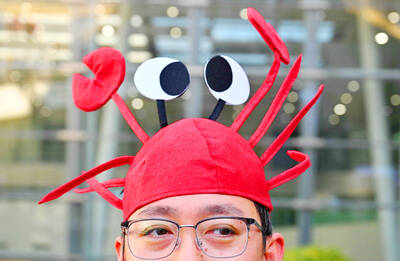
Chinese entrepreneur Frank Gao used to spend long hours running his social media accounts but now outsources the chore to artificial intelligence (AI) agent tool OpenClaw, which is taking China by storm despite official warnings over cybersecurity. OpenClaw, created in November by an Austrian coder, differs from bots such as ChatGPT because it can execute real-life tasks such as sending e-mails, organizing files or even booking flight tickets. “Since January, I’ve spent hours on the lobster every day,” Gao said in an interview, referring to OpenClaw’s red crustacean mascot. “We’re family.” After downloading OpenClaw, users connect it to artificial intelligence models of their
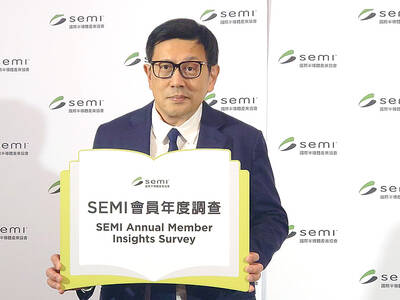
PRICE HIKES: The war in the Middle East would not significantly disrupt supply in the short term, but semiconductor companies are facing price surges for materials Taiwan’s semiconductor companies are not facing imminent supply disruptions of essential chemicals or raw materials due to the war in the Middle East, but surges in material costs loom large, industry association SEMI Taiwan said yesterday. The association’s comments came amid growing concerns that supplies of helium and other key raw materials used in semiconductor production could become a choke point after Qatar shut down its liquefied natural gas (LNG) production and helium output earlier this month due to the conflict. Qatar is the second-largest LNG supplier in the world and accounts for about 33 percent of global helium output. Helium is


 RSS
RSS