


Some vinyl baby bibs made in China contain lead levels well above US safety limits for lead in paint, a California environmental group said.
The bibs were sold at Toys "R" Us, the US' second-largest toy seller.
A bib with Winnie the Pooh characters and store-brand bibs sold under the Koala Baby and Especially for Baby labels all tested positive for lead in concentrations three to four times what the US Environmental Protection Agency allows in paint, according to the Center for Environmental Health.
The group bought the four bibs at San Francisco Bay-area Toys "R" Us and Babies "R" Stores and contracted with a private lab that specializes in product safety to perform the tests.
"There's plenty of ways to make bibs without lead," Caroline Cox, the center's research director, said on Wednesday. "I don't think we should be exposing children to this toxic metal unnecessarily."
Lead most commonly occurs in vinyl products as a stabilizer or a pigment. It can also occur unintentionally when recycled vinyl used for other purposes becomes part of a new product.
Studies have repeatedly shown that childhood exposure to lead can cause learning problems, reduced intelligence, hyperactivity and attention deficit disorder.
Average US lead levels in the blood have dropped sharply in recent decades since the metal was restricted in paint and gasoline.
The Center for Environmental Health said it had notified Toys "R" Us that it intended to sue if the retailer failed to take the bibs off store shelves in California, a state with especially strict rules on lead exposure.
A Toys "R" Us spokeswoman said tests performed in May by a lab contracted by the company found the bibs met not just federal standards but California's more stringent limits on lead content.
However, more bibs were being pulled from the shelves on Wednesday for testing, spokeswoman Kathleen Waugh said.
Consumer anxiety over Chinese goods has risen in recent months with the discovery of contaminated pet food, toothpaste, seafood and toys made there.
Worries intensified on Tuesday after Mattel Inc recalled millions of toys made in China because of lead paint -- the company's second such recall in two weeks.
Both the bibs sold by Wal-Mart and Toys "R" Us were manufactured in China for Louisiana-based Hamco Baby Products.
China's problems with lead in consumer products go far beyond tainted toys.
From playthings to paint to gasoline, Chinese companies use lead in a wide range of products and experts say China's children are suffering the health consequences.
Beijing has prohibited leaded gasoline in recent years and has tightened standards for other goods.
But enforcement is spotty, and lead remains so common that researchers say up to one-fifth of Chinese children tested had unsafe levels in their blood.
"The central government many times has regulations in place, but given China's size, a lot of things don't get implemented at the local level," said Jamie Choi, a Beijing-based campaigner for the environmental group Greenpeace.
An official of trade group, the China National Light Industry Council, said that responsibility for meeting foreign standards should not lie with Chinese manufacturers.
"The quality of Chinese-made toys with American brands should be the responsibility of the American brand owner, not the Chinese manufacturer," said Zhang Yanfen, secretary of the council's panel on toy standards.
Meanwhile, Chinese Commerce Ministry spokesman Wang Xinpei (
"Some media and irresponsible people take a small problem and make it into a large one," Wang told reporters when asked about various recalls, most recently by US toy giant Mattel.
"Because toys can affect the health of children, the Chinese government attaches great importance to the quality of those products. But the media saying that all Chinese products are bad, this is a shame," he said.
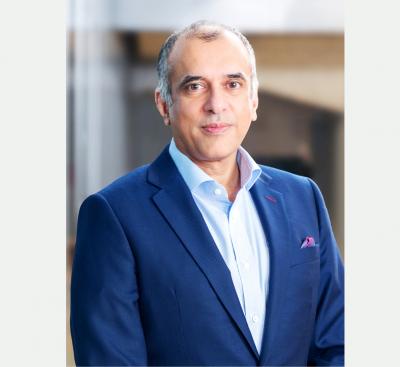
HSBC Holdings PLC is deepening its commitment to Taiwan as the economy emerges as one of the bank’s fastest-growing markets globally, driven by an artificial intelligence (AI) investment boom, expanding cross-border trade, and rising wealth creation. “The advantage that Taiwan has is a growth story linked to the semiconductor and broader AI industries, strong underlying corporate performance, and wealth creation,” said Surendra Rosha, HSBC’s co-chief executive for Asia and the Middle East, in an exclusive interview with the Taipei Times on June 2, during this year’s HSBC Taiwan Conference. That combination has helped HSBC cement its position as the most profitable international
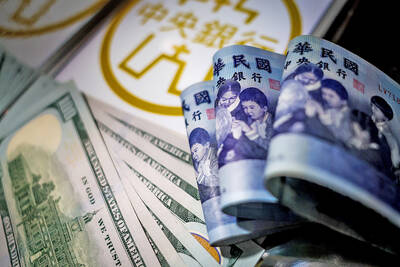
The New Taiwan dollar yesterday fell sharply against the US dollar to close at its lowest level since May 22 amid a massive outflow of funds from the country because of investors panicking over global equity markets. The NT dollar ended at NT$31.580 against the US dollar, slightly lower than its close of NT$31.568 on May 22, after moving between NT$31.5 and NT$31.648 on combined turnover of US$3.062 billion on the Taipei Foreign Exchange and the Cosmos Foreign Exchange. The NT dollar received a significant hit in the morning session, slumping as much as NT$0.173 at a time when other Asian currencies
Taiwan Semiconductor Manufacturing Co (TSMC, 台積電) is now ranked ninth among the world’s 100 most valuable companies after its market capitalization more than doubled over the past year, PricewaterhouseCoopers (PwC) Taiwan said in a report last month. TSMC’s market capitalization surged 101 percent year-on-year to US$1.427 trillion as of March 31, the accounting and consulting firm’s 2026 Global Top 100 Companies by Market Capitalization report said. The gain catapulted the world’s largest contract chipmaker from 12th place to ninth in the rankings, and it was the fastest-growing among the global top 10, it said. TSMC was the only Taiwanese company among the top
Taiwan Semiconductor Manufacturing Co (TSMC, 台積電) yesterday reported record revenue of NT$416.975 billion (US$13.17 billion) for last month, putting the world’s largest contract chipmaker on track to set a record for quarterly revenue. Last month’s figure surpassed March’s record NT$415.19 billion and represented increases of 1.5 percent from April and 30.1 percent from a year earlier. For the first five months of the year, TSMC generated NT$1.96 trillion in revenue, up 30 percent year-on-year, it said in a statement. TSMC has forecast second-quarter revenue of between US$39 billion and US$40.2 billion, representing sequential growth of about 10 percent and year-on-year growth of about


 RSS
RSS