


The New Taiwan (NT) dollar strengthened to more than a one-month high on speculation the central bank will purchase the currency to curb declines.
A slide in the NT dollar last week to a 17-month low increased the cost of imports, adding to inflation.
A weaker currency could also encourage some investors to take funds out of the local markets as the value of their securities is eroded. The NT dollar was the third-worst performer after the Japanese yen among the world's 16 most-actively traded currencies.
"There is still a strong likelihood the central bank will step in," said Tetsuo Yoshikoshi, a market analyst at the treasury unit of Sumitomo Mitsui Banking Corp in Singapore. "One of their concerns is future inflation and another is the outflow of funds."
"If the currency is too weak relative to other regionals, they may lose credibility," he said.
The NT dollar gained for a third day, rising 0.3 percent to NT$33.148 against the US currency at 4pm, the strongest close since April 20, Taipei Forex Inc said.
Turnover was US$1.085 billion.
The currency will probably trade between NT$33.10 and NT$33.30 this week, Yoshikoshi said.
The Taiwanese currency has dropped 1.7 percent this year as the nation's benchmark interest rate of 2.875 percent is among the lowest in the region.
Taiwan's 10-year government bonds rose, ending six days of losses, after traders closed out short positions to realize profits.
The interest rate on borrowing the benchmark debt for one day surged to an annual 19.5 percent, GRETAI Securities Market (櫃櫃買賣中心) said.
That compared with 8 percent early in the morning, Ernest Lee of Mega Securities Co (兆豐證券) said. A short position is where an investor sells borrowed securities, looking to buy them back at a profit after prices fall.
"Some traders bought back debt because it became too expensive to carry short positions," said Lee, a Taipei-based bond trader at Mega Securities, a unit of the nation's second-biggest financial company. "People with short positions were nervous that the cost of borrowing debt had surged too much."
The yield on the benchmark 1 7/8 percent bond maturing March 2017 declined 1.2 basis points to 2.172 percent, said the GRETAI Securities Market, the nation's biggest bond exchange.

The Eurovision Song Contest has seen a surge in punter interest at the bookmakers, becoming a major betting event, experts said ahead of last night’s giant glamfest in Basel. “Eurovision has quietly become one of the biggest betting events of the year,” said Tomi Huttunen, senior manager of the Online Computer Finland (OCS) betting and casino platform. Betting sites have long been used to gauge which way voters might be leaning ahead of the world’s biggest televised live music event. However, bookmakers highlight a huge increase in engagement in recent years — and this year in particular. “We’ve already passed 2023’s total activity and

Nvidia Corp CEO Jensen Huang (黃仁勳) today announced that his company has selected "Beitou Shilin" in Taipei for its new Taiwan office, called Nvidia Constellation, putting an end to months of speculation. Industry sources have said that the tech giant has been eyeing the Beitou Shilin Science Park as the site of its new overseas headquarters, and speculated that the new headquarters would be built on two plots of land designated as "T17" and "T18," which span 3.89 hectares in the park. "I think it's time for us to reveal one of the largest products we've ever built," Huang said near the
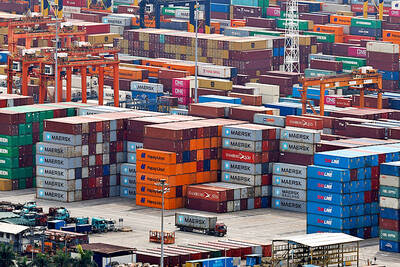
China yesterday announced anti-dumping duties as high as 74.9 percent on imports of polyoxymethylene (POM) copolymers, a type of engineering plastic, from Taiwan, the US, the EU and Japan. The Chinese Ministry of Commerce’s findings conclude a probe launched in May last year, shortly after the US sharply increased tariffs on Chinese electric vehicles, computer chips and other imports. POM copolymers can partially replace metals such as copper and zinc, and have various applications, including in auto parts, electronics and medical equipment, the Chinese ministry has said. In January, it said initial investigations had determined that dumping was taking place, and implemented preliminary
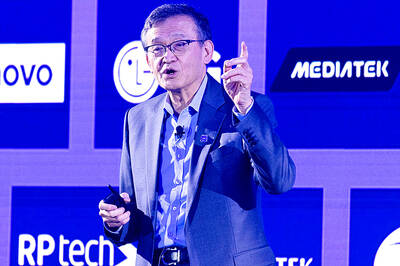
Intel Corp yesterday reinforced its determination to strengthen its partnerships with Taiwan’s ecosystem partners including original-electronic-manufacturing (OEM) companies such as Hon Hai Precision Industry Co (鴻海精密) and chipmaker United Microelectronics Corp (UMC, 聯電). “Tonight marks a new beginning. We renew our new partnership with Taiwan ecosystem,” Intel new chief executive officer Tan Lip-bu (陳立武) said at a dinner with representatives from the company’s local partners, celebrating the 40th anniversary of the US chip giant’s presence in Taiwan. Tan took the reins at Intel six weeks ago aiming to reform the chipmaker and revive its past glory. This is the first time Tan


 RSS
RSS