


Local major hypermarkets decided to pull White-Westinghouse branded electronics off the shelves on Monday, after reports of a possible financial crisis in local general distributor Diastar Home Appliance Co (太尹).
"Our procurement department got wind of the issue on Monday and we pulled the products the same day," Henry Yin (
Geant, the nation's third-largest hypermarket chain, removed the products because of concerns that consumers may not receive warranty services after purchases, should Diastar fail to recover from the crisis.
Diastar, licensed by Stockholm-based Electrolux AB to make appliances in Taiwan under the White-Westinghouse brand, has failed to honor checks it issued to Sampo Corp (
Diastar failed to honor NT$90 million (US$2.7 million) worth of checks issued for Sampo to make washing machines and refrigerators under the White-Westinghouse label, Sampo spokeswoman Lin Re-ing (
Sampo has been a supplier to Diastar for two decades, Lin said.
obligations
Diastar is unable to meet an estimated NT$1 billion in financial obligations, according to yesterday's Chinese-language Commercial Times.
Diastar Chairman Titan Chung (莊智和) left Taiwan on May 18, the newspaper said. Calls made to Diastar were unanswered.
The product withdrawal should not impact Geant greatly as White- Westinghouse items -- such as washing machines and refrigerators -- only account for 3 percent sales of Geant's all home appliances, Yin said.
But Carrefour Taiwan, the nation's largest hypermarket operator, said it is still monitoring the situation and if Diastar is able to overcome the crisis.
Taipei-based Diastar, distributing White-Westinghouse products in Taiwan since 1985, is believed to owe more than NT$100 million to local contract manufacturers including Sampo and Proton Communications Technology Inc (
additional reporting by Bloomberg
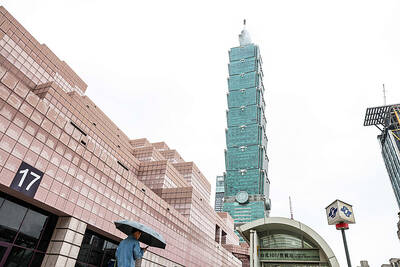
MANAGING RISKS: Taiwan has secured LNG sufficient to cover 95 percent of electricity demand for next month, UBS said, describing the government’s approach as proactive UBS Group AG has raised its forecast for Taiwan’s economic growth this year to 8 percent, up from 6.9 percent previously, and said expansion could reach as high as 8.6 percent if external energy shocks are avoided. The upgrade reflects a stronger-than-expected first-quarter performance and sustained momentum in artificial intelligence (AI)-driven exports, which UBS said are providing a firm foundation for growth despite geopolitical and energy risks. Taiwan’s GDP expanded 13.69 percent year-on-year in the first quarter, the fastest growth since the second quarter of 1987, the Directorate-General of Budget, Accounting and Statistics (DGBAS) reported on Thursday. On a seasonally

The Fair Trade Commission’s (FTC) ongoing review of Grab Holdings Ltd’s US$600 million acquisition of Foodpanda Taiwan’s operations, announced on March 23, has taken on fresh urgency as industry experts warn that the transaction could embed significant Chinese cybersecurity vulnerabilities into Taiwan’s digital infrastructure through Grab’s deep ties to autonomous-driving firm WeRide (文遠知行). Less than 16 months after the FTC blocked Uber Eats’ direct attempt to acquire Foodpanda Taiwan — citing potential combined market shares of 80 to 90 percent — the emergence of Grab as the buyer has prompted questions about whether the same competitive harm is simply being rerouted
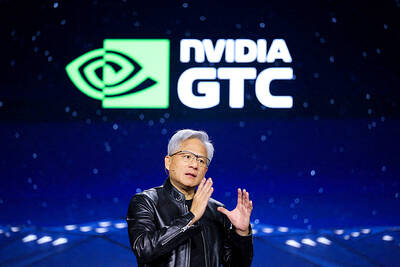
The list of Asian stocks that benefit from business partnership with Nvidia Corp is getting longer, as the region further integrates into the artificial intelligence (AI) chip giant’s business ecosystem. Just in the past week, South Korea’s LG Electronics Inc, Taiwan’s Nanya Technology Corp (南亞科技), as well as China’s Huizhou Desay SV Automotive Co (德賽西威) and Pateo Connect Technology Shanghai Corp (博泰車聯) have become the latest to rally on news of tie-ups, supply-chain participation or product collaboration with the US chip designer. Asian suppliers account for about 90 percent of Nvidia’s production costs, up from about 65 percent last year, data compiled
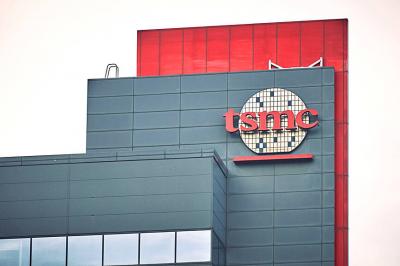
Taiwan Semiconductor Manufacturing Co (TSMC, 台積電) is seeking government approval for an advanced wafer fab at the Longtan (龍潭) campus of Hsinchu Science Park (新竹科學園區), the park's bureau said today. In a written reply, the Hsinchu Science Park Bureau said it would submit a proposal for the third phase of the Longtan Science Park (龍潭科學園區), including plans for a TSMC fab, later this month to the National Science and Technology Council for review. The contract chipmaker previously bid to build a fab using a process more advanced than its current 2-nanometer (nm) technology at the Longtan Campus, but the plan was shelved


 RSS
RSS