


The fizzy drink of choice at PepsiCo on Dec. 12 was more likely to have been champagne than cola. By the end of trading on Wall Street that day, the company's market capitalization reached US$98.4 billion -- and the market valued rival Coca-Cola at US$97.9 billion. For the first time in the history of the two companies, PepsiCo was valued more highly than its old arch enemy.
It was chiefly a symbolic shift, but what a symbol -- and one that has persisted over ensuing days. The "real thing" is suddenly second best.
The tussle for supremacy between Coca-Cola and PepsiCo is one of the great rivalries in business. The two firms remain the No. 1 case study for marketing students on how to create a brand mythos around something as humble as brown carbonated water laced with caffeine and vegetable extracts.
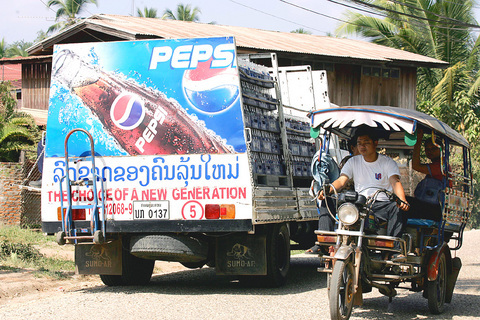
PHOTO: AFP
They have more recently become case studies for another reason: PepsiCo for its ability to spot consumer trends and adapt its business to a changing climate; Coca-Cola for failing to do the same, perhaps numbed into complacency by its long history as the No. 1 best-selling drink in the world.
In early 2000, Coca-Cola's market capitalization was about US$128 billion, almost three times that of PepsiCo, which was valued at US$44 billion.
Fizzy drinks sales at both firms are flat in developed markets.
The crucial factor in the differing fortunes of the two has been PepsiCo's diversification away from sugary carbonated drinks and the early realization that consumers were worrying more and more about obesity and health.
In 1998 the company acquired the fruit juice business Tropicana. Three years later it won an auction for Quaker Oats, paying US$14 billion and adding the energy drink Gatorade to its portfolio.
Coca-Cola pulled out of the bidding after its independent directors -- including the billionaire investor Warren Buffett -- expressed concerns about the lofty price. That proved to be a poor decision.
Today, PepsiCo has about 81 percent of the fast-growing sports drink market in the US. It has the No. 1 fruit juice brand in Tropicana and the leading bottled water brand in the US, Aquafina.
In the most recent quarter, sales of PepsiCo's non-carbonated drinks grew by 24 percent.
PepsiCo generates about 23 percent of its worldwide profits from the near stagnant carbonated-drinks sector, while Coca-Cola relies on its fizzy drinks for 85 percent of profits.
PepsiCo owns snack foods including Walkers Crisps and Doritos and its diverse range of products, analysts have said, is helping it to gain better leverage with supermarket chains.
Coca-Cola is playing catch-up. In June, it launched its Minute Maid pure juice range in the UK. It has also introduced the Dasani bottled water brand and the Powerade energy drink. Powerade is about one-fifth as big as Gatorade in the US.
When Coca-Cola did eventually launch its bottled water brand in the UK, it met first with derision when the press realized it was distilled tap water and then horror as it was pulled from shelves in a health scare.
PepsiCo shares have risen 14 percent last year while Coca-Cola's fell 1.2 percent.
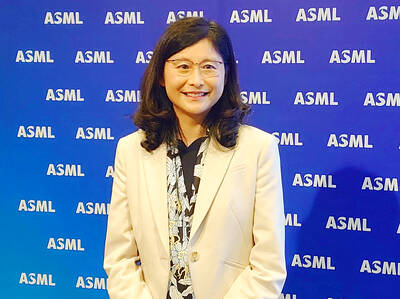
Netherlands-based semiconductor equipment supplier ASML Holding NV yesterday said that it is planning to hire an additional 1,000 people in Taiwan this year in response to growing demand from clients. ASML had previously planned to recruit 600 people this year, but that the plan has been adjusted upward, ASML vice president and ASML Taiwan general manager Grace Wang (汪佳慧) told reporters. ASML has a workforce of more than 4,500 in Taiwan, accounting for about 10 percent of its global total, Wang said. This year’s recruitment campaign would focus on adding people in the customer support, manufacturing and supply chain domains to assist ASML
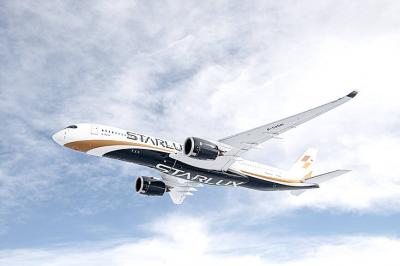
Starlux Airlines Co (星宇航空) today unveiled a long-haul network expansion plan at a shareholders’ meeting in Taipei, including direct flights to Barcelona, Spain, and Zurich, Switzerland, as well as a service connecting Taipei, Sydney and New Zealand. Starlux is to become the first Taiwanese carrier to offer non-stop services to the two European cities, while the inaugural oceanic route is expected to expand transit opportunities within the Australia-New Zealand market, Starlux said. Flight services to Chicago, Dallas, Washington and New York are under evaluation, the airline added. Prior to the shareholders’ meeting, the airline earlier this year announced that it would be
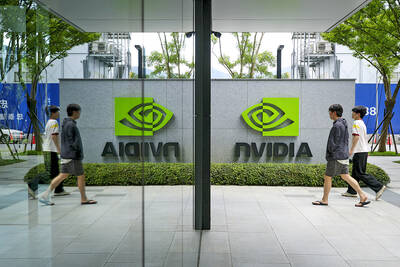
UNDER MICROSCOPE: Taiwan detained three people who allegedly conspired to buy servers in Taiwan and export them using fraudulent documentation, prosecutors said Nvidia Corp chief executive officer Jensen Huang (黃仁勳) on Saturday urged Super Micro Computer Inc to tighten up on compliance after Taiwan detained three people this week for allegedly making fraudulent declarations about artificial intelligence (AI) servers made by its US partner. The development marked the nation’s first crackdown on semiconductor smuggling, which grew after the US slapped restrictions on exports of high-end chips such as Nvidia AI accelerators to China. Nvidia is “rigorous” in explaining regulations to all of its partners, Huang told reporters after arriving in Taipei. “Ultimately Super Micro has to run their own company,” he said in response to
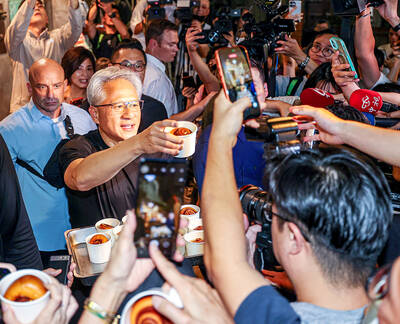
Nvidia Corp yesterday announced that CEO Jensen Huang (黃仁勳) would attend an employee meeting in Taipei tomorrow to celebrate the launch of the company’s Taiwan headquarters project. Huang would attend a gathering at the site of Nvidia’s planned headquarters in Beitou Shilin Technology Park (北投士林科技園區), the company said in a statement. After arriving in Taiwan on Saturday last week, Huang told reporters that he plans to meet with Quanta Computer Inc (廣達) chairman Barry Lam (林百里) and Taiwan Semiconductor Manufacturing Co (TSMC, 台積電) chairman C.C. Wei (魏哲家), and would attend the groundbreaking ceremony for Nvidia’s Taiwan headquarters tomorrow. Nvidia has not yet applied


 RSS
RSS