


China fever is rebounding following the end of the SARS scare, with nearly 30 percent of young job hunters aged between 18 to 30 interested in working across the Taiwan Strait, according to a survey released yesterday.
The poll, conducted by the Taiwan Human Resource & Outsourcing Association (
The survey was sent out to 22,550 job seekers via e-mail, with 6,257 valid responses.
"The Chinese job market lost its momentum in the first half of the year because of the SARS outbreak, but as SARS came under control early last month, interest in the market came back," Wayne Shiah (夏瑋), executive secretary of the association, said at a press conference yesterday.
The poll showed that almost 30 percent of young people are willing to work in China.
When asked why, 32.7 percent of respondents said it could help their career if they have work experience in China, 27.82 percent said they found it hard to compete in the local job market and 20.37 percent said they had confidence in China's economic outlook.
The survey also found that almost 15 percent of respondents may move to China in the near future.
Of this group, 51.03 percent said China has a prosperous economy, while up to 65.98 percent were attracted by lower living expenses.
"Obviously, China's strong economic potential is the key to the go-west fever," Shiah said.
The average salary of new job entrants domestically has slid back 10 years, while prices have risen, Shiah said.
For example, monthly salaries offered to college graduates with literature degrees are NT$18,000 to NT$22,000 and graduates with science diplomas can expect to earn NT$25,000 to NT$28,000, he said.
However, the demand for Tai-wanese talent in China is decreasing, according to Simon Juan (阮劍安), deputy manager of the human-resource department at 104 Job Bank (104人力銀行).

NEW IMPORTS: Car dealer PG Union Corp said it would consider introducing US-made models such as the Jeep Grand Cherokee and Stellantis’ RAM 1500 to Taiwan Tesla Taiwan yesterday said that it does not plan to cut its car prices in the wake of Washington and Taipei signing the Agreement on Reciprocal Trade on Thursday to eliminate tariffs on US-made cars. On the other hand, Mercedes-Benz Taiwan said it is planning to lower the price of its five models imported from the US after the zero tariff comes into effect. Tesla in a statement said it has no plan to adjust the prices of the US-made Model 3, Model S and Model X as tariffs are not the only factor the automaker uses to determine pricing policies. Tesla said

OpenAI has warned US lawmakers that its Chinese rival DeepSeek (深度求索) is using unfair and increasingly sophisticated methods to extract results from leading US artificial intelligence (AI) models to train the next generation of its breakthrough R1 chatbot, a memo reviewed by Bloomberg News showed. In the memo, sent on Thursday to the US House of Representatives Select Committee on China, OpenAI said that DeepSeek had used so-called distillation techniques as part of “ongoing efforts to free-ride on the capabilities developed by OpenAI and other US frontier labs.” The company said it had detected “new, obfuscated methods” designed to evade OpenAI’s defenses
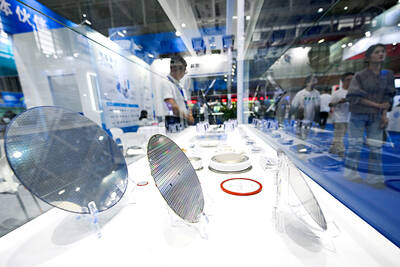
China’s top chipmaker has warned that breakaway spending on artificial intelligence (AI) chips is bringing forward years of future demand, raising the risk that some data centers could sit idle. “Companies would love to build 10 years’ worth of data center capacity within one or two years,” Semiconductor Manufacturing International Corp (SMIC, 中芯) cochief executive officer Zhao Haijun (趙海軍) said yesterday on a call with analysts. “As for what exactly these data centers will do, that hasn’t been fully thought through.” Moody’s Ratings projects that AI-related infrastructure investment would exceed US$3 trillion over the next five years, as developers pour eye-watering sums
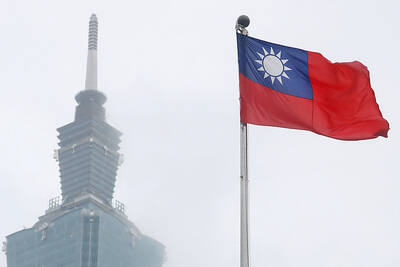
Bank of America Corp nearly doubled its forecast for the nation’s economic growth this year, adding to a slew of upgrades even after a rip-roaring last year propelled by demand for artificial intelligence (AI). The firm lifted its projection to 8 percent from 4.5 percent on “relentless global demand” for the hardware that Taiwanese companies make, according to a note dated yesterday by analysts including Xiaoqing Pi (皮曉青). Taiwan’s GDP expanded 8.63 percent last year, the fastest pace since 2010. The increase “reflects our sustained optimism over Taiwan’s technology driven expansion and is reinforced by several recent developments,” including a more stable currency,


 RSS
RSS