


The president's top economic advisor, Vincent Siew (
"Banks should allow companies to collateralize their business credit while granting loans, in addition to traditional collateral such as real-estate properties and company assets," Siew told reporters yesterday.
Siew was nominated last month by President Chen Shui-bian (陳水扁) to head a four-member presidential economic advisory panel.
At a seminar on transforming Taiwan into a global logistics center yesterday in Taipei, Siew said the management board of the Small and Medium Business Credit Guarantee Fund (
The fund is currently under the management of the Ministry of Economic Affairs.
Siew said that the new credit policies will help boost the nation's industrial development.
To elaborate on Siew's economic proposal, Jan Yih-yaw (詹益燿), the fund's executive vice president said yesterday that business credit refers to creditors' newly developed business models, expertise and management.
It also involves creditors' future prospects and competitiveness as well as human resource capital if they are bankable.
Currently, the 200-staff fund is in its initial stage to embody Siew's proposal, Jan said.
"The yet-to-be-established [business credit] mechanism may open up a new financial channel for knowledge-based businesses to obtain loans more easily," he said.
If a mechanism of rating how credit-worthy the prospective businesses are is in place, Jan said that his institution may begin to issue credit-guarantee certificates, which enable companies to get loans from other banks.
Upon receiving the government-backed credit-guarantee certificates, banks should be able to dismiss their concerns over risks of generating bad loans that these businesses may incur and thus make their credit policies flexible.
But Chou Tein-chen (
"Business credit is such an abstract indicator that bank officials may find it hard to measure when it comes to offering loans," Chou said, adding that the mechanism appears well-intentioned, but difficult to implement.
The to-be-deregulated credit policies may not benefit traditional industries and small and medium-sized businesses since their credit is mostly rated to be below average, Chou said.
The economist, moreover, said that the deregulation move will further trap the administration in a dilemma, where it reverses its efforts to tighten up the banking sector's control over non-performing loans by loosening up credit policies that may generate new bad loans.
Siew, also said that he will urge the administration to push forward urban renovation projects in order to reinforce the nation's infrastructure construction and boost private investments by inviting the private sector to take part.
Meanwhile, Siew reiterated that Chen has accepted his proposal to facilitate direct chartered cargo flights between Taiwan and China.
Siew refused to say how soon the cross-strait cargo links will be implemented, but added that the Mainland Affair Council is working on it.
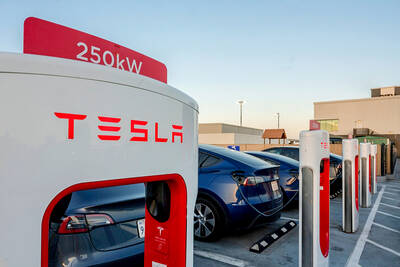
NEW IMPORTS: Car dealer PG Union Corp said it would consider introducing US-made models such as the Jeep Grand Cherokee and Stellantis’ RAM 1500 to Taiwan Tesla Taiwan yesterday said that it does not plan to cut its car prices in the wake of Washington and Taipei signing the Agreement on Reciprocal Trade on Thursday to eliminate tariffs on US-made cars. On the other hand, Mercedes-Benz Taiwan said it is planning to lower the price of its five models imported from the US after the zero tariff comes into effect. Tesla in a statement said it has no plan to adjust the prices of the US-made Model 3, Model S and Model X as tariffs are not the only factor the automaker uses to determine pricing policies. Tesla said

OpenAI has warned US lawmakers that its Chinese rival DeepSeek (深度求索) is using unfair and increasingly sophisticated methods to extract results from leading US artificial intelligence (AI) models to train the next generation of its breakthrough R1 chatbot, a memo reviewed by Bloomberg News showed. In the memo, sent on Thursday to the US House of Representatives Select Committee on China, OpenAI said that DeepSeek had used so-called distillation techniques as part of “ongoing efforts to free-ride on the capabilities developed by OpenAI and other US frontier labs.” The company said it had detected “new, obfuscated methods” designed to evade OpenAI’s defenses
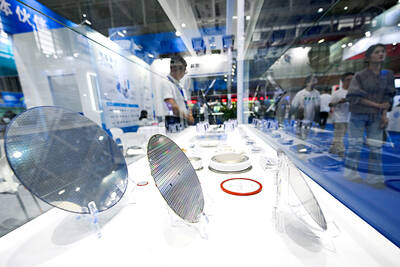
China’s top chipmaker has warned that breakaway spending on artificial intelligence (AI) chips is bringing forward years of future demand, raising the risk that some data centers could sit idle. “Companies would love to build 10 years’ worth of data center capacity within one or two years,” Semiconductor Manufacturing International Corp (SMIC, 中芯) cochief executive officer Zhao Haijun (趙海軍) said yesterday on a call with analysts. “As for what exactly these data centers will do, that hasn’t been fully thought through.” Moody’s Ratings projects that AI-related infrastructure investment would exceed US$3 trillion over the next five years, as developers pour eye-watering sums
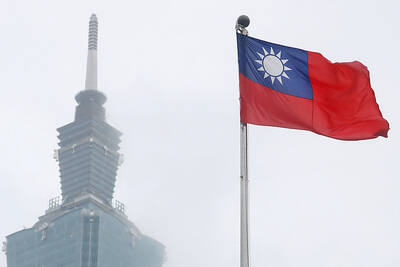
Bank of America Corp nearly doubled its forecast for the nation’s economic growth this year, adding to a slew of upgrades even after a rip-roaring last year propelled by demand for artificial intelligence (AI). The firm lifted its projection to 8 percent from 4.5 percent on “relentless global demand” for the hardware that Taiwanese companies make, according to a note dated yesterday by analysts including Xiaoqing Pi (皮曉青). Taiwan’s GDP expanded 8.63 percent last year, the fastest pace since 2010. The increase “reflects our sustained optimism over Taiwan’s technology driven expansion and is reinforced by several recent developments,” including a more stable currency,


 RSS
RSS