


Spectators of the US-lead attack on Iraq are being offered an extraordinary virtual coverage from breaking e-mail news flashes to an interactive Internet "control room."
Heavyweight US television networks such as ABC, CNN and CBS, and magazines such as Newsweek are joining battle with Yahoo, America Online/Netscape and MSN.com to bring frontline action to the Internet.
Users pay about US$10 a month for ABCnews.com's premium service, with an interactive control room linked to four cameras: one trained permanently to the destruction in Baghdad.
The other cameras pan across news events from demonstrations in Washington to live news conferences in Doha, Qatar.
It also offers a link to the ABC television news coverage.
CNN.com matches ABC with a free live link to a camera in Baghdad and a "War Tracker" with a scorecard of battles, stikes, casualties and a day-by-day graph of Iraqi troop surrenders.
War protesters' and supporters' comments are provided side by side on the CNN site.
"This massive destruction of Iraq is wrong. Killing is wrong. Listen to the millions of people outcry to stop this killing," wrote Laura Castleman of Alaska.
"The war on Iraq is a necessary first strike event to defend the United States against a terrorist sponsor nation -- our enemy," said Russ Hamilton of Phoenix, Arizona.
CBSnews.com delivers the live Baghdad skyline pictures, and an interactive map of the battlefield. All three networks include a sign-up to receive alerts on war developments via email.
Newsweek goes a step further.
Under a special feature "Targeting Baghdad," Internet browsers are invited to "choose a destroyed site to locate," from a menu. Each choice, from "Saddam's Residence" to "Baath Party headquarters" zooms in on the stop on a satellite picture.
Yaho's yahoo.com homepage has been redesigned with box, headlined in white on black background: "Yahoo News -- War with Iraq."

STRONG INTEREST: Analysts have pointed to optimism in TSMC’s growth prospects in the artificial intelligence era as the cause of the rising number of shareholders The number of people holding shares of chipmaker Taiwan Semiconductor Manufacturing Co (TSMC, 台積電) hit a new high last week despite a decline in its stock price, the Taiwan Depository and Clearing Corp (TDCC, 台灣集保) said. The number of TSMC shareholders rose to 2.46 million as of Friday, up 75,536 from a week earlier, TDCC data showed. The stock price fell 1.34 percent during the same week to close at NT$1,840 (US$57.55). The decline in TSMC’s share price resulted from volatility in global tech stocks, driven by rising international crude oil prices as the war against Iran continues. Dealers said
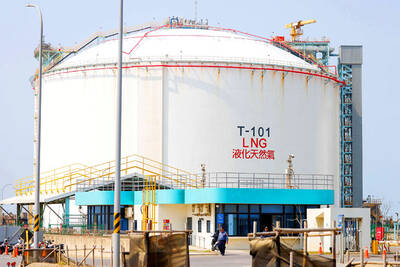
Taiwan’s natural gas supply remains stable through the end of May, despite rising concerns about potential disruptions to Qatari liquefied natural gas (LNG) supplies due to escalating conflicts in the Middle East, the Ministry of Economic Affairs said yesterday. The ministry in a statement said that Taiwan has completed preparations for natural gas supply and shipping schedules through the end of May. It has also made plans to increase natural gas imports from regions outside the Middle East in June to ensure a stable supply, it added. Taiwan sources natural gas from 14 countries and is not solely dependent on the Middle East,

China is clamping down on fertilizer exports to protect its domestic market, industry sources said, putting an additional strain on global markets that were already grappling with shortages caused by the US-Israeli war on Iran. China is among the largest fertilizer exporters — shipping more than US$13 billion of it last year — and it has a history of controlling exports to keep prices low for farmers. Shipments through the war-blocked Strait of Hormuz account for about one-third of the sea-borne supply. This month, Beijing banned exports of nitrogen-potassium fertilizer blends and certain phosphate varieties, sources said. The ban, which has not
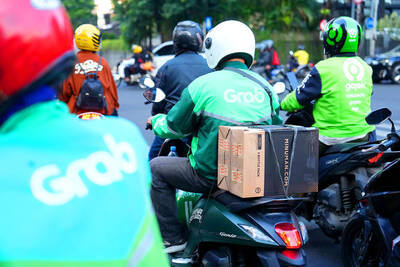
Grab Holdings Ltd agreed to buy Delivery Hero SE’s Foodpanda operations in Taiwan for US$600 million, a deal that marks its first foray outside of its Southeast Asian base. The cash acquisition will allow Grab to expand into 21 cities across Taiwan, the Singapore-based ride-hailing and delivery company said in a statement yesterday. Grab expects the transaction to be completed in the second half, subject to regulatory approvals. The purchase will give Grab a presence on the island of about 23 million people, helping it to expand beyond its intensely competitive home market. Grab has seen growth slow dramatically as it takes


 RSS
RSS