


Richard Li, a notebook computer on his knee, shows what became of his dream to sell televised programs to millions in Asia on the Internet. As he taps the pad, a model struts across the screen to a disco beat.
"It's still a video-driven product," the 36-year-old chief executive of PCCW Ltd. said of his Now.com.hk, an Asian-focused multimedia Web site. "Maybe the market size and geographical ambition changed, but the vision very much carried on."
It was quite a change. Two years ago, Li bought Hong Kong's biggest phone company for US$28 billion. Then Internet stocks collapsed. All that's left of the dream is Now.com.hk, which sells games, cartoons and news to 140,000 users in Hong Kong. PCCW's market value is US$4.1 billion.
The son of Li Ka-shing, Asia's richest businessman, is trying to cut PCCW's net debt, which at US$4.2 billion almost equals the market value. Li's family ties will be put to the test as he tries to reverse PCCW's 95 percent stock plunge and show management skills in bad times as well as good.
"I don't see a clear-cut strategy going forward in the next five years," said Mark Monson, who manages US$2.8 billion globally at Gottardo Asset Management Ltd. and sold PCCW shares in 2000. "I don't think he's stupid. He does have ideas that need to be refocused."
The bond market suggests some investors approve.
The difference in yields between PCCW's 7.75 percent bonds due in 2011 and similar-maturity US Treasuries has narrowed by 78 basis points to 2.77 percentage points since October. That's a greater decline than for comparable bonds of rival Singapore Telecommunications Ltd, though PCCW's yields are higher. The bonds rose after PCCW announced a fourth major round of job cuts and repaid some debt ahead of schedule.
For Li, the PCCW purchase gave him what he wanted: a business that produces US$500 million cash a year for future investments.
"Spending money is fun," but earning money "is even more fun," he said. "I would not have been able to have another machine that can generate that kind of cash."
PCCW has freed up cash. In two years, it cut salaries and trimmed its workforce by more than a fifth. It paid some debt early after selling mobile-phone operations in Hong Kong and Singapore. This year, it expects to draw revenue from Cyberport, a Hong Kong office and residential property project aimed at housing technology companies.
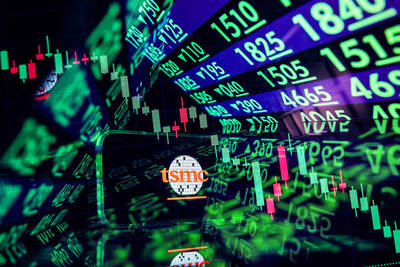
Taiwan Semiconductor Manufacturing Co (TSMC, 台積電) last week recorded an increase in the number of shareholders to the highest in almost eight months, despite its share price falling 3.38 percent from the previous week, Taiwan Stock Exchange data released on Saturday showed. As of Friday, TSMC had 1.88 million shareholders, the most since the week of April 25 and an increase of 31,870 from the previous week, the data showed. The number of shareholders jumped despite a drop of NT$50 (US$1.59), or 3.38 percent, in TSMC’s share price from a week earlier to NT$1,430, as investors took profits from their earlier gains
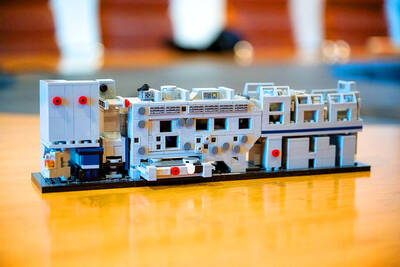
In a high-security Shenzhen laboratory, Chinese scientists have built what Washington has spent years trying to prevent: a prototype of a machine capable of producing the cutting-edge semiconductor chips that power artificial intelligence (AI), smartphones and weapons central to Western military dominance, Reuters has learned. Completed early this year and undergoing testing, the prototype fills nearly an entire factory floor. It was built by a team of former engineers from Dutch semiconductor giant ASML who reverse-engineered the company’s extreme ultraviolet lithography (EUV) machines, according to two people with knowledge of the project. EUV machines sit at the heart of a technological Cold
Taiwan’s long-term economic competitiveness will hinge not only on national champions like Taiwan Semiconductor Manufacturing Co. (TSMC, 台積電) but also on the widespread adoption of artificial intelligence (AI) and other emerging technologies, a US-based scholar has said. At a lecture in Taipei on Tuesday, Jeffrey Ding, assistant professor of political science at the George Washington University and author of "Technology and the Rise of Great Powers," argued that historical experience shows that general-purpose technologies (GPTs) — such as electricity, computers and now AI — shape long-term economic advantages through their diffusion across the broader economy. "What really matters is not who pioneers
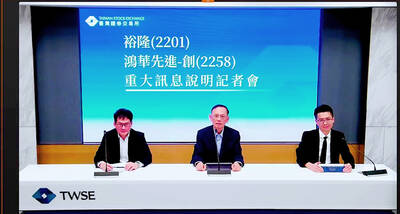
TAIWAN VALUE CHAIN: Foxtron is to fully own Luxgen following the transaction and it plans to launch a new electric model, the Foxtron Bria, in Taiwan next year Yulon Motor Co (裕隆汽車) yesterday said that its board of directors approved the disposal of its electric vehicle (EV) unit, Luxgen Motor Co (納智捷汽車), to Foxtron Vehicle Technologies Co (鴻華先進) for NT$787.6 million (US$24.98 million). Foxtron, a half-half joint venture between Yulon affiliate Hua-Chuang Automobile Information Technical Center Co (華創車電) and Hon Hai Precision Industry Co (鴻海精密), expects to wrap up the deal in the first quarter of next year. Foxtron would fully own Luxgen following the transaction, including five car distributing companies, outlets and all employees. The deal is subject to the approval of the Fair Trade Commission, Foxtron said. “Foxtron will be


 RSS
RSS