


Minister of Finance Lee Yung-san (李庸三) yesterday said that the government's Financial Restructuring Fund (金融重建基金) may be increased by NT$910 billion to NT$950 billion.
After having used nearly NT$100 billion to bail out troubled banks in the past year, Lee yesterday said that the NT$140-billion fund currently has a balance of NT$40 billion. Therefore, another NT$910 billion will be proposed to the Cabinet for injection into the fund.
Lee made the comments after President Chen Shui-bian (陳水扁) on Wednesday, gave his endorsement to a petition designed to speed up the pace of the nation's financial reforms by reducing the non-performing loan (NPL) ratio to below 5 percent and raising banks' capital-adequacy ratio to above 8 percent within two years.
With a total of NT$950 billion in the fund, Lee yesterday added that a variety of measures will be introduced to address the nation's banking problem including an exit mechanism to shut down underperforming banks.
Lee had previously suggested that banks whose capital-adequacy ratio falls below 2 percent should be shut down immediately. The Financial Restructuring Fund, moreover, will be allowed to purchase troubled banks' impaired assets for re-sale or put down investment in exchange of banks' swap shares should their capital-adequacy ratio runs short of 8 percent, the banker-turned-minister said.
By taking up banks' stakes, Lee said that the government will then be empowered to take the initiative in facilitating mergers and acquisitions among banks, maximizing the banking sector's scale of economy and solving the nation's over-banking competition.
According to local media, Vice Premier Lin Hsin-yi (林信義) yesterday also endorsed the ministry's policy to take a tougher stance in dealing with the nation's NPLs problem.
Lin said the government should take judicial action against bank mismanagement by putting those responsible for bankrupting local financial institutions behind bars.
Meanwhile with the number of banks islandwide still a problem, pundits yesterday said the recent establishment of 14 financial holding companies may may negatively impact the banking sector over the long term, pundits said.
Addressing a seminar on Thursday, Eric Chen (陳聖德), country manager for Citibank N.A., expressed concern that these holding companies "may become too over-sized to fail" and overburden the government within five to 10 years.
Chen said that the government can't just bank on the establishment of financial holding companies through mergers and acquisitions to solve the over-banking problem. Any proposal to form a financial holding company that demonstrates little success in synergy and competitiveness in the future, should not be approved by the authorities, he said.
Liu Tai-ying (劉泰英), chairman of China Development Financial Holding Co (中華開發金控), voiced a similar idea during that seminar, suggesting further industrial consolidation is probable in this sector.
Lee expects five financial holding companies will eventually prevail in Taiwan, given the nation's scale of economy. Otherwise, over competition among numerous holding companies may trigger a banking crisis, he warned.
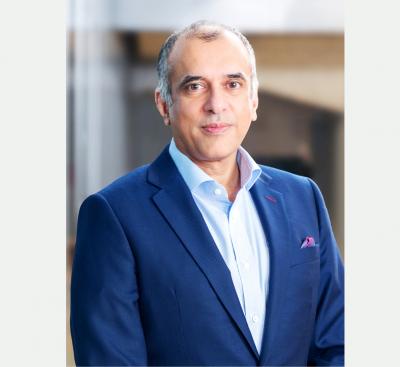
HSBC Holdings PLC is deepening its commitment to Taiwan as the economy emerges as one of the bank’s fastest-growing markets globally, driven by an artificial intelligence (AI) investment boom, expanding cross-border trade, and rising wealth creation. “The advantage that Taiwan has is a growth story linked to the semiconductor and broader AI industries, strong underlying corporate performance, and wealth creation,” said Surendra Rosha, HSBC’s co-chief executive for Asia and the Middle East, in an exclusive interview with the Taipei Times on June 2, during this year’s HSBC Taiwan Conference. That combination has helped HSBC cement its position as the most profitable international
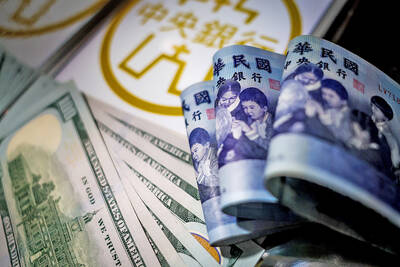
The New Taiwan dollar yesterday fell sharply against the US dollar to close at its lowest level since May 22 amid a massive outflow of funds from the country because of investors panicking over global equity markets. The NT dollar ended at NT$31.580 against the US dollar, slightly lower than its close of NT$31.568 on May 22, after moving between NT$31.5 and NT$31.648 on combined turnover of US$3.062 billion on the Taipei Foreign Exchange and the Cosmos Foreign Exchange. The NT dollar received a significant hit in the morning session, slumping as much as NT$0.173 at a time when other Asian currencies
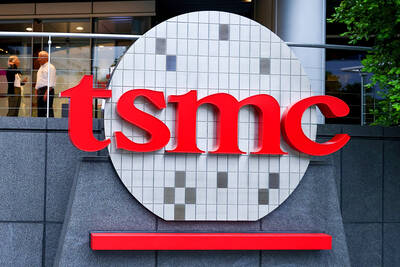
Taiwan Semiconductor Manufacturing Co (TSMC, 台積電) is now ranked ninth among the world’s 100 most valuable companies after its market capitalization more than doubled over the past year, PricewaterhouseCoopers (PwC) Taiwan said in a report last month. TSMC’s market capitalization surged 101 percent year-on-year to US$1.427 trillion as of March 31, the accounting and consulting firm’s 2026 Global Top 100 Companies by Market Capitalization report said. The gain catapulted the world’s largest contract chipmaker from 12th place to ninth in the rankings, and it was the fastest-growing among the global top 10, it said. TSMC was the only Taiwanese company among the top
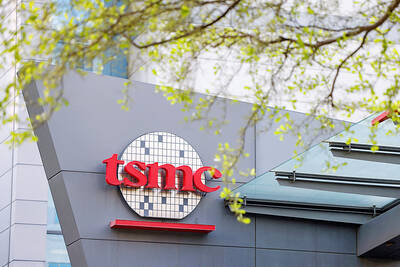
Taiwan Semiconductor Manufacturing Co (TSMC, 台積電) yesterday reported record revenue of NT$416.975 billion (US$13.17 billion) for last month, putting the world’s largest contract chipmaker on track to set a record for quarterly revenue. Last month’s figure surpassed March’s record NT$415.19 billion and represented increases of 1.5 percent from April and 30.1 percent from a year earlier. For the first five months of the year, TSMC generated NT$1.96 trillion in revenue, up 30 percent year-on-year, it said in a statement. TSMC has forecast second-quarter revenue of between US$39 billion and US$40.2 billion, representing sequential growth of about 10 percent and year-on-year growth of about


 RSS
RSS