


Sumitomo Mitsui is taking over Citigroup’s Japan brokerage businesses, both sides said yesterday, as part of a bigger plan to restructure the struggling US bank.
Sumitomo Mitsui Financial Group Inc will acquire Nikko Cordial Securities Inc and some parts of Nikko Citigroup’s Japan operations for about ¥545 billion (US$5.6 billion), company officials said.
Details were to be announced by executives at a news conference at a Tokyo hotel later in the day, they said. The deal, to be completed between October and December this year, also includes a cash transfer related to assets of the brokerage totaling some ¥21 billion, they said.
The expected move, which also includes the purchase of most of Nikko Citigroup’s securities operations, is part of the ailing US bank’s global restructuring. Citigroup has said it is looking into selling its Japan brokerage operations.
The deal makes Sumitomo Mitsui the first Japanese bank to buy a top brokerage in Japan.
Two other local “megabanks” — Mitsubishi UFJ Financial Group Inc and Mizuho Financial Group Inc — had wooed Nikko Cordial.
Nikko Cordial, which Citigroup acquired a year ago, is Japan’s third-largest brokerage, boasting managed assets of ¥25 billion and 111 branches.
Sumitomo Mitsui can hope to expand its brokerage operations by acquiring Nikko Cordial, which operates in both individual and corporate sectors in Japan. The acquisition will allow Sumitomo Mitsui to come close in size to the nation’s industry leader, Nomura Holdings.
The acquisition will not include some operations in Nikko Citigroup’s securities business, Nikko Asset Management and other units, it said, and is an effort to better streamline the efficiency of Citigroup’s overall business.
After reporting a quarterly loss of US$8.29 billion, Citigroup last month reorganized into two entities, Citicorp and Citi Holdings. The first is focused on traditional banking around the world, while the second holds the company’s riskier assets and tougher-to-manage non-core ventures, including Nikko Cordial.
Analysts have said that CEO Vikram Pandit’s reorganization allows Citigroup to sell or spin off the Citi Holdings assets to raise cash.
Citigroup has already begun scaling back its presence in Japan to cope with the global financial crisis. In December, it agreed to sell NikkoCiti Trust and Banking Corp to Mitsubishi UFJ Trust and Banking Corp in an all-cash deal worth ¥25 billion.
Authorities have detained three former Taiwan Semiconductor Manufacturing Co (TMSC, 台積電) employees on suspicion of compromising classified technology used in making 2-nanometer chips, the Taiwan High Prosecutors’ Office said yesterday. Prosecutors are holding a former TSMC engineer surnamed Chen (陳) and two recently sacked TSMC engineers, including one person surnamed Wu (吳) in detention with restricted communication, following an investigation launched on July 25, a statement said. The announcement came a day after Nikkei Asia reported on the technology theft in an exclusive story, saying TSMC had fired two workers for contravening data rules on advanced chipmaking technology. Two-nanometer wafers are the most
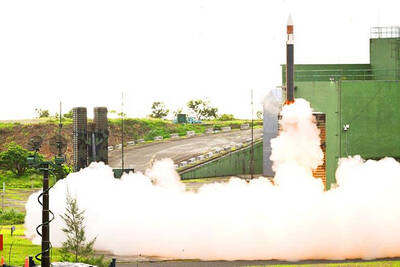
NEW GEAR: On top of the new Tien Kung IV air defense missiles, the military is expected to place orders for a new combat vehicle next year for delivery in 2028 Mass production of Tien Kung IV (Sky Bow IV) missiles is expected to start next year, with plans to order 122 pods, the Ministry of National Defense’s (MND) latest list of regulated military material showed. The document said that the armed forces would obtain 46 pods of the air defense missiles next year and 76 pods the year after that. The Tien Kung IV is designed to intercept cruise missiles and ballistic missiles to an altitude of 70km, compared with the 60km maximum altitude achieved by the Missile Segment Enhancement variant of PAC-3 systems. A defense source said yesterday that the number of
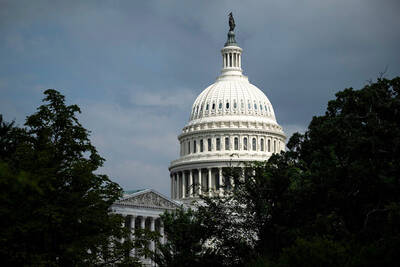
A bipartisan group of US representatives have introduced a draft US-Taiwan Defense Innovation Partnership bill, aimed at accelerating defense technology collaboration between Taiwan and the US in response to ongoing aggression by the Chinese Communist Party (CCP). The bill was introduced by US representatives Zach Nunn and Jill Tokuda, with US House Select Committee on the Chinese Communist Party Chairman John Moolenaar and US Representative Ashley Hinson joining as original cosponsors, a news release issued by Tokuda’s office on Thursday said. The draft bill “directs the US Department of Defense to work directly with Taiwan’s Ministry of National Defense through their respective
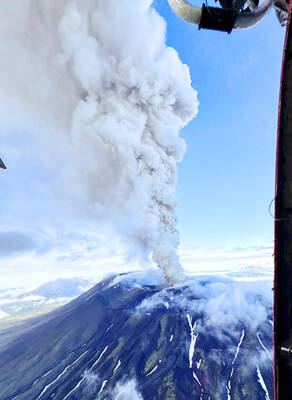
Tsunami waves were possible in three areas of Kamchatka in Russia’s Far East, the Russian Ministry for Emergency Services said yesterday after a magnitude 7.0 earthquake hit the nearby Kuril Islands. “The expected wave heights are low, but you must still move away from the shore,” the ministry said on the Telegram messaging app, after the latest seismic activity in the area. However, the Pacific Tsunami Warning System in Hawaii said there was no tsunami warning after the quake. The Russian tsunami alert was later canceled. Overnight, the Krasheninnikov volcano in Kamchatka erupted for the first time in 600 years, Russia’s RIA


 RSS
RSS