


Sun Microsystems Inc shares surged nearly 80 percent on Wall Street on Wednesday after reports IBM was in talks to buy the computer server company.
The Wall Street Journal reported overnight that IBM was seeking to purchase Sun in a cash deal for more than US$6.5 billion, or US$10 to US$11 a share, a premium of more than 100 percent over Sun’s closing price on Tuesday.
Sun shares soared by 78.87 percent in New York on Wednesday to close at US$8.89. IBM lost 1.03 percent to US$91.95.
The Journal, citing people familiar with the matter, said Sun in recent months had approached a number of large technology companies in the hopes of being acquired.
Hewlett-Packard, declined the offer, the newspaper said, and a spokesman for Dell, the world’s third-largest computer server maker, declined to comment.
The Journal said the Sun acquisition would bolster IBM’s position on the Internet, in software and in finance and telecommunications markets.
The newspaper also noted that both IBM and Sun make computer systems for corporate customers that are not reliant on Microsoft’s Windows software.
Several analysts, however, questioned the benefits for IBM of the purchase of Sun, which owns the rights to the Java programming language and MySQL open source database software, but has been running up big losses recently.
Devina Mehra, chief strategist at First Global, said the deal “appears reasonably priced” but “we do not think it is a very good idea for IBM to acquire Sun.
“Sun has been in trouble far too long, with a declining business model, for IBM to get entangled into, specially in these troubled times,” he said.
Goldman Sachs said it had questions about the “short-term and longer-term benefit to IBM from a potential combination.
“While there would undoubtedly be significant cost savings in the hardware divisions of both companies post a potential acquisition, there is also substantial overlap in almost all product lines,” it said.
“It is hard to see what strategic value [Sun] has to IBM, but the larger company is flush with cash, and may not be able to help itself,” analyst Douglas McIntyre wrote at the Web site 247wallst.com.
A purchase of Sun would be the largest in the history of IBM and in line with “Big Blue” chairman Samuel Palmisano’s recent pledge not to sit back but to engage in “strategic acquisitions.”
A deal could potentially run into difficulties with the anti-trust division of the US Department of Justice because of the wide range of products the firms now make.

SECURITY: As China is ‘reshaping’ Hong Kong’s population, Taiwan must raise the eligibility threshold for applications from Hong Kongers, Chiu Chui-cheng said When Hong Kong and Macau citizens apply for residency in Taiwan, it would be under a new category that includes a “national security observation period,” Mainland Affairs Council (MAC) Minister Chiu Chui-cheng (邱垂正) said yesterday. President William Lai (賴清德) on March 13 announced 17 strategies to counter China’s aggression toward Taiwan, including incorporating national security considerations into the review process for residency applications from Hong Kong and Macau citizens. The situation in Hong Kong is constantly changing, Chiu said to media yesterday on the sidelines of the Taipei Technology Run hosted by the Taipei Neihu Technology Park Development Association. With

CARROT AND STICK: While unrelenting in its military threats, China attracted nearly 40,000 Taiwanese to over 400 business events last year Nearly 40,000 Taiwanese last year joined industry events in China, such as conferences and trade fairs, supported by the Chinese government, a study showed yesterday, as Beijing ramps up a charm offensive toward Taipei alongside military pressure. China has long taken a carrot-and-stick approach to Taiwan, threatening it with the prospect of military action while reaching out to those it believes are amenable to Beijing’s point of view. Taiwanese security officials are wary of what they see as Beijing’s influence campaigns to sway public opinion after Taipei and Beijing gradually resumed travel links halted by the COVID-19 pandemic, but the scale of
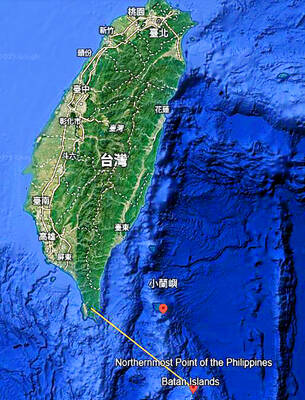
A US Marine Corps regiment equipped with Naval Strike Missiles (NSM) is set to participate in the upcoming Balikatan 25 exercise in the Luzon Strait, marking the system’s first-ever deployment in the Philippines. US and Philippine officials have separately confirmed that the Navy Marine Expeditionary Ship Interdiction System (NMESIS) — the mobile launch platform for the Naval Strike Missile — would take part in the joint exercise. The missiles are being deployed to “a strategic first island chain chokepoint” in the waters between Taiwan proper and the Philippines, US-based Naval News reported. “The Luzon Strait and Bashi Channel represent a critical access

Pope Francis is be laid to rest on Saturday after lying in state for three days in St Peter’s Basilica, where the faithful are expected to flock to pay their respects to history’s first Latin American pontiff. The cardinals met yesterday in the Vatican’s synod hall to chart the next steps before a conclave begins to choose Francis’ successor, as condolences poured in from around the world. According to current norms, the conclave must begin between May 5 and 10. The cardinals set the funeral for Saturday at 10am in St Peter’s Square, to be celebrated by the dean of the College


 RSS
RSS