


InBev may be based in Belgium and have strong ties to Brazil, but the brewing giant has grand plans to sell Budweiser — what it calls America in a bottle — to the world.
But InBev and its ambitious Brazilian chief executive Carlos Brito face a huge challenge to convince the world that it wants the iconic US brew as they try to make their US$52 billion takeover of Budweiser-owner Anheuser-Busch pay off.
“Budweiser brings the great America in a bottle. That’s what consumers love,” Brito told journalists last week as he announced InBev’s planned takeover of Anheuser-Busch.
During the month-long takeover battle for Anheuser-Busch, Brito sought to win over the skeptical board at his US rival by promising to make Budweiser the merged company’s flagship international premium brew.
Using InBev’s extensive international distribution network, he said he envisaged Budweiser following in the steps of other well-known American consumer products that ventured beyond US shores.
“When I look at other American companies that have done this before — like McDonald’s, like Pepsi, like Coke, like Frito-Lays, so many companies that have expanded abroad — I’m very excited,” Brito said.
However, consumer analyst Mike Hughes at market research group Datamonitor said that bringing an iconic US product to the global market might not be as easy in the age of globalization with countless products vying for consumers’ attention.
“The thing to remember about a lot of brands like Coca-Cola is that they were introduced decades ago when there wasn’t the choice we have today,” Hughes said. “It’s a lot more difficult to replicate than 30 or 40 years ago.”
InBev, which has some 200 brands in its portfolio, has already tried to catapult brands such as Stella Artois, Beck’s and Brahma into the international premium beer market.
Although InBev has had limited success, analyst Kris Kippers at Belgian brokerage Petercam sees better prospects for transforming Budweiser into an international brand of choice for beer lovers.
He said Budweiser was already such a well-known brand globally that simply by making it available in stores and pubs through InBev’s distribution network would “make a big difference.”
“The question now is cannibalization between the brands that are pointed out as global brands will be somewhat different,” he said. “I don’t know if Beck’s and Budweiser can live next to each other on the same shelf. It depends on how consumers react.”
While also optimistic that InBev will be able to transform Budweiser into an international premium beer, JPMorgan analyst Mike Gibbs said it would take a lot of money to do it.
“Even with high awareness and distribution clout, building a real presence for Bud in many markets is going to require substantial marketing investment,” he said in a research note.

SECURITY: As China is ‘reshaping’ Hong Kong’s population, Taiwan must raise the eligibility threshold for applications from Hong Kongers, Chiu Chui-cheng said When Hong Kong and Macau citizens apply for residency in Taiwan, it would be under a new category that includes a “national security observation period,” Mainland Affairs Council (MAC) Minister Chiu Chui-cheng (邱垂正) said yesterday. President William Lai (賴清德) on March 13 announced 17 strategies to counter China’s aggression toward Taiwan, including incorporating national security considerations into the review process for residency applications from Hong Kong and Macau citizens. The situation in Hong Kong is constantly changing, Chiu said to media yesterday on the sidelines of the Taipei Technology Run hosted by the Taipei Neihu Technology Park Development Association. With
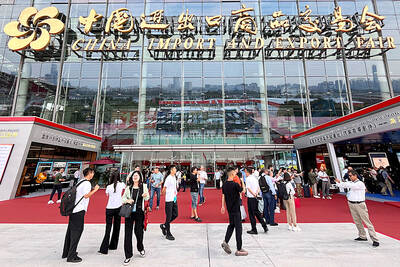
CARROT AND STICK: While unrelenting in its military threats, China attracted nearly 40,000 Taiwanese to over 400 business events last year Nearly 40,000 Taiwanese last year joined industry events in China, such as conferences and trade fairs, supported by the Chinese government, a study showed yesterday, as Beijing ramps up a charm offensive toward Taipei alongside military pressure. China has long taken a carrot-and-stick approach to Taiwan, threatening it with the prospect of military action while reaching out to those it believes are amenable to Beijing’s point of view. Taiwanese security officials are wary of what they see as Beijing’s influence campaigns to sway public opinion after Taipei and Beijing gradually resumed travel links halted by the COVID-19 pandemic, but the scale of
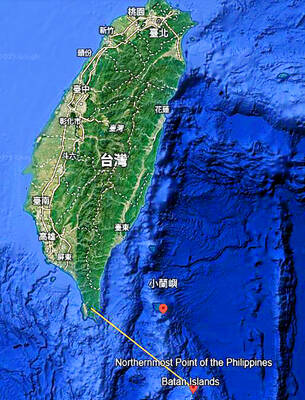
A US Marine Corps regiment equipped with Naval Strike Missiles (NSM) is set to participate in the upcoming Balikatan 25 exercise in the Luzon Strait, marking the system’s first-ever deployment in the Philippines. US and Philippine officials have separately confirmed that the Navy Marine Expeditionary Ship Interdiction System (NMESIS) — the mobile launch platform for the Naval Strike Missile — would take part in the joint exercise. The missiles are being deployed to “a strategic first island chain chokepoint” in the waters between Taiwan proper and the Philippines, US-based Naval News reported. “The Luzon Strait and Bashi Channel represent a critical access

Pope Francis is be laid to rest on Saturday after lying in state for three days in St Peter’s Basilica, where the faithful are expected to flock to pay their respects to history’s first Latin American pontiff. The cardinals met yesterday in the Vatican’s synod hall to chart the next steps before a conclave begins to choose Francis’ successor, as condolences poured in from around the world. According to current norms, the conclave must begin between May 5 and 10. The cardinals set the funeral for Saturday at 10am in St Peter’s Square, to be celebrated by the dean of the College


 RSS
RSS