


■COMPUTERS
Big Blue’s results shine
Technology colossus IBM reported second quarter income of US$2.77 billion on Thursday, up 22 percent on the same quarter last year on strong global growth in sales of services, hardware and software. Revenue rose 13 percent to US$26.8 billion, with 7 percent of that growth stemming from currency gains caused by the record weakness of the US dollar. “IBM had an outstanding quarter and a strong first half for 2008. These results demonstrate that IBM has the ability to thrive in both emerging and established markets,” said Samuel Palmisano, IBM chairman, president and chief executive officer.
■OIL
Crude prices inch higher
Oil prices rose US$2 to stand above U$131 a barrel yesterday, after a 10 percent decline in the past three trading sessions lured buyers. Easing tensions between Iran and the West and worries that high prices and a weaker US economy will undermine demand have sent US crude down US$15 in just three days, putting it on track for its biggest weekly fall since the contract started trading in New York in 1983. US light crude rose US$2.12 to US$131.41 a barrel by 8:45am GMT, still way off its June 11 record high of US$147.27, as Wednesday’s report of an unexpected build in US crude oil stocks continued to weigh on the price. London Brent crude gained US$2.18 to US$133.25 a barrel.
■BANKING
UBS overhauls US operation
UBS AG overhauled its offshore private banking business for US residents on Thursday in the face of accusations by congressional investigators that the Swiss bank helped clients dodge taxes. In a dramatic hearing on Capitol Hill before a Senate subcommittee, a senior UBS executive apologized and announced the bank would cease offering cross-border private banking through its unregulated units to US-domiciled customers. Mark Branson, chief financial officer for UBS Global Wealth Management and Business Banking, said the bank’s 80,000 employees were alarmed by reports of misconduct.
■OIL
Sinopec issues warning
Chinese oil giant Sinopec, formally known as China Petroleum & Chemical Corp, says its first-half profit will fall more than 50 percent from the same period last year because of government controls that limit its ability to pass on record-high crude costs to consumers. A Sinopec statement, dated on Thursday, gave no estimate of first-half earnings. But the company, Asia’s biggest refiner by volume, reported profits of 36.2 billion yuan (US$5.3 billion) in the year-earlier period. “The net profit for the first half of 2008 will decrease by more than 50 percent compared to the same period of last year,” Beijing-based Sinopec said. It blamed China’s “strict control over refined oil prices.”
■ELECTRONICS
Wii on top in the US
Nintendo said on Thursday that its globally popular Wii has become the top-selling video game console in the US, a crown coveted by rivals Microsoft and Sony. Market-tracking firm NPD Group reported that 666,000 Wii consoles were sold in the US last month, raising the total sales count in the country to nearly 10.9 million units. The Japanese video game giant scored another victory with its DS portable devices, selling more than 783,000 in the US last month, to raise total sales there to 20.8 million units.

SECURITY: As China is ‘reshaping’ Hong Kong’s population, Taiwan must raise the eligibility threshold for applications from Hong Kongers, Chiu Chui-cheng said When Hong Kong and Macau citizens apply for residency in Taiwan, it would be under a new category that includes a “national security observation period,” Mainland Affairs Council (MAC) Minister Chiu Chui-cheng (邱垂正) said yesterday. President William Lai (賴清德) on March 13 announced 17 strategies to counter China’s aggression toward Taiwan, including incorporating national security considerations into the review process for residency applications from Hong Kong and Macau citizens. The situation in Hong Kong is constantly changing, Chiu said to media yesterday on the sidelines of the Taipei Technology Run hosted by the Taipei Neihu Technology Park Development Association. With

CARROT AND STICK: While unrelenting in its military threats, China attracted nearly 40,000 Taiwanese to over 400 business events last year Nearly 40,000 Taiwanese last year joined industry events in China, such as conferences and trade fairs, supported by the Chinese government, a study showed yesterday, as Beijing ramps up a charm offensive toward Taipei alongside military pressure. China has long taken a carrot-and-stick approach to Taiwan, threatening it with the prospect of military action while reaching out to those it believes are amenable to Beijing’s point of view. Taiwanese security officials are wary of what they see as Beijing’s influence campaigns to sway public opinion after Taipei and Beijing gradually resumed travel links halted by the COVID-19 pandemic, but the scale of
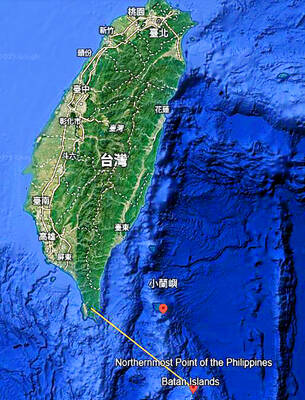
A US Marine Corps regiment equipped with Naval Strike Missiles (NSM) is set to participate in the upcoming Balikatan 25 exercise in the Luzon Strait, marking the system’s first-ever deployment in the Philippines. US and Philippine officials have separately confirmed that the Navy Marine Expeditionary Ship Interdiction System (NMESIS) — the mobile launch platform for the Naval Strike Missile — would take part in the joint exercise. The missiles are being deployed to “a strategic first island chain chokepoint” in the waters between Taiwan proper and the Philippines, US-based Naval News reported. “The Luzon Strait and Bashi Channel represent a critical access

Pope Francis is be laid to rest on Saturday after lying in state for three days in St Peter’s Basilica, where the faithful are expected to flock to pay their respects to history’s first Latin American pontiff. The cardinals met yesterday in the Vatican’s synod hall to chart the next steps before a conclave begins to choose Francis’ successor, as condolences poured in from around the world. According to current norms, the conclave must begin between May 5 and 10. The cardinals set the funeral for Saturday at 10am in St Peter’s Square, to be celebrated by the dean of the College


 RSS
RSS