


The war in Iraq might just determine the fate of a little-known Houston company, Boots & Coots International Well Control, which put out about a third of the oil-well fires set in Kuwait in 1991 and earned perhaps as much as US$100 million in the process.
Barring some drastic shift in the pattern of the war so far, the company could well go under.
As recently as mid-February, the company acknowledged that creditors were pressuring it to file for bankruptcy, but its fortunes seemed to take a positive swing on March 6, when the Pentagon announced that it had a plan for fighting oil-well fires. Its plan was drafted by a unit of Halliburton, Vice President Dick Cheney's former employer, which has an agreement to subcontract oil-well firefighting to Boots & Coots.
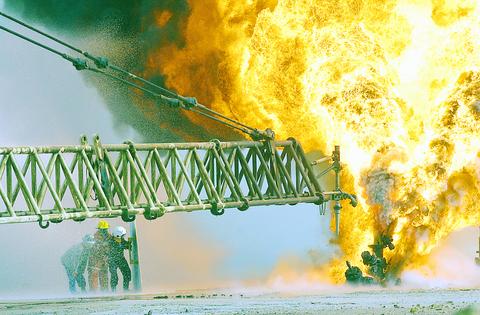
PHOTO: AFP
But its fortunes looked bleak again when, contrary to many expectations, the first days of the war produced only a relative handful of fires, compared with more than 700 in 1991. Danny Clayton, the operations manager of Boots & Coots, said on Monday that he was surprised that relatively few oil-well fires had started in Iraq so far.
"It's as easy to destroy 90 wells as it is to destroy nine," said Clayton, who ran the company's oil-well firefighting operations in Kuwait after the 1991 war. "But there's still a good chance. They have several more oil fields, and I'm sure that they are not all secured yet."
Perverse as it may sound, then, the company's fortunes -- indeed, its very existence -- seem to depend on a good many Iraqi oil wells being put to the torch.
Boots & Coots was founded by Boots Hansen and Coots Matthews in 1978, when they left the employ of Red Adair, the legendary oil-well fire fighter who inspired the late 1960s John Wayne film Hellfighters. The company, which began trading in 1997, was once a thriving concern. But accidental oil-well fires have become much less common as engineering has improved.
If there are more fires, Boots & Coots might have a larger share of the work this time, said Jerry L. Winchester, the chief executive and chief operating officer, who worked for Halliburton 12 years ago coordinating the firefighting teams in Kuwait. In 1991, firefighters were sent in from China, Russia, Iran, Romania, Hungary and elsewhere. This time, the Pentagon has said it will favor American companies.
There are two other oil-well firefighters in the US: Wild Well Control, a subsidiary of Superior Energy Services of Harvey, Louisiana, which also has a Halliburton contract in Iraq, and Cudd Pressure Control, a unit of RPC Inc in Atlanta.
Shares of Boots & Coots have been swinging wildly. They vacillated from US$0.47 to US$0.70 until the start of war sent them as high as US$2.55. On Friday they closed at US$0.83. A filing in November with the Securities and Exchange Commission covering the quarter ended Sept. 30 said, "The company does not have sufficient funds to meet its immediate obligations," and there is "substantial doubt about the ability of the company to continue as a going concern."
At the end of September, current assets totaled US$4.1 million and current liabilities were US$19.9 million.
Clayton, the operations manager, estimates that it will take four to five days to extinguish each well fire, possibly less. Boots & Coots might bill roughly US$40,000 to US$50,000 a day for its services, he said. That yields a very rough estimate of US$160,000 to US$250,000 a well. As of Friday, nine wells had been set on fire, with six of those already extinguished, a Pentagon spokesman said. Kuwaiti firefighters worked with crews from Boots & Coots to put out those fires, according to a spokesman for the Army Corps of Engineers.
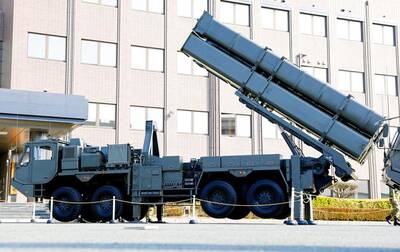
Japan has deployed long-range missiles in a southwestern region near China, the Japanese defense minister said yesterday, at a time when ties with Beijing are at their lowest in recent years. The missiles were installed in Kumamoto in the southern region of Kyushu, as Japan is attempting to shore up its military capacity as China steps up naval activity in the East China Sea. “Standoff defense capabilities enable us to counter the threat of enemy forces attempting to invade our country ... while ensuring the safety of our personnel,” Japanese Minister of Defense Shinjiro Koizumi said. “This is an extremely important initiative for
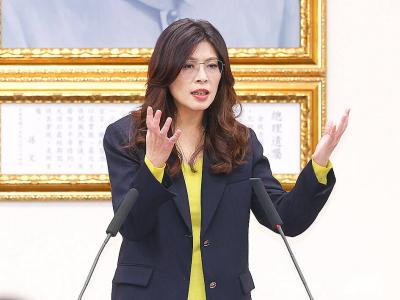
Chinese Nationalist Party (KMT) Chairwoman Cheng Li-wun (鄭麗文) today accepted an invitation from Chinese President Xi Jinping (習近平) to lead a delegation to China next month, saying she hopes to promote the peaceful development of cross-strait relations and bring stability to the Taiwan Strait. “I am grateful and happy to accept this invitation,” Cheng said in a statement from the KMT chairperson’s office. Cheng said she hopes both sides can work together to promote the peaceful development of cross-strait relations, enhance exchange and cooperation, bring stability to the Taiwan Strait and improve people’s livelihoods. At today's news conference, Cheng said any efforts to

MORE POPULAR: Taiwan Pass sales increased by 59 percent during the first quarter compared with the same period last year, the Tourism Administration said The Tourism Administration yesterday said that it has streamlined the Taiwan Pass, with two versions available for purchase beginning today. The tourism agency has made the pass available to international tourists since 2024, allowing them to access the high-speed rail, Taiwan Railway Corp services, four MRT systems and four Taiwan Tourist Shuttles. Previously, five types of Taiwan Pass were available, but some tourists have said that the offerings were too complicated. The agency said only two types of Taiwan Pass would be available, starting from a three-day pass with the high-speed rail and a three-day pass with Taiwan Railway Corp. The former costs NT$2,800

The nation’s fastest supercomputer, Nano 4 (晶創26), is scheduled to be launched in the third quarter, and would be used to train large language models in finance and national defense sectors, the National Center for High-Performance Computing (NCHC) said. The supercomputer, which would operate at about 86.05 petaflops, is being tested at a new cloud computing center in the Southern Taiwan Science Park in Tainan. The exterior of the server cabinet features chip circuitry patterns overlaid with a map of Taiwan, highlighting the nation’s central position in the semiconductor industry. The center also houses Taiwania 2, Taiwania 3, Forerunner 1 and


 RSS
RSS