


Want to place a bet on this year's soccer World Cup? In the UK, you can put money on whether a streaker will run onto the field or a band will play the wrong national anthem. And, of course, on which team will win.
The bigger gamble: whether bookmakers will make a profit on the year's biggest sporting event. William Hill Plc, Ladbrokes and others aren't sure they will.
The removal of a tax on winnings and the growth of online gambling will stimulate betting on the tournament, according to Ladbrokes, the largest UK betting-shop chain. It forecasts that ?200 million (US$293 million) will be wagered, up from ?85 million in the 1998 World Cup.
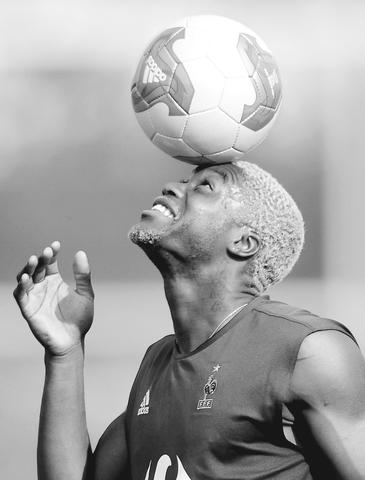
PHOTO: REUTERS
How much turns into profit depends on how lucky punters get.
At the Euro 2000 soccer tournament, when most games were won by favored teams, bookmakers suffered. Coral Group Ltd, the third-largest UK bookmaker, said it lost several million pounds.
"It all depends in particular on how well the favorites do," said Brian Gallagher, who manages 800 million pounds in funds at Gartmore Investment Management, including shares in Ladbrokes' parent company, Hilton Group Plc.
Since the World Cup was first staged in 1930, only seven nations -- Brazil, Italy, Germany, Argentina, Uruguay, England and France -- have won. All those teams qualified for the 2002 finals opening Friday and only Uruguay isn't ranked in the top 12 by FIFA, soccer's world governing body.
"There are only eight sides to bet in the World Cup," said Adrian Fitzpatrick, a florist from central England who in 1994 won 500,000 pounds backing Brazil. Of the 32 nations this year, only France, Argentina, Italy, Brazil, Spain, Portugal, England and Germany can be seriously considered, he said.
Bookmakers' costs may also increase as they step up spending on advertising to entice new gamblers.
"The World Cup will easily be the biggest marketing spend during our year," Ladbrokes spokesman Sean Boyce said, without giving details. Ladbrokes accounts for more than half of Hilton Group's sales and about a third of its profit.
Research conducted at Euro 2000 showed up to a third of wagers were placed by people who hadn't bet before, Boyce said.
UK bookmakers' sales have risen since October when the government abolished a tax on gambler's winnings.
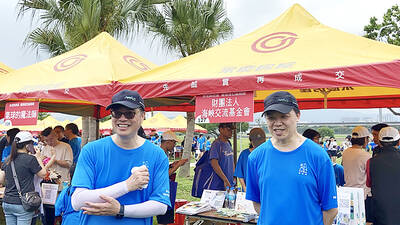
SECURITY: As China is ‘reshaping’ Hong Kong’s population, Taiwan must raise the eligibility threshold for applications from Hong Kongers, Chiu Chui-cheng said When Hong Kong and Macau citizens apply for residency in Taiwan, it would be under a new category that includes a “national security observation period,” Mainland Affairs Council (MAC) Minister Chiu Chui-cheng (邱垂正) said yesterday. President William Lai (賴清德) on March 13 announced 17 strategies to counter China’s aggression toward Taiwan, including incorporating national security considerations into the review process for residency applications from Hong Kong and Macau citizens. The situation in Hong Kong is constantly changing, Chiu said to media yesterday on the sidelines of the Taipei Technology Run hosted by the Taipei Neihu Technology Park Development Association. With
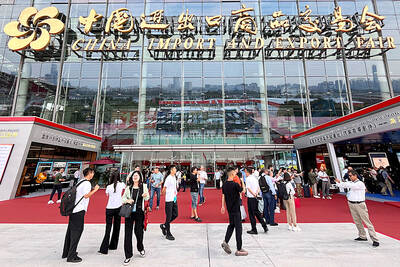
CARROT AND STICK: While unrelenting in its military threats, China attracted nearly 40,000 Taiwanese to over 400 business events last year Nearly 40,000 Taiwanese last year joined industry events in China, such as conferences and trade fairs, supported by the Chinese government, a study showed yesterday, as Beijing ramps up a charm offensive toward Taipei alongside military pressure. China has long taken a carrot-and-stick approach to Taiwan, threatening it with the prospect of military action while reaching out to those it believes are amenable to Beijing’s point of view. Taiwanese security officials are wary of what they see as Beijing’s influence campaigns to sway public opinion after Taipei and Beijing gradually resumed travel links halted by the COVID-19 pandemic, but the scale of
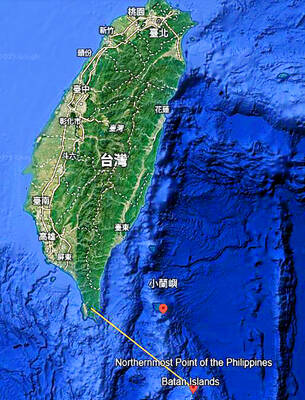
A US Marine Corps regiment equipped with Naval Strike Missiles (NSM) is set to participate in the upcoming Balikatan 25 exercise in the Luzon Strait, marking the system’s first-ever deployment in the Philippines. US and Philippine officials have separately confirmed that the Navy Marine Expeditionary Ship Interdiction System (NMESIS) — the mobile launch platform for the Naval Strike Missile — would take part in the joint exercise. The missiles are being deployed to “a strategic first island chain chokepoint” in the waters between Taiwan proper and the Philippines, US-based Naval News reported. “The Luzon Strait and Bashi Channel represent a critical access
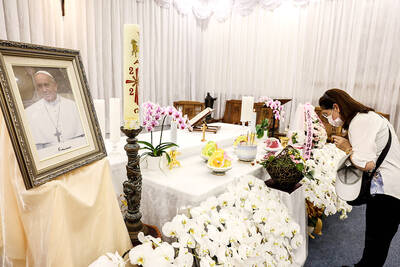
Pope Francis is be laid to rest on Saturday after lying in state for three days in St Peter’s Basilica, where the faithful are expected to flock to pay their respects to history’s first Latin American pontiff. The cardinals met yesterday in the Vatican’s synod hall to chart the next steps before a conclave begins to choose Francis’ successor, as condolences poured in from around the world. According to current norms, the conclave must begin between May 5 and 10. The cardinals set the funeral for Saturday at 10am in St Peter’s Square, to be celebrated by the dean of the College


 RSS
RSS