

The US on Tuesday banned a broad swath of Canadian alcoholic beverages, motorcycles and dairy products from import, sharply escalating an already acrimonious trade spat.
The import bans, which go into effect on Sept. 29 and were published on the White House’s Web site, came after Canada’s own retaliatory tariffs on US goods took effect after midnight on Tuesday.
Those Canadian levies themselves followed 50 percent tariffs that the US imposed on US$20 billion of Canadian goods last month, after several rounds of negotiations collapsed.
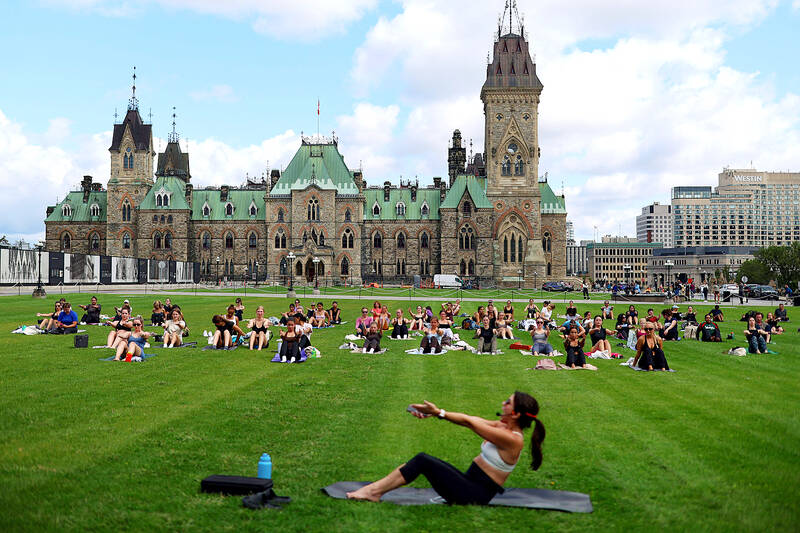
Photo: AFP
The breakdown has widened a rift between the longtime allies, who have blamed each other for the failed talks, spurred Canadian Prime Minister Mark Carney to urge a further shift away from Canada’s biggest trading partner and cast doubt on the viability of the US-Mexico-Canada Agreement.
“We have everything we need to pivot and prosper,” Carney said on Tuesday in a video posted on YouTube.
“That pivot will come at a cost. There’s always a cost to action, but it doesn’t come close to the cost of standing still,” he said.
The US bans appeared to cover most alcohol products, including beer and various types of wine, whisky, bourbon, rum, vodka, vermouth, tequila, mezcal and brandy. The dairy ban covers whey protein, invert molasses, cane molasses and nonalcoholic beer, per notices on the White House’s Web site.
In addition to the import bans, cheese products were added to a list of products subject to a 50 percent tariff, but not banned outright. Some paper, aluminum, wood, furniture, lighting and other products were also added to the list.
A US official said US President Donald Trump’s pre-existing threat to increase tariffs on Canadian autos from 25 percent to 50 percent on Jan. 1 remained in effect.
The official added that US Trade Representative Jamieson Greer had spoken with Canadian Minister for International Trade Dominic LeBlanc over the past couple of days, and the pair were expected to speak again in the coming days to see if there was an alternative path for the two countries.
In a social media post on Tuesday night, LeBlanc criticized the latest US measures and said he was in contact with Greer regarding a path forward.
“As has been the case for the last 18 months, our first priority remains on protecting and supporting Canadian workers, farmers, families, and businesses from these unjustified actions,” he wrote.
Ottawa’s retaliatory measures, which in turn provoked Washington’s move on Tuesday night, were designed to put economic and political pressure on Washington, Canadian government officials said.
Those counter-tariffs cover US$20 billion of US goods, with duties ranging from 15 percent to 50 percent across products from steel and furniture to clothing and electronics, and are expected to hit sectors in some competitive states such as Michigan and Ohio, ahead of US midterm elections in November.
While the tariffs affect a small amount of exports compared with total trade between the US and Canada, some analysts worry the standoff could destabilize the US-Mexico-Canada Agreement, the free-trade pact that succeeded North American Free Trade Agreement. Together they have underpinned commerce across North America for decades.
“What we are worried about is an escalatory spiral,” said Michael Harvey, executive director of the Canadian Agri-Food Trade Alliance and a member of Carney’s advisory committee on bilateral US economic relations. “But at the same time, we totally understand that the prime minister needs to find areas of leverage.”
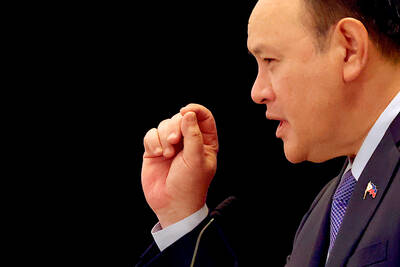
Philippine Secretary of National Defense Gilberto Teodoro Jr on Tuesday hit out at China at an international forum after a memo asserting Beijing’s position over their longstanding maritime dispute was delivered to him while he was speaking on stage. The unusual incident was captured on video at the Seoul Defense Dialogue as the secretary was responding to a question about “gray zone” coercion in the South China Sea. The video shows what appears to be a conference staffer placing it on the table next to him while speaking. “I have a note here, I think this is from China,” he said, describing
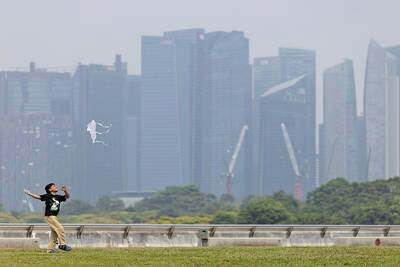
Singapore’s air quality hit an unhealthy level yesterday, as haze from forest fires raging in Indonesia continued to spread across swathes of Southeast Asia. The city-state is currently one of the 10 most-polluted major cities in the world, coming in at third in IQAir’s ranking. Kuching, in the Malaysian part of the island of Borneo, was No. 1. A government taskforce has “activated haze response plans” for schools, workplaces and community centers, Singaporean Minister for Sustainability and the Environment Grace Fu (傅海) said in a video message on Facebook. Most people could continue essential daily activities, but the elderly or vulnerable should
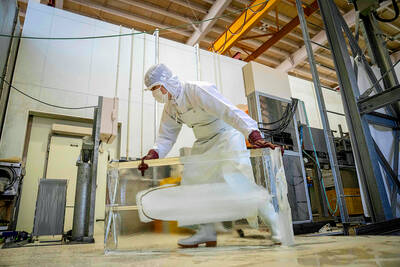
PAINSTAKING PROCESS: Ice makers freeze water for up to 72 hours, replace tainted water with a fresh batch once freezing begins, and are constantly stirring In the historic Japanese city of Kanazawa, craftsmen painstakingly shape and slice blocks of ice destined to chill negronis in some of the world’s trendiest bars. The men work for Kuramoto Ice, a century-old company in Ishikawa on the Sea of Japan coast and one of dozens of Japanese firms producing ultra-clear, premium ice. This luxury product, believed by those in the industry to melt more slowly than regular blocks, is a staple of Japan’s cocktail culture, but its popularity is also spilling over to bars abroad, from the US to Australia, who pay as much as ¥200 (US$1.28) per cube. Kuramoto Ice
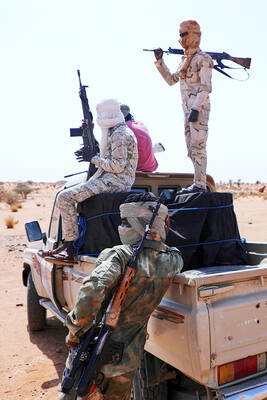
WAR CRIMES? An investigation found that a network of countries are supplying Sudan’s RSF with weapons, including drone blamed for large civilian casualties Foreign weapons, military technology, fighters and logistical networks are helping sustain Sudan’s conflict and expanding the warring parties’ ability to strike deep into civilian areas, a UN fact-finding mission said in a report published yesterday, warning that some attacks might amount to war crimes. Sudan’s war erupted in April 2023 following a power struggle between Sudan’s military and the Rapid Support Forces (RSF) ahead of a planned transition to civilian rule. The conflict has devastated the country, displaced more than 14 million people and created what the UN has described as one of the world’s worst humanitarian crises. The UN mission said


 RSS
RSS