

Esther Lutula stopped going for prenatal checkups shortly after this year’s Ebola outbreak was declared in the eastern Democratic Republic of the Congo. Midway into her pregnancy, the 26-year-old feared being put into isolation simply for having a fever, a common misconception.
“That’s why I’m waiting until the disease is no longer widespread,” she said from her home in Bunia, the epicenter of the outbreak declared in May.
That could be a deadly mistake.
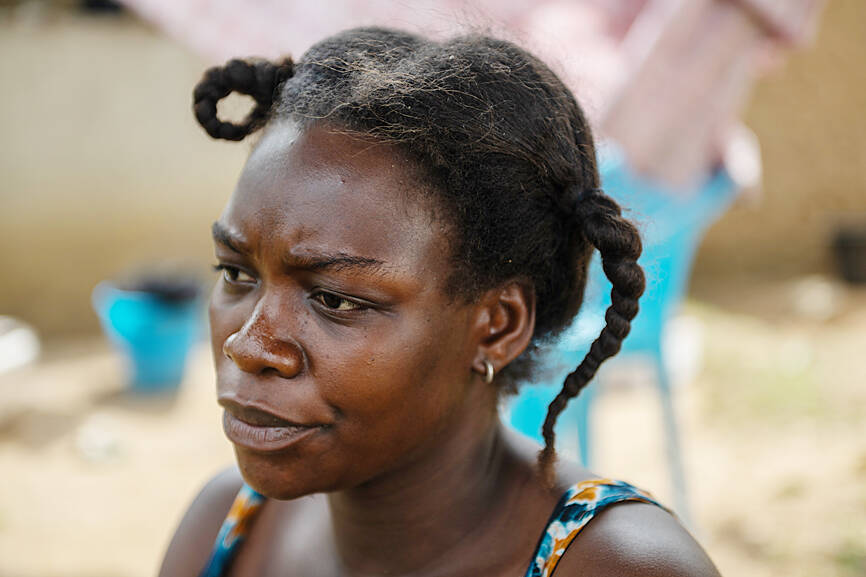
Photo: AP
Maternal mortality across Ituri province doubled as news of the outbreak spread, with about six women dying each week due to childbirth complications, said Noemi Dalmonte, deputy country representative of the UN Population Fund in Congo.
While there was an average of 3.1 maternal deaths weekly this year before the outbreak, that jumped to 5.8 deaths from May 25 to July 19.
Deaths outside health centers have jumped from 9.1 percent to 17.4 percent within the same period, UNFPA data show.
NOT A NEW ISSUE
As Congo battles the fastest-growing Ebola outbreak on record, with more than 1,600 attributed deaths, healthcare and aid workers are warning of a hidden crisis as pregnant women avoid hospitals and the country’s already high maternal mortality rate climbs higher.
It is common for Africans to avoid health centers during public health emergencies because of safety concerns, but “with Ebola, it is stronger because Ebola has a lot of rumors,” Dalmonte said.
With some residents questioning whether Ebola even exists, and health workers in one of Congo’s most remote and volatile regions struggling to respond to the outbreak with scarce supplies, pregnant women have less care than ever.
Congo is one of the world’s most dangerous places to give birth, with some of the world’s highest rates of both childbirths per woman and deaths around childbirth.
Women in the central African nation have almost six children on average. At least 19,000 women died from pregnancy complications in Congo in 2023, according to the latest UN data, tied with India and second only to Nigeria worldwide.
Health workers in the affected province say they have seen a decline in hospital visits as people worry about the risk of infection. This type of Ebola has no approved treatment or vaccine.
Women in need of care also fear being caught up in violence. Ebola treatment centers have been attacked by residents fueled by misinformation or resentment over strict outbreak measures.
At the Benedicte Clinic in Bunia, the number of women registered for prenatal care has dropped from 60 each month to around 10, said medical director Dr. Sonny Mwembo.
Even now, weeks into efforts to battle misinformation, some residents hold mistaken views of the outbreak.
“Right now, if you feel sick and go to the hospital, they say it’s Ebola and they put you in quarantine right away,” said Elodie Yabiri, a Bunia resident who is heavily pregnant. “That’s what scares people.”
Yabiri said she is avoiding hospitals as much as she can.
As long as she still feels her unborn child moving, she said everything is still okay.
LIMITED AID
The outbreak has strained Congo’s already overstretched healthcare system, complicating access for the pregnant women who still come in for prenatal care or birth.
Health facilities in the five affected provinces are directing staff and supplies toward the response, reducing access to essential maternal care services, according to aid groups.
At least 44 infected health workers have died. Many other health workers have walked off their jobs, protesting the lack of payment. At least 12 attacks have been recorded against health facilities and teams since the outbreak was declared in mid-May.
“We are doing everything we can to make the public understand how dangerous this disease is. We are working day and night without being paid,” said Dr. Ghislain Maneba, an epidemiologist and community investigator.
GENDER RISK
Women are at higher risk in this outbreak
Ebola is rare but highly contagious and severe, often fatal. It spreads in the human population through bodily fluids such as vomit, blood or semen, and with contaminated surfaces and materials such as bedding and clothing.
Women are often the primary caregivers when a family member becomes ill. Many are frontline health workers in this outbreak as well.
Journalists covering the outbreak have seen pregnant health workers among the responders.
“It is very important that they know how to protect themselves, that they have the right information,” Dalmonte said.
Pregnant women with Ebola are at an increased risk of problems including miscarriage, the US Centers for Disease Control and Prevention has said in its clinical guidance.
Pregnant women who delay care and avoid health facilities “could die not from Ebola itself but because the care that would have saved them was no longer accessible, trusted or safe,” Dalmonte said.
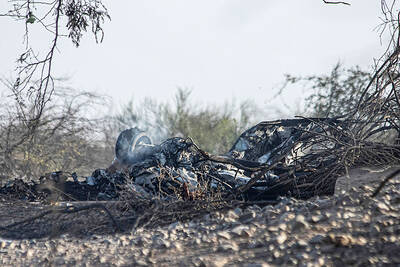
SIGHTSEEING GONE WRONG: The tourists were on their way to view the Nazca Lines’ mysterious geometric shapes and animal outlines, which are best viewed from the air A small plane carrying foreign tourists to view Peru’s famed Nazca Lines archeological site crashed on Saturday, killing all 13 people on board, police said. Seven Italians, two Germans and two Spaniards were killed, along with two crew members, a Peru Ministry of Transportation and Communications spokesperson said. The incident occurred shortly after 1pm after the Cessna 208 Caravan took off from the airport in Pisco, about 240km south of Lima. “We have information that 11 passengers and two crew members have died,” Police Major Jorge Andrade said. “Given the severity of the accident, there are no survivors. We have recovered four

DOUBLING DOWN: Peters’ deputy said that a deal with India risked a ‘butter chicken tsunami,’ and the deputy yelled ‘send the Mexicans home’ in another incident Beijing’s embassy in New Zealand yesterday said it had raised an official complaint after New Zealand Minister of Foreign Affairs Winston Peters told a lawmaker of Chinese descent to “go back to your own country.” Populist NZ First leader Peters was asked by China-born Green Party member Lawrence Xu-Nan (南西): “Are you vaccinated?” during a heated debate about New Zealand’s response to the COVID-19 pandemic on Wednesday. In response, Peters said the lawmaker, who was born in Tianjin, China, but grew up in New Zealand, had “come here five minutes ago.” “Go back to your own country. That’s where they

AI RACE: Chinese military researchers distill US models to create smaller and more secure versions, but an expert said these models have limited capabilities Chinese military researchers have used outputs from leading US artificial intelligence (AI) models developed by OpenAI and Anthropic to train domestic AI systems to advance China’s defense capabilities, according to a Reuters review of more than 80 Chinese academic papers and patents. The previously unreported findings offer a rare glimpse into how military and security-linked institutions in China are leveraging cutting-edge US AI models as a shortcut to developing specialized systems of their own, despite Washington’s efforts to restrict Beijing’s access to advanced chips and other strategic technologies. The documents show widespread use of a technique known as “model distillation,” in which

FOR ACCOUNTABILITY: It plans to travel across the country to hear young people’s concerns, as those ‘at the grassroots face a lot of issues and nobody hears them out’ The Cockroach Janta Party (CJP), which led India’s biggest student protests in years, wants to build a nationwide movement to hold the government accountable for its promises to young people, one of its senior members said. The group is seeking to create a grassroots organization with workers in every district, party spokesperson Saurav Das, 27, said on Friday. There are no immediate plans to register as a political party, Das said. Instead, it plans to travel across the country, hold public assemblies in villages to hear young people’s concerns, and demand greater government accountability on issues including unemployment, inflation and food security. “The


 RSS
RSS