

Bhutan is offering families cash incentives to have more children as the tiny Himalayan kingdom grapples with a nosediving birthrate and a growing exodus of young people seeking opportunities abroad.
Annual births have dropped by more than one-quarter over the past decade, compounding the country’s loss of youngsters to migration.
Bhutanese Prime Minister Tshering Tobgay has repeatedly rung the alarm over the population slump, calling it an “existential” crisis, the state’s Bhutan Broadcasting Service said.

Photo: AFP
“The evidence is unambiguous — Bhutan’s fertility has declined to near or below replacement level,” Tobgay wrote in the introduction to the government’s “Third Child Plus” program launched last month.
The scheme provides monthly payments of US$105 for each third or subsequent child until they turn three.
Civil servant Khandu Wangmo welcomed the incentive, but questioned whether cash payments alone would persuade families to have more children.
“It is a good initiative, because it encourages families to have three or more children,” she said. “However, its impact may be limited if the cost of raising children, housing and childcare remains high.”
Births of a third or more children, the focus of the new scheme, have fallen 27 percent since 2020, the report said.
Bhutan’s fertility rate has fallen to about 1.8 children per woman, below the replacement level, while the share of people aged 65 and older is projected to rise from about 6 percent to 17 percent by 2050, UN estimates showed.
The government fears that falling births, combined with sustained outward migration, would leave too few working-age people to support the economy and an aging population.
More than 71,000 Bhutanese were abroad as of May, with 39,000 — about 55 percent of the overseas population — in Australia, the report said.
“While migration brings remittance benefits, its concentration among prime working and reproductive ages further constrains labor force participation, domestic fertility and long-term population momentum,” the briefing note said.
Experts said the reasons behind smaller families are complex, ranging from rising living and childcare costs to changing priorities.
The UN Population Fund, which supported the program, advocates to “expand choices for everyone” through affordable childcare and supportive social policies, rather than simply raising birth numbers.
Bhutan’s demographic worries mirror trends across much of Asia.
Bhutan once promoted family planning through its “Small Family, Happy Family” campaign launched in 1974, helping drive fertility down over several decades.
The 1990s saw an exodus of more than 100,000 ethnic Nepali-speakers — about one-sixth of Bhutan’s population at the time — as the kingdom tightened immigration policies.
Now, policymakers are seeking to reverse that trend.
Tobgay, addressing parliament last month, cited overseas migration as Bhutan’s “most pressing challenge,” saying that bolstering the economy, creating quality jobs and improving living conditions were essential to slowing the exodus.
Anthropologist Shawn Rowlands said Bhutan’s demographic transition had been unusually swift.
“Given the fact that it has gone from a high of about 6.6 in the 1990s, to about 1.8 today, this is quite a remarkable demographic shift,” he said. “It has been exacerbated by the large-scale trend of young Bhutanese emigrating overseas for work.”
Yet, Rowlands questioned whether a declining population should automatically be viewed as a crisis.
“Higher access to education and job opportunities lead to fewer women having children,” she said. “I do not see that as a bad thing at all.”

US President Donald Trump on Wednesday threatened to take action against the EU if it moves forward with European Commission President Ursula von der Leyen’s proposal to make Canada the bloc’s first associate member. “If they do that, if I think it’s at all a hostile act; I will put very serious tariffs or stop trading with Europe on many things,” Trump told reporters en route to an event in North Carolina, calling the proposal “laughable.” “If it’s a good intention, that’s fine. If it’s a bad intention, we’ll put very heavy tariffs on Europe,” he said. Von der Leyen made the proposal
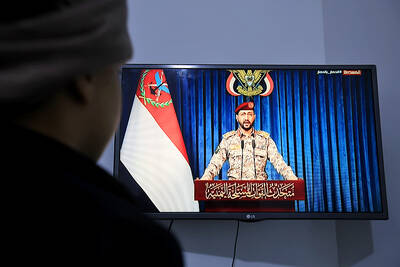
ON THE MOVE: Trump unexpectedly cut short a trip to return to the White House, while the State Department warned Americans to avoid travel to the Middle East The US on Saturday warned that hostilities between Saudi Arabia and Iran-backed Houthis could “escalate rapidly” after a missile attack targeted Riyadh for the first time since the Yemen conflict resumed. US President Donald Trump on Saturday cut short a weekend at Camp David, a secluded presidential complex in rural Maryland, to return unexpectedly to the White House. The White House gave no explanation for the early return, which comes as a new threshold was crossed in the conflict between Saudi Arabia and the Houthis, who control a large part of Yemen and are fighting government forces backed by a coalition led

The US military came close to boarding a Chinese vessel in the Middle East earlier this year based on a flawed intelligence report prepared with the help of artificial intelligence (AI), CNN said on Friday. US intelligence indicated the ship was carrying nuclear weapons-related components, leading US forces to prepare to intercept it, the broadcaster reported, citing four anonymous sources familiar with the incident. However, the operation was called off after officials determined that an AI chatbot used by an analyst had misidentified the material the ship was carrying. The report was “entirely false,” but “almost started a war,” CNN quoted one source

French President Emmanuel Macron today embarks on a rare and symbolic visit to a remote French territory in the North Atlantic, hosting Canadian Prime Minister Mark Carney at a time of growing tensions with Washington. The three-day visit to Saint Pierre and Miquelon, a three-island archipelago of less than 6,000 people just 25km off Newfoundland, would be the first by a French president in more than a decade. The trip to France’s only remaining possession in North America, a vestige of the huge territories Paris once controlled in what is now Canada and the US, carries immense symbolic resonance. Macron insists that US


 RSS