


France has put emergency services and military forces on wildfire alert, restricting public alcohol consumption and canceling some outdoor sports events to cope with a heat wave unfurling across parts of Europe.
About one-third of France was under the national weather service’s heat red alert yesterday and temperatures were high nationwide, expected to reach 40°C yesterday in some areas, in a country where air-conditioning is not widespread. The forecast for today is even hotter.
The Eiffel Tower and other Paris venues set up misting stations to cool crowds, among a raft of measures announced by national and local authorities to minimize risks.

Photo: AFP
More than 200,000 people across Europe died from heat-related causes over the past four years, and most of the fatalities were preventable, the WHO’s Europe office said this month.
More above-average temperatures are expected this summer, which can cause heat exhaustion and life-threatening heat stroke.
WHO’s Europe office called for countries and institutions to implement heat plans, such as opening cooling centers, or introducing breaks or flexible shifts that enable workers to stay out of the midday sun.
France’s annual Music Day yesterday was a particular concern for authorities. The nationwide summer solstice celebration involves thousands of concerts in village squares, rave venues and Paris clubs, bringing communities together and increasingly drawing international visitors.
The French government ordered organizers of music day events to limit alcohol use to “preserve emergency services and allow medics to concentrate on taking care of the most vulnerable.”
Authorities are worried about people living in the baking streets, and older people in nursing homes or isolated in their homes. About 15,000 older people died in a 2003 heat wave that became a reckoning for France.
The French government on Saturday announced reinforced wildfire readiness and ordered tightened surveillance of water supplies to France’s many nuclear reactors.
Schools would only be closed as a last recourse, the government said, though end-of-year exams held in the afternoons might be delayed until the following morning or otherwise rearranged.
French Prime Minister Sebastien Lecornu on Saturday convened a government heat crisis meeting and was planning another one on Sunday in the face of what the national weather service called a “widespread, long-lasting and intense” hot spell.
Lecornu ordered government ministers to plan for better adapting France to heat waves in the future — including “via air-conditioning, if necessary.”
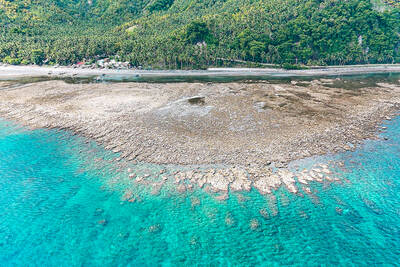
Arsenio Butil Jr fell to his knees and began to pray when last week’s deadly magnitude 7.8 earthquake began shaking his home on the coast of the southern Philippines. When he opened his eyes, he saw a once-familiar shoreline changing in real time, with swathes of previously submerged coral suddenly pushing above the waterline. The June 8 quake, driven by a shifting of the nearby Cotabato Trench, toppled buildings, triggered landslides and killed at least 76 people on the southern island of Mindanao. The tectonic forces at work also thrust chunks of the island’s coastline upward in a phenomenon known as “coastal uplift,”

Voters in Switzerland yesterday cast their ballots on an initiative championed by the top right-wing party to cap the Alpine country’s population at 10 million. As of press time last night, early results showed that Swiss voters were leaning against it. The populist Swiss People’s Party, which has the most seats in parliament, has stirred up and fostered anti-migration sentiment over the years, notably about an influx of workers from the neighboring EU. Critics called the bid a self-inflicted wound, saying the boom in migration over the past generation has brought foreign labor and skills to sectors such as healthcare, finance, pharmaceuticals
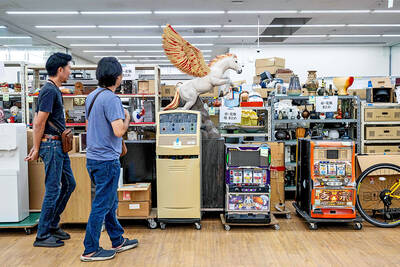
YUCK OR YUM? While it is difficult to sell second-hand goods that are more than seven years old in Japan, they are still popular in foreign markets, an executive said Under a scorching sun in a Bangkok suburb, a whistle blew, and shouts filled the air as dozens of shoppers rushed into a warehouse bearing the sign “Japanese Second-Hand Store.” From bags and bicycles to surfboards and suitcases, the Japanese second-hand market is booming, with quality-conscious buyers in other Asian countries increasingly tapping into the circular economy trend. “What is considered garbage for them can still be useful in Thailand,” said 36-year-old Lookpoo Sathitpanyapon, who runs an online store selling toy keychains. “That bag, that bag,” one shopper shouted while racing through the warehouse, filled with everything from colorful toys
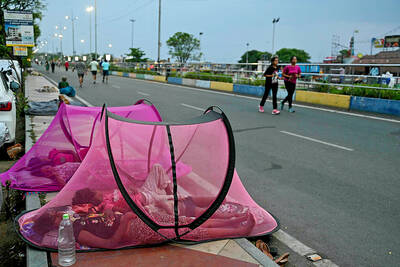
Growing up in Tahiti, Anna-Bella Failloux saw first-hand the threat posed by mosquitoes: Nearly one-third of adults on the picturesque island once had swollen limbs from elephantiasis caused by their bites. She has since dedicated her life to studying mosquitoes and the diseases they transmit — a concern that looms ever larger as climate change expands the area where the insects roam. “You have to accept being bitten by a mosquito from time to time,” the 63-year-old entomologist at France’s Pasteur Institute said. “But we have to avoid too many people getting sick and dying from the infections,” Failloux said, as she observed


 RSS
RSS