


Artificial intelligence (AI) helped spot breast cancers earlier and was linked to fewer dangerous cases emerging between routine screenings in a Swedish trial of more than 100,000 women.
The findings suggested AI could improve screening by reducing the number of breast cancers that are missed and diagnosed later, when they are often more aggressive and harder to treat.
Interval cancers — those diagnosed after a woman has received a clear screening result and before her next routine test — are “a very good measure on how effective the screening method is,” said lead author Kristina Lang, a breast radiologist and clinical researcher at Lund University. “Since it takes a long time to evaluate breast cancer mortality, interval cancer rate has been used as a surrogate measure.”
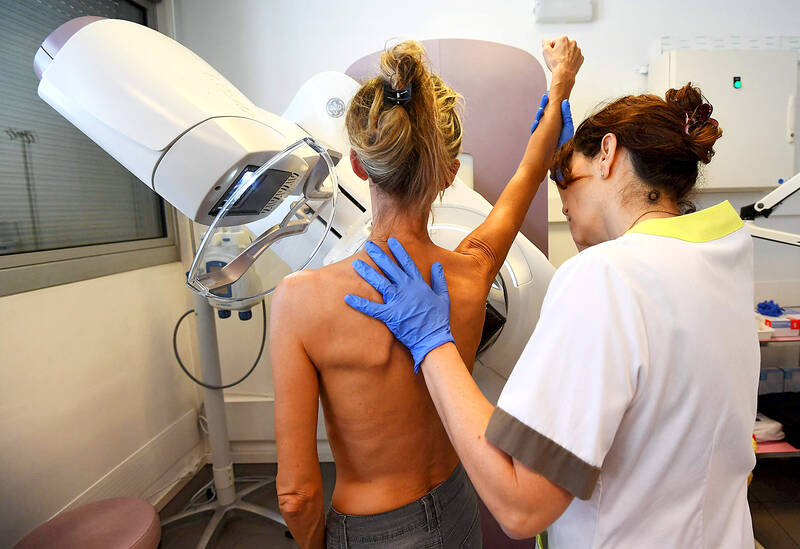
Photo: AFP
The trial is the first randomized controlled study to examine how AI affects breast cancer screening outcomes and is the largest test of AI in cancer screening to date. Earlier results from the same project showed the technology could increase cancer detection while reducing the workload for radiologists.
What had remained unclear was whether those gains meant fewer cancers would appear later, after screening appeared to show no disease.
The results come from a trial embedded in Sweden’s national breast cancer screening program. About 106,000 women were assigned to either standard screening, in which mammograms were read independently by two radiologists, or to screening supported by AI.
In the AI group, software reviewed images alongside radiologists, flagging higher-risk scans for extra scrutiny while allowing lower-risk images to be read once instead of twice.
Over the two years following screening, fewer women in the AI group were diagnosed with breast cancer after a clear scan. The rate of such cases was about 12 percent lower than among women whose mammograms were read without AI.
Women screened with AI support were also less likely to be diagnosed later with invasive tumors or aggressive cancer subtypes, the researchers found.
Importantly, using AI did not worsen screening performance or increase false alarms. The rate of false positives was similar in both groups.
“Our study does not support replacing healthcare professionals with AI,” said Jessie Gommers, a doctoral candidate at Radboud University Medical Center and first author of the paper. “However, our results potentially justify using AI to ease the substantial pressure on radiologists’ workloads.”
Whether AI-supported screening is worth the cost remains an open question. Previous modeling from Norway suggested the technology could be cost-effective if it helped prevent even a small share of cancers from being missed.
The Swedish trial showed a larger drop than that benchmark, although a full economic analysis of the data is still under way, Lang said.
The researchers said the study has limitations. It was conducted within Sweden’s screening program, using a single type of mammography machine and one AI system, and involved mostly experienced radiologists. The results would need to be confirmed in other countries and health systems, they said.
Further follow-up would also be needed to understand the long-term effects of AI-supported screening, including whether earlier detection reduces the need for aggressive treatment over time.
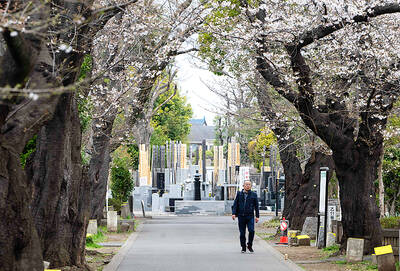
ROCKY RELATIONS: The figures on residents come as Chinese tourist numbers drop following Beijing’s warnings to avoid traveling to Japan The number of Chinese residents in Japan has continued to rise, even as ties between the two countries have become increasingly fractious, data released on Friday showed. As of the end of December last year, the number of Chinese residents had increased by 6.5 percent from the previous year to 930,428. Chinese people accounted for 22.6 percent of all foreign residents in Japan, making them by far the largest group, Japanese Ministry of Justice data showed. Beijing has criticized Tokyo in increasingly strident terms since Japanese Prime Minister Sanae Takaichi last year suggested that a military conflict around Taiwan could

Germany is considering Australia’s Ghost Bat robot fighter as it looks to select a combat drone to modernize its air force, German Minister of Defense Boris Pistorius said yesterday. Germany has said it wants to field hundreds of uncrewed fighter jets by 2029, and would make a decision soon as it considers a range of German, European and US projects developing so-called “collaborative combat aircraft.” Australia has said it will integrate the Ghost Bat, jointly developed by Boeing Australia and the Royal Australian Air Force, into its military after a successful weapons test last year. After inspecting the Ghost Bat in Queensland yesterday,
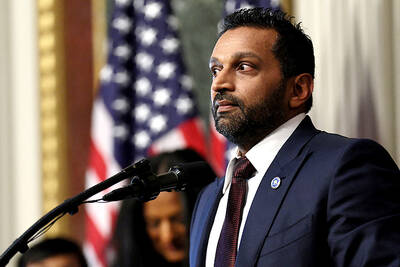
A pro-Iran hacking group claimed to breach FBI Director Kash Patel’s personal e-mail inbox and posted some of the contents online. The e-mails provided by the hacking group include travel details, correspondence with leasing agents in Washington and global entry, and loyalty account numbers. The e-mail address the hackers claim to have compromised has been previously tied to Patel’s personal details, and the leaked e-mails contain photos of Patel and others, in addition to correspondence with family members and colleagues. “The FBI is aware of malicious actors targeting Director Patel’s personal email information,” the agency said in a statement on
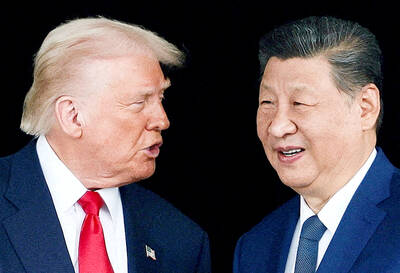
RIVALRY: ‘We know that these are merely symbolic investigations initiated by China, which is in fact the world’s most profligate disrupter of supply chains,’ a US official said China has started a pair of investigations into US trade practices, retaliating against similar probes by US President Donald Trump’s administration as the superpowers stake out positions before an expected presidential summit in May. The move, announced by the Chinese Ministry of Commerce on Friday, is a direct mirror of steps Trump took to revive his tariff agenda after the US Supreme Court last month struck down some of his duties. “China expresses its strong dissatisfaction and firm opposition to these actions,” a ministry spokesperson said in a statement, referring to the so-called Section 301 investigations initiated on March 11.


 RSS
RSS