


Between the 1930s and the 1970s, German ethnologist Hans Himmelheber journeyed across the Ivory Coast, amassing a collection of ritual objects.
Today, about 100 pieces he bought from local artists — along with 15,000 photographs and a dozen films — have been handed back to their country of origin.
Masterpieces from the Senufo, Dan, Baoule and Guro peoples, as well as everyday objects, are now on show in the cities of Abidjan and Man.
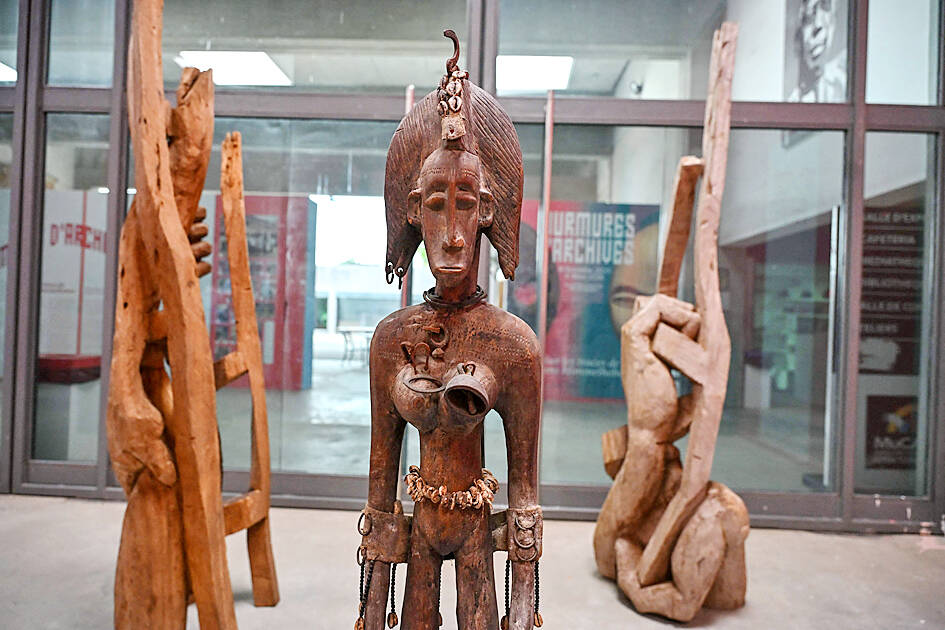
Photo: AFP
Ivorian schoolchildren crowd around masks, finely carved turtles and ceremonial spoons once admired by visitors of Zurich’s Rietberg Museum.
They have flocked to the Himmelheber archive at the Adama Toungara museum in Abidjan.
Running until March 8, the exhibit retraces the journeys made by the researcher, who died in 2003.
It also features 24 of the 107 returned objects, alongside thousands of digitized photos and films shot by Himmelheber.
Among the highlights: a striking “wabele” hood mask and a Dan runner’s mask with delicate feminine features.
The return of cultural artifacts taken from former colonies in Africa and elsewhere has become a sensitive issue, with museums, institutions and collectors in Europe and the US facing pressure to give them back.
Although Himmelheber “always bought his pieces... we cannot ignore the colonial context that sometimes forced people to sell,” Rietberg Museum Africa and Oceania collections head Michaela Oberhofer said.
Although returns of African cultural heritage are increasing, experts said such gestures remain rare.
“This donation is key to diversifying our collections,” said Francis Tagro, director of Abidjan’s Museum of Civilizations, set to reopen this year after renovations.
Switzerland and Ivory Coast last year signed a deal on cultural asset returns.
Alongside the restitution, research projects and workshops were funded.
Himmelheber’s photos and films were screened in 16 Dan villages he often visited, shown to younger generations.
“Some people recognized their ancestors — it was very moving,” Oberhofer said.
A meticulous researcher, Himmelheber documented artists’ techniques and styles during his travels.
“African art is anonymized,” said his son, Eberhard Fischer. “But my father treated artists as seriously as Picasso or Paul Klee.”
Oberhofer said Himmelheber’s trips also revealed ornate loom pulleys and pottery, challenging stereotypes that African art is “limited to masks and figures.”
Ivory Coast now awaits the return of the Djidji Ayokwe “talking drum,” which French colonial troops took in 1916.
Its return was approved by the French parliament in July last year.

MONEY GRAB: People were rushing to collect bills scattered on the ground after the plane transporting money crashed, which an official said hindered rescue efforts A cargo plane carrying money on Friday crashed near Bolivia’s capital, damaging about a dozen vehicles on highway, scattering bills on the ground and leaving at least 15 people dead and others injured, an official said. Bolivian Minister of Defense Marcelo Salinas said the Hercules C-130 plane was transporting newly printed Bolivian currency when it “landed and veered off the runway” at an airport in El Alto, a city adjacent to La Paz, before ending up in a nearby field. Firefighters managed to put out the flames that engulfed the aircraft. Fire chief Pavel Tovar said at least 15 people died, but

LIKE FATHER, LIKE DAUGHTER: By showing Ju-ae’s ability to handle a weapon, the photos ‘suggest she is indeed receiving training as a successor,’ an academic said North Korea on Saturday released a rare image of leader Kim Jong-un’s teenage daughter firing a rifle at a shooting range, adding to speculation that she is being groomed as his successor. Kim’s daughter, Ju-ae, has long been seen as the next in line to rule the secretive, nuclear-armed state, and took part in a string of recent high-profile outings, including last week’s military parade marking the closing stages of North Korea’s key party congress. Pyongyang’s official Korean Central News Agency (KCNA) released a photo of Ju-ae shooting a rifle at an outdoor shooting range, peering through a rifle scope

South Korea would soon no longer be one of the few countries where Google Maps does not work properly, after its security-conscious government reversed a two-decade stance to approve the export of high-precision map data to overseas servers. The approval was made “on the condition that strict security requirements are met,” the South Korean Ministry of Land, Infrastructure and Transport said. Those conditions include blurring military and other sensitive security-related facilities, as well as restricting longitude and latitude coordinates for South Korean territory on products such as Google Maps and Google Earth, it said. The decision is expected to hurt Naver and Kakao
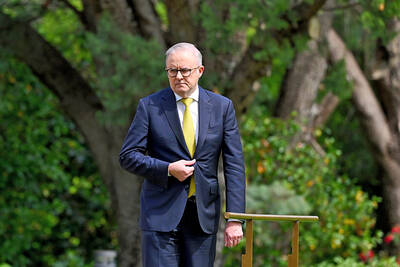
Australian Prime Minister Anthony Albanese yesterday said he did not take his security for granted, after he was evacuated from his residence for several hours following a bomb threat sent to a Chinese dance group. Albanese was evacuated from his Canberra residence late on Tuesday following the threat, and returned a few hours later after nothing suspicious was found. The bomb scare was among several e-mails threatening Albanese sent to a representative of Shen Yun, a classical Chinese dance troupe banned in China that is due to perform in Australia this month, a spokesperson for the group said in a statement. The e-mail


 RSS
RSS