


Mattel has launched its first Barbie doll with type 1 diabetes (T1D) in a bid to foster a greater sense of inclusion and empathy among children, a company vice president said on Tuesday.
The new Barbie has been designed in partnership with the global type 1 diabetes not-for-profit Breakthrough T1D.
“Introducing a Barbie doll with type 1 diabetes marks an important step in our commitment to inclusivity and representation,” said Krista Berger, senior vice president of Barbie and global head of dolls. “Barbie helps shape children’s early perceptions of the world, and by reflecting medical conditions like T1D, we ensure more kids can see themselves in the stories they imagine and the dolls they love.”
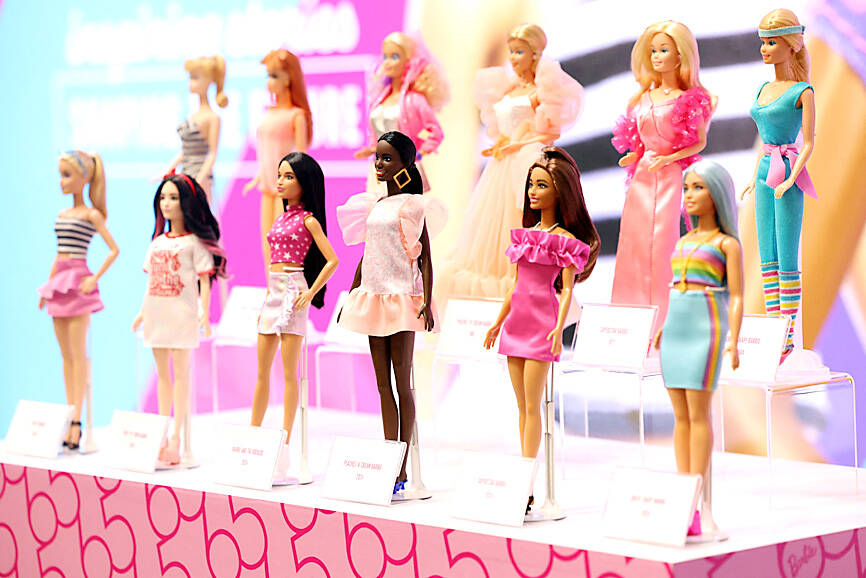
Photo: Reuters
Type 1 diabetes is an autoimmune condition where the body attacks and destroys the cells in the pancreas that make insulin. It is often diagnosed in childhood, and people with the condition have to monitor their glucose levels and take insulin every day.
The new doll wears a CGM — a small device that continuously measures a person’s blood sugar — on her arm to help manage her condition.
To keep her CGM in place, she uses a pink heart-shaped medical tape along with a phone that displays an app to help track her blood sugar levels throughout the day.
She also has an insulin pump, a small, wearable medical device that allows for automated insulin dosing as needed, attached to her waist.
The doll is wearing a blue polka dot top and matching skirt inspired by global diabetes awareness symbols.
Alongside the new model, the company also launched a bespoke Lila Moss doll, complete with the CGM paraphernalia.
Moss, daughter of supermodel Kate Moss, was diagnosed with type 1 diabetes when she was 12 years old.
For several years Mattel has aimed to diversify its models, particularly those of the iconic doll Barbie, after having offered for decades — barring a few exceptions — a young, lithe blonde white woman with high heels.
Since 2016 the California company notably launched “curvy,” “petite” and “tall” versions of Barbie.

An American scientist convicted of lying to US authorities about payments from China while he was at Harvard University has rebuilt his research lab in Shenzhen, China, to pursue technology the Chinese government has identified as a national priority: embedding electronics into the human brain. Charles Lieber, 67, is among the world’s leading researchers in brain-computer interfaces. The technology has shown promise in treating conditions such as amyotrophic lateral sclerosis and restoring movement in paralyzed people. It also has potential military applications: Scientists at the Chinese People’s Liberation Army have investigated brain interfaces as a way to engineer super soldiers by boosting
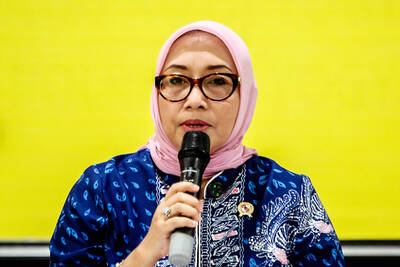
Indonesian police have arrested 13 people after shocking images of alleged abuse against small children at a daycare center went viral, sparking outrage across the nation, officials said on Monday. Police on Friday last week raided Little Aresha, a daycare center in Yogyakarta on Java island, following a report from a former employee. CCTV footage circulating on social media showed children, most younger than two, lying on the floor wearing only diapers, their hands and feet bound with rags. The police have confirmed that the footage is authentic. Police said they also found 20 children crammed into a room just 3m by 3m. “So
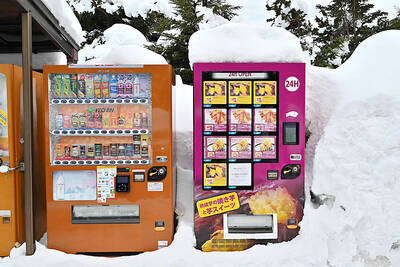
From post offices and parks to stations and even the summit of Mount Fuji, Japan’s vending machines are ubiquitous, but with the rapid pace of inflation cooling demand for their drinks, operators are being forced to rethink the business. Last month beverage giant DyDo Group Holdings announced it would remove about 20,000 vending machines — about 7 percent of their stock nationwide — by January next year, to “reconstruct a profitable network.” Pokka Sapporo Food & Beverage, based in Nagoya, also said last month it would sell its 40,000-machine operation to Osaka-based Lifedrink Co. “The strength of the vending machine
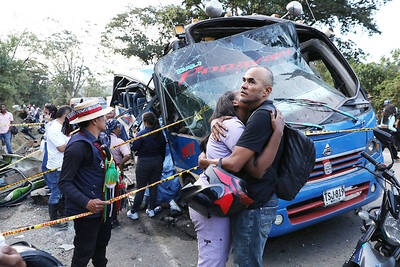
A highway bomb attack in a restive region of southwestern Colombia on Saturday killed 14 people and injured at least 38, the latest spate of violence ahead of next month’s presidential election. Authorities blamed the attack in the Cauca department — a conflict-ridden, coca-growing region — on dissidents of the now-disbanded FARC guerrilla army, who have been sowing violence across the country. “Those who carried out this attack ... are terrorists, fascists and drug traffickers,” Colombian President Gustavo Petro said on social media. “I want our very best soldiers to confront them,” he added. The leftist leader blamed the bombing


 RSS
RSS