


Only seven nations met WHO air quality standards last year, data showed yesterday, as researchers warned that the war on smog would only get harder after the US shut down its global monitoring efforts.
Chad and Bangladesh were the world’s most polluted nations last year, with average smog levels more than 15 times higher than WHO guidelines, according to data compiled by Swiss air quality monitoring firm IQAir.
Only Australia, New Zealand, the Bahamas, Barbados, Grenada, Estonia and Iceland made the grade, IQAir said.

Photo: AP
Significant data gaps, especially in Asia and Africa, cloud the worldwide picture, and many developing nations have relied on air quality sensors mounted on US embassy and consulate buildings to track their smog levels.
However, the US Department of State has ended the scheme, citing budget constraints, with more than 17 years of data removed last week from the US government’s official air quality monitoring site, airnow.gov, including readings collected in Chad.
“Most countries have a few other data sources, but it’s going to impact Africa significantly, because oftentimes these are the only sources of publicly available real-time air quality monitoring data,” IQAir air quality science manager Christi Chester-Schroeder said.
Climate change is playing an increasing role in driving up the amount of pollution, Chester-Schroeder said, with higher temperatures causing fiercer and lengthier forest fires that swept through parts of Southeast Asia and South America.
Christa Hasenkopf, director of the Clean Air Program at the University of Chicago’s Energy Policy Institute, said at least 34 countries would lose access to reliable pollution data after the US program was closed.
The state department scheme improved air quality in the cities where the monitors were placed, boosting life expectancy and even reducing hazard allowances for US diplomats, meaning that it paid for itself, Hasenkopf said.
It “is a giant blow to air quality efforts worldwide,” she said.
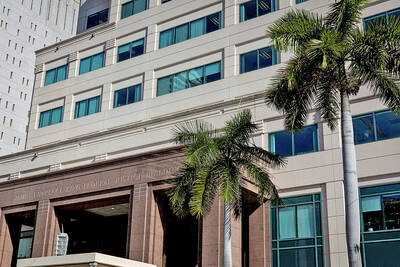
‘GROSS NEGLIGENCE?’ Despite a spleen typically being significantly smaller than a liver, the surgeon said he believed Bryan’s spleen was ‘double the size of what is normal’ A Florida surgeon who is facing criminal charges after allegedly removing a patient’s liver instead of his spleen has said he is “forever traumatized” by that person’s death. In a deposition from November last year that was recently obtained by NBC, 44-year-old Thomas Shaknovsky described the death of 70-year-old William Bryan as an “incredibly unfortunate event that I regret deeply.” Bryan died after the botched surgery; and last month, a grand jury in Tallahassee indicted Shaknovsky on a charge of manslaughter. “I’m forever traumatized by it and hurt by it,” Shaknovsky added, also saying that wrong-site surgeries can happen “during

Former Chinese ministers of national defense Wei Fenghe(魏鳳和) and Li Shangfu (李尚福) were both sentenced to death with a two-year reprieve over graft charges, state news agency Xinhua reported on Thursday, underscoring the severity of the purge in the military. The armed forces have been one of the main targets of a broad corruption crackdown ordered by Chinese President Xi Jinping (習近平) after coming to power in 2012. The purges reached the elite Rocket Force, which oversees nuclear weapons as well as conventional missiles, in 2023. Earlier this year they escalated further, resulting in the removal of the top general in

The Philippine Coast Guard yesterday said it deployed aircraft to issue radio warnings to a Chinese research ship in a disputed area of the South China Sea “swarming” with vessels from Beijing’s so-called maritime militia. The research vessel Xiang Yang Hong 33 (向陽紅33), which is capable of supporting submersible craft, was operating near a reef in the contested Spratly Islands (Nansha Islands, 南沙群島), which Taiwan also claims, the Philippine Coast Guard said. The Chinese ship was deploying a service boat toward the Spratly’s Iroquois Reef on Wednesday when it was spotted by a coast guard plane, “confirming ongoing unauthorized [marine scientific research]

New Zealand is open to expanding its frigate fleet beyond its current two vessels, with New Zealand Minister of Defence Chris Penk saying “no options are off the table” as the government weighs buying new warships from Japan or the UK. The government yesterday said it is looking to replace its two aging Anzac-class frigates, which were both commissioned almost 30 years ago. The UK’s Type 31 and Japan’s Mogami-class warships are the options under consideration. Speaking in an interview, Penk said there is potential to increase the number of frigates the nation purchases. “We need a certain amount of capability as a


 RSS
RSS