


Plummeting immunization rates, outbreaks of once-vanquished childhood diseases and the appointment of a vocal vaccine skeptic as US secretary of health and human services have experts sounding the alarm about a looming public health crisis.
Since the start of the year, nearly 100 cases of measles have been reported in Texas and neighboring New Mexico, raising fears that the highly contagious and potentially serious illness is making a comeback.
“The measles is the canary in the coal mine,” warned leading pediatrician and immunologist Paul Offit, highlighting the decline in vaccination rates since the COVID-19 pandemic.

Photo: AP
Amid growing distrust of health authorities and pharmaceutical companies, more parents are opting not to vaccinate their children.
The proportion of preschool-aged children vaccinated against measles — which is mandatory — dropped nationally from 95 percent in 2019 to less than 93 percent in 2023. Some regions show even steeper declines, such as Idaho, where rate fell below 80 percent.
Experts warn that this trend could worsen under the leadership of newly appointed US Secretary of Health and Human Services Robert Kennedy Jr, who has repeatedly questioned vaccine safety and promoted misinformation.
“It is a disaster waiting to happen, and it will happen,” Offit said.
In Louisiana, whooping cough has resulted in the deaths of two children, according to local media. As with measles, experts attribute the resurgence to vaccine exemptions.
“This is already happening. Our immunization rates are already low enough that vulnerable children are getting these diseases,” said Jennifer Herricks, a scientist and board member of the nonprofit Louisiana Families for Vaccines.
Across much of the US, parents can opt out of mandatory vaccinations for reasons beyond medical contraindications. Many states allow exemptions on religious grounds, while others permit “philosophical” objections — or both.
“In Texas, you can just pretty much say I object,” Terri Burke of the Texas-based Immunization Partnership said.
The measles cases have been reported in a Texas county with a large Mennonite population — a conservative Christian sect. The situation is reminiscent of the 2019 measles outbreak, which saw more than 1,200 cases, primarily among unvaccinated Orthodox Jewish communities in New York and New Jersey.
While the reasons behind these exemptions vary — ranging from religious beliefs and fear of side effects to distrust in health authorities or difficulties accessing healthcare — there is an undeniable trend linked to a “pandemic backlash,” said Richard Hughes, a health policy expert at George Washington University.
Mixed messaging on masking, frustration over lockdowns and COVID-19 vaccine mandates — some of which remained in place long after it was clear the shots did not fully prevent transmission — have eroded public trust, he said.
“We might have done better by just continuing to encourage people to be vaccinated than requiring it,” Hughes said.
Any missteps were amplified by an overwhelming spread of misinformation, which thrived on social media and in podcasts.
These factors have turned vaccinations into a flashpoint in the culture wars in the US. Across the nation, lawmakers are introducing bills aimed at either enshrining vaccine mandates at the local level, banning certain types of vaccines or expanding exemptions.
The number of such bills has more than doubled compared with pre-pandemic levels, said Herricks, who tracks the issue nationally.
Notable shifts include Montana’s decision to halt vaccination statistics and Louisiana’s cessation of vaccine promotion — both signs of the growing marginalization of a practice that was once a cornerstone of public health policy.
Americans might soon face a harsh reality check, Offit said.
Before the measles vaccine was introduced in 1963, the disease sickened an estimated 3 to 4 million Americans annually and killed hundreds. It was declared eliminated in the US by 2000, thanks to widespread immunization.
“People don’t realize how sick and dead that virus can make you,” Offit said.
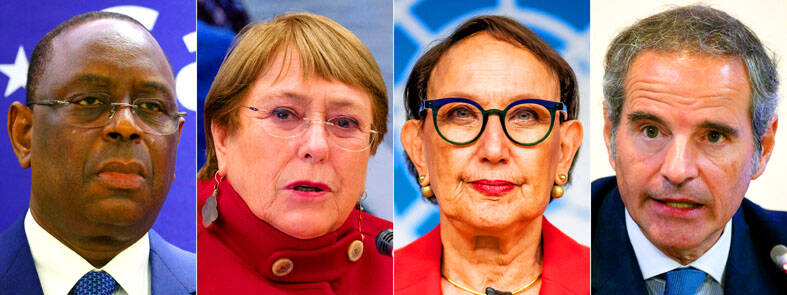
Four contenders are squaring up to succeed Antonio Guterres as secretary-general of the UN, which faces unprecedented global instability, wars and its own crushing budget crisis. Chile’s Michelle Bachelet, Argentina’s Rafael Grossi, Costa Rica’s Rebeca Grynspan and Senegal’s Macky Sall are each to face grillings by 193 member states and non-governmental organizations for three hours today and tomorrow. It is only the second time the UN has held a public question-and-answer, a format created in 2016 to boost transparency. Ultimately the five permanent members of the UN’s top body, the Security Council, hold the power, wielding vetoes over who leads the

A humanoid robot that won a half-marathon race for robots in Beijing on Sunday ran faster than the human world record in a show of China’s technological leaps. The winner from Honor, a Chinese smartphone maker, completed the 21km race in 50 minutes and 26 seconds, said a WeChat post by the Beijing Economic-Technological Development Area, also known as Beijing E-Town, where the race began. That was faster than the human world record holder, Ugandan Jacob Kiplimo, who finished the same distance in about 57 minutes in March at the Lisbon road race. The performance by the robot marked a significant step forward

An earthquake registering a preliminary magnitude of 7.7 off northern Japan on Monday prompted a short-lived tsunami alert and the advisory of a higher risk of a possible mega-quake for coastal areas there. The Cabinet Office and the Japan Meteorological Agency said there was a 1% chance for a mega-quake, compared to a 0.1% chance during normal times, in the next week or so following the powerful quake near the Chishima and Japan trenches. Officials said the advisory was not a quake prediction but urged residents in 182 towns along the northeastern coasts to raise their preparedness while continuing their daily lives. Prime
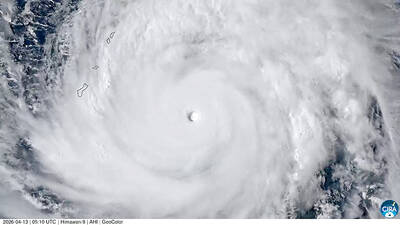
HAZARDOUS CONDITION: The typhoon’s sheer size, with winds extending 443km from its center, slowed down the ability of responders to help communities, an official said The US Coast Guard was searching for six people after losing contact with their disabled boat off the coast of Guam following Typhoon Sinlaku. The crew of the 44m dry cargo vessel, the US-registered Mariana, on Wednesday notified the coast guard that the boat had lost its starboard engine and needed assistance, Petty Officer 3rd Class Avery Tibbets said yesterday. The coast guard set up a one-hour communication schedule with the vessel, but lost contact on Thursday. A Coast Guard HC-130 Hercules aircraft was launched to search for the six people on board, but it had to return to Guam because of


 RSS
RSS