


Groups representing some of South Africa’s white minority on Saturday responded to a plan by US President Donald Trump to offer them refugee status and resettlement in the US by saying: Thanks, but no thanks.
The plan was detailed in an executive order Trump signed on Friday that stopped all aid and financial assistance to South Africa as punishment for what the Trump administration said were “rights violations” by the government against some of its white citizens.
The Trump administration accused the South African government of allowing violent attacks on white Afrikaner farmers and introducing a land expropriation law that enables it to “seize ethnic minority Afrikaners’ agricultural property without compensation.”

Photo: Reuters
The South African government has denied there are any concerted attacks on white farmers and has said that Trump’s description of the new land law is full of misinformation and distortions.
Whites make up about 7 percent of South Africa’s population of 62 million.
On Saturday, two of the most prominent groups representing Afrikaners said they would not be taking up Trump’s offer of resettlement in the US.
“Our members work here, and want to stay here, and they are going to stay here,” said Dirk Hermann, chief executive of the Afrikaner trade union Solidarity, which says it represents around 2 million people. “We are committed to build a future here. We are not going anywhere.”
At the same news conference, Kallie Kriel, the CEO of the Afrikaner lobby group AfriForum, also spoke out.
“We have to state categorically: We don’t want to move elsewhere,” he said.
Trump’s move to sanction South Africa, a key US trading partner in the region, came after he and his South African-born adviser Elon Musk have accused its black leadership of having an anti-white stance.
However, the portrayal of Afrikaners as a downtrodden group that needed to be saved would surprise most South Africans.
“It is ironic that the executive order makes provision for refugee status in the US for a group in South Africa that remains amongst the most economically privileged,” the South African Department of International Relations and Cooperation said.
It also criticized the Trump administration’s own policies, saying the focus on Afrikaners came “while vulnerable people in the US from other parts of the world are being deported and denied asylum despite real hardship.”
There was “a campaign of misinformation and propaganda” aimed at South Africa, the ministry said.
Despite being a small minority, whites own about 70 percent of South Africa’s private farmland. A study in 2021 by the South Africa Human Rights Commission said that 1 percent of whites were living in poverty compared with 64 percent of blacks.
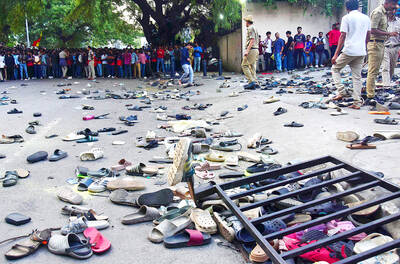
Packed crowds in India celebrating their cricket team’s victory ended in a deadly stampede on Wednesday, with 11 mainly young fans crushed to death, the local state’s chief minister said. Joyous cricket fans had come out to celebrate and welcome home their heroes, Royal Challengers Bengaluru, after they beat Punjab Kings in a roller-coaster Indian Premier League (IPL) cricket final on Tuesday night. However, the euphoria of the vast crowds in the southern tech city of Bengaluru ended in disaster, with Indian Prime Minister Narendra calling it “absolutely heartrending.” Karnataka Chief Minister Siddaramaiah said most of the deceased are young, with 11 dead
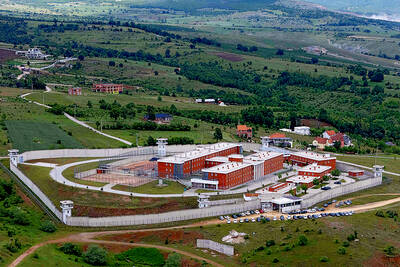
By 2027, Denmark would relocate its foreign convicts to a prison in Kosovo under a 200-million-euro (US$228.6 million) agreement that has raised concerns among non-governmental organizations (NGOs) and residents, but which could serve as a model for the rest of the EU. The agreement, reached in 2022 and ratified by Kosovar lawmakers last year, provides for the reception of up to 300 foreign prisoners sentenced in Denmark. They must not have been convicted of terrorism or war crimes, or have a mental condition or terminal disease. Once their sentence is completed in Kosovan, they would be deported to their home country. In

Brazil, the world’s largest Roman Catholic country, saw its Catholic population decline further in 2022, while evangelical Christians and those with no religion continued to rise, census data released on Friday by the Brazilian Institute of Geography and Statistics (IBGE) showed. The census indicated that Brazil had 100.2 million Roman Catholics in 2022, accounting for 56.7 percent of the population, down from 65.1 percent or 105.4 million recorded in the 2010 census. Meanwhile, the share of evangelical Christians rose to 26.9 percent last year, up from 21.6 percent in 2010, adding 12 million followers to reach 47.4 million — the highest figure

LOST CONTACT: The mission carried payloads from Japan, the US and Taiwan’s National Central University, including a deep space radiation probe, ispace said Japanese company ispace said its uncrewed moon lander likely crashed onto the moon’s surface during its lunar touchdown attempt yesterday, marking another failure two years after its unsuccessful inaugural mission. Tokyo-based ispace had hoped to join US firms Intuitive Machines and Firefly Aerospace as companies that have accomplished commercial landings amid a global race for the moon, which includes state-run missions from China and India. A successful mission would have made ispace the first company outside the US to achieve a moon landing. Resilience, ispace’s second lunar lander, could not decelerate fast enough as it approached the moon, and the company has


 RSS
RSS