


When the mother of one of the Thai hostages held in the Gaza Strip for more than a year caught sight of her son on a Facebook livestream after his release on Thursday, he had changed so much that she did not recognize him at first.
Surasak Rumnao, 32, who was kidnapped from the southern Israeli town of Yesha on Oct. 7, 2023, looked pale and puffy, his mother, Khammee Lamnao, said.
“I was so happy that I could not eat anything. His father brought some food to me, but I did not want to eat at all,” Khammee said on a video call after the release of her son.
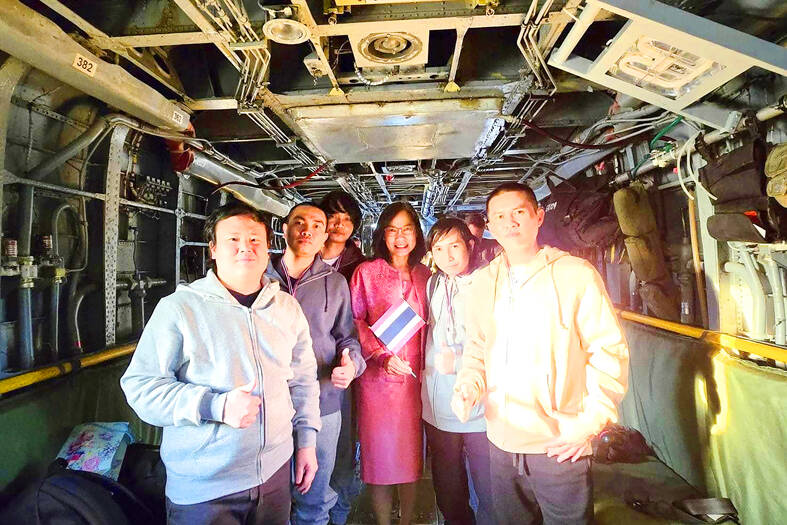
Photo: Royal Thai Embassy in Tel Aviv via AP
Dozens of Israeli doctors, nurses and representatives from Israel and Thailand waved flags, sang and cheered on Thursday as the five Thai hostages stepped off a military helicopter and entered a hospital outside Tel Aviv, where they were to spend a few days undergoing medical tests and recuperating.
Three Israelis were also released, and Israel released 110 Palestinian prisoners in the exchange.
Besides Sarusak, Watchara Sriaoun, 33, Sathian Suwannakham, 35, Pongsak Thaenna, 36, and Bannawat Saethao, 27, were released in Thursday’s exchange.
Hamas militants kidnapped 31 Thai nationals during the assault on southern Israel, making them the largest group of foreigners held captive. Many of the Thai agricultural workers lived in compounds on the outskirts of southern Israeli kibbutzim and towns, and Hamas militants overran those places first.
During an earlier ceasefire in November 2023, 23 Thai nationals were released in a deal negotiated between Thailand and Hamas, with assistance from Qatar and Iran.
Forty-six Thais have been killed during the conflict, including two Thai citizens who were killed on Oct. 7, 2023, and their bodies taken into Gaza, the Thai Ministry of Foreign Affairs said.
Osnat Levzion-Korach, the director of Shamir Medical Center outside Tel Aviv where the five were taken, said they were in “fair” health, although most were held underground and were not exposed to sunlight for extended periods of time.
She said they did not appear to be malnourished and credited their young age with helping them survive captivity in fairly good physical shape.
Thai Ambassador to Israel Pannabha Chandraramya said she facilitated video calls between the hostages and their families after they arrived at the hospital, describing them as incredibly emotional, with shouts of joy and tears.
It was “one of the happiest days of her life” to see their release just a week before she ends her five-year term, she said.
There was no immediate information available about the last Thai hostage left in Gaza, Nattapong Pingsa, nor the two Thai workers whose bodies were taken into Gaza, Pannabha said.
Thai Prime Minister Paetongtarn Shinawatra thanked Qatar, Egypt, Iran, Turkey, the US, Israel and the Red Cross, for helping to negotiate the Thais’ release in a separate deal from the Israel-Hamas ceasefire.
She said Thailand’s minister of foreign affairs would travel to Israel this weekend.
Pannabha said that the Thai government might bring some relatives of the released hostages to Israel, although many do not have passports, and the government would help those released return home as soon as they are medically cleared to travel.

An American scientist convicted of lying to US authorities about payments from China while he was at Harvard University has rebuilt his research lab in Shenzhen, China, to pursue technology the Chinese government has identified as a national priority: embedding electronics into the human brain. Charles Lieber, 67, is among the world’s leading researchers in brain-computer interfaces. The technology has shown promise in treating conditions such as amyotrophic lateral sclerosis and restoring movement in paralyzed people. It also has potential military applications: Scientists at the Chinese People’s Liberation Army have investigated brain interfaces as a way to engineer super soldiers by boosting
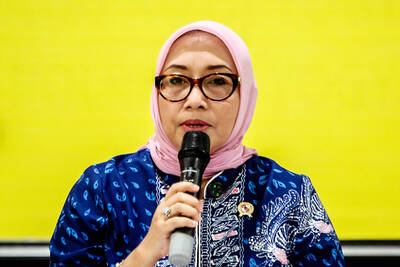
Indonesian police have arrested 13 people after shocking images of alleged abuse against small children at a daycare center went viral, sparking outrage across the nation, officials said on Monday. Police on Friday last week raided Little Aresha, a daycare center in Yogyakarta on Java island, following a report from a former employee. CCTV footage circulating on social media showed children, most younger than two, lying on the floor wearing only diapers, their hands and feet bound with rags. The police have confirmed that the footage is authentic. Police said they also found 20 children crammed into a room just 3m by 3m. “So
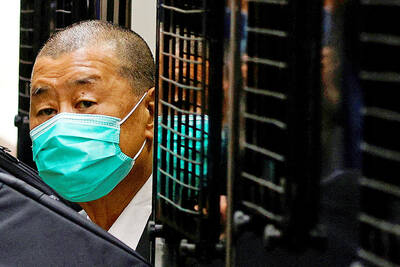
Jailed media entrepreneur Jimmy Lai (黎智英) has been awarded Deutsche Welle’s (DW) freedom of speech award for his contribution to Hong Kong’s pro-democracy movement. The German public broadcaster on Thursday said Lai would be presented in absentia with the 12th iteration of the award on June 23 at the DW Global Media Forum in Bonn. Deutsche Welle director-general Barbara Massing praised the 78-year-old founder of the now-shuttered news outlet Apple Daily for standing “unwaveringly for press freedom in Hong Kong at great personal risk.” “With Apple Daily, he gave journalists a platform for free reporting and a voice to the democracy movement in
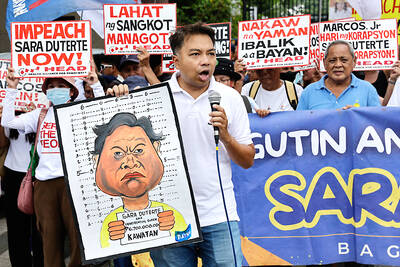
PHILIPPINE COMMITTEE: The head of the committee that made the decision said: ‘If there is nothing to hide, there is no reason to hide, there is no reason to obstruct’ A Philippine congressional committee on Wednesday ruled that there was “probable cause” to impeach Philippine Vice President Sara Duterte after hearing allegations of unexplained wealth, misuse of state funds and threats to have the president assassinated. The unanimous decision of the 53-member committee in the Philippine House of Representatives sends the two impeachment complaints to deliberations and voting by the entire lower chamber, which has more than 300 lawmakers. The complaints centered on Duterte’s alleged illegal use and mishandling of intelligence funds from the vice president’s office, and from her time as education secretary under Philippine President Ferdinand Marcos Jr. Duterte and the


 RSS
RSS