


US president-elect Donald Trump has tossed expansionist rhetoric at US allies and potential adversaries with arguments that the frontiers of US power need to be extended into Canada, the Danish territory of Greenland and southward to include the Panama Canal.
Trump’s suggestions that international borders can be redrawn — by force if necessary — are particularly inflammatory in Europe. His words run contrary to the argument European leaders and Ukrainian President Volodymyr Zelenskiy are trying to impress on Russian President Vladimir Putin.
However, many European leaders — who have learned to expect the unexpected from Trump and have seen that actions do not always follow his words — have been guarded in their response, with some taking a nothing-to-see-here view rather than vigorously defend EU member Denmark.
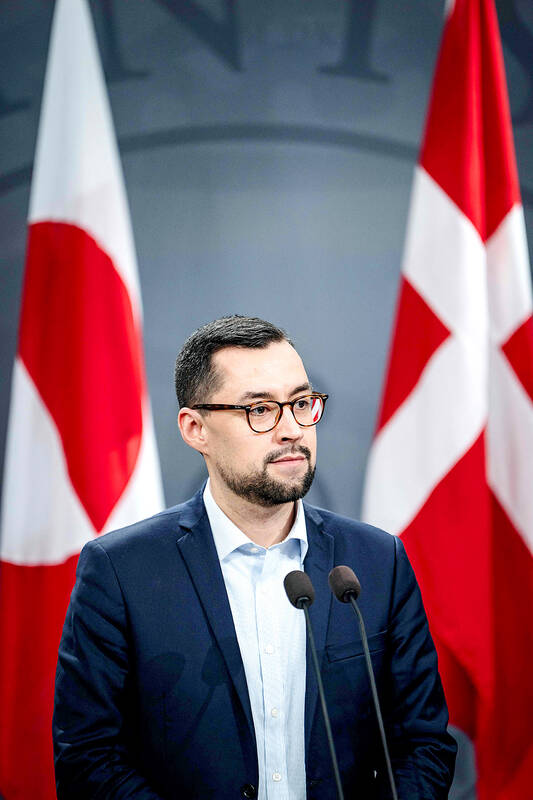
Photo: AFP
However, analysts said that even words could damage US-European relations ahead of Trump’s second presidency.
Several officials in Europe — where governments depend on US trade, energy, investment, technology and defense cooperation for security — emphasized their belief that Trump has no intention of marching troops into Greenland.
“I think we can exclude that the US in the coming years will try to use force to annex territory that interests it,” Italian Prime Minister Giorgia Meloni said.
German Chancellor Olaf Scholz pushed back, saying “borders must not be moved by force” and not mentioning Trump by name.
This week, as Zelenskiy pressed Trump’s incoming administration to continue supporting Ukraine, he said: “No matter what’s going on in the world, everyone wants to feel sure that their country will not just be erased off the map.”
The British and French ministers of foreign affairs have said they cannot foresee a US invasion of Greenland. Still, French Minister for Europe and Foreign Affairs Jean-Noel Barrot portrayed Trump’s remarks as a wake-up call.
“Do we think we’re entering into a period that sees the return of the law of the strongest? Yes.” Barrot said.
Greenlandic Prime Minister Mute B. Egede on Friday said its people do not want to be Americans, but that he is open to greater cooperation with the US. The semiautonomous Arctic territory is not part of the EU, but its 56,000 residents are EU citizens, as part of Denmark.
“Cooperation is about dialogue,” Egede said.
Danish Prime Minister Mette Frederiksen called the US “our closest ally” and said: “We have to stand together.”
European security analysts agreed there is no real likelihood of Trump using the military against NATO ally Denmark, but nevertheless expressed profound disquiet.
Analysts warned of turbulence ahead for trans-Atlantic ties, international norms and the NATO military alliance — not least because of the growing row with member Canada over Trump’s repeated suggestions that it become a US state.
“There is a possibility, of course, that this is just a new sheriff in town,” said Flemming Splidsboel Hansen, who specializes in foreign policy, Russia and Greenland at the Danish Institute for International Studies. “I take some comfort from the fact that he is now insisting that Canada should be included in the US, which suggests that it is just sort of political bravado.
“But damage has already been done. And I really cannot remember a previous incident like this where an important ally — in this case the most important ally — would threaten Denmark or another NATO member state.”
Hansen said he fears NATO might be falling apart even before Trump’s inauguration.
“I worry about our understanding of a collective West,” he said. “What does this even mean now? What may this mean just, say, one year from now, two years from now, or at least by the end of this second Trump presidency? What will be left?”

Packed crowds in India celebrating their cricket team’s victory ended in a deadly stampede on Wednesday, with 11 mainly young fans crushed to death, the local state’s chief minister said. Joyous cricket fans had come out to celebrate and welcome home their heroes, Royal Challengers Bengaluru, after they beat Punjab Kings in a roller-coaster Indian Premier League (IPL) cricket final on Tuesday night. However, the euphoria of the vast crowds in the southern tech city of Bengaluru ended in disaster, with Indian Prime Minister Narendra calling it “absolutely heartrending.” Karnataka Chief Minister Siddaramaiah said most of the deceased are young, with 11 dead
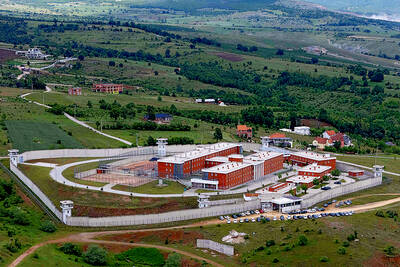
By 2027, Denmark would relocate its foreign convicts to a prison in Kosovo under a 200-million-euro (US$228.6 million) agreement that has raised concerns among non-governmental organizations (NGOs) and residents, but which could serve as a model for the rest of the EU. The agreement, reached in 2022 and ratified by Kosovar lawmakers last year, provides for the reception of up to 300 foreign prisoners sentenced in Denmark. They must not have been convicted of terrorism or war crimes, or have a mental condition or terminal disease. Once their sentence is completed in Kosovan, they would be deported to their home country. In

Brazil, the world’s largest Roman Catholic country, saw its Catholic population decline further in 2022, while evangelical Christians and those with no religion continued to rise, census data released on Friday by the Brazilian Institute of Geography and Statistics (IBGE) showed. The census indicated that Brazil had 100.2 million Roman Catholics in 2022, accounting for 56.7 percent of the population, down from 65.1 percent or 105.4 million recorded in the 2010 census. Meanwhile, the share of evangelical Christians rose to 26.9 percent last year, up from 21.6 percent in 2010, adding 12 million followers to reach 47.4 million — the highest figure

LOST CONTACT: The mission carried payloads from Japan, the US and Taiwan’s National Central University, including a deep space radiation probe, ispace said Japanese company ispace said its uncrewed moon lander likely crashed onto the moon’s surface during its lunar touchdown attempt yesterday, marking another failure two years after its unsuccessful inaugural mission. Tokyo-based ispace had hoped to join US firms Intuitive Machines and Firefly Aerospace as companies that have accomplished commercial landings amid a global race for the moon, which includes state-run missions from China and India. A successful mission would have made ispace the first company outside the US to achieve a moon landing. Resilience, ispace’s second lunar lander, could not decelerate fast enough as it approached the moon, and the company has


 RSS
RSS