


The South Korean government yesterday announced that it would abandon its plan to suspend the licenses of striking junior doctors as part of its efforts to convince them to return to work and resolve the nation’s monthslong medical impasse.
It was not immediately known whether the thousands of striking doctors would return to their hospitals after the announcement.
The government’s concession could also invite accusations of unfairness given its treatment of previous labor strikes and of doctors who have already returned to work.

Photo: Reuters
South Korean Minister of Health and Welfare Cho Kyoo-hong said the government has decided not to suspend the licenses of the strikers, who are medical interns and residents, regardless of whether they return to their hospitals or not.
He said the government would also offer special measures to returnees to minimize the gap in their training and help them obtain specialist licenses in time.
“After painstaking deliberations, the government has reached this decision based on an assessment that minimizing the medical vacuum in the treatment of emergency and seriously ill patients and maintaining a training system to supply specialists at the right time will serve the public interest more than anything else,” Cho said.
More than 90 percent of the nation’s 13,000 medical interns and residents walked off their jobs in February to protest the government’s plan to sharply boost medical school admissions. The walkout has significantly burdened the operations of university hospitals where they were training and threatened to disrupt South Korea’s medical services.
Some senior doctors and professors at those teaching schools supported the walkout by holding rallies and temporarily walking off their jobs or reducing their working hours.
Officials have said they want to add up to 10,000 doctors by 2035 to cope with a fast-aging population and a shortage of physicians in rural areas and in low-paying yet essential specialties like pediatrics and emergency departments.
Doctors say schools are not ready to handle such an abrupt increase in students and that it would ultimately undermine the nation’s medical services.
However, critics say physicians, one of the best-paid jobs in South Korea, are mainly worried that having more doctors would lower their future incomes.
The striking doctors suffered a major legal setback after a Seoul court in May ruled in support of the government’s plan. The Supreme Court last month upheld that ruling.
The government later took steps to withdraw its plan to suspend the licenses of doctors who returned to their hospitals, but did not do so for those who remained off the job. Only a small number of strikers have returned to work.
As of Friday last week, about 8 percent of the 13,756 medical interns and residents at about 210 teaching hospitals were working, government records show.
Government officials earlier threatened to impose three-month license suspensions on striking doctors and even indictments by prosecutors for refusing back-to-work orders. South Korean President Yoon Suk-yeol — who has said illegal strikes should be dealt with in line with the law — also called the doctors’ walkout an “illegal collective action.”
The standoff created strife among doctors, with some harassing colleagues who opted not to join or continue the strike, local media reports said.
Cho said the government was aware of possible criticism over the issue of fairness in its decision not to suspend the licenses of the striking doctors.
He said patient groups and some medical officials have called for an early end of the walkout by the striking doctors.
Last month, the government finalized a plan to increase next year’s medical school enrollment by about 1,500, down from its earlier push for an increase of 2,000 students.
The current medical student enrollment cap has been unchanged at 3,058 since 2006, with doctors blocking previous government attempts to raise it with vehement protests.
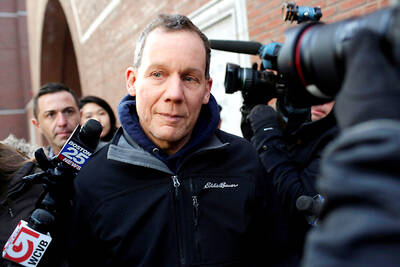
An American scientist convicted of lying to US authorities about payments from China while he was at Harvard University has rebuilt his research lab in Shenzhen, China, to pursue technology the Chinese government has identified as a national priority: embedding electronics into the human brain. Charles Lieber, 67, is among the world’s leading researchers in brain-computer interfaces. The technology has shown promise in treating conditions such as amyotrophic lateral sclerosis and restoring movement in paralyzed people. It also has potential military applications: Scientists at the Chinese People’s Liberation Army have investigated brain interfaces as a way to engineer super soldiers by boosting
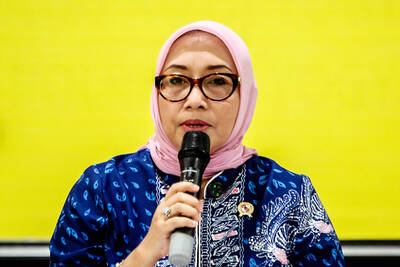
Indonesian police have arrested 13 people after shocking images of alleged abuse against small children at a daycare center went viral, sparking outrage across the nation, officials said on Monday. Police on Friday last week raided Little Aresha, a daycare center in Yogyakarta on Java island, following a report from a former employee. CCTV footage circulating on social media showed children, most younger than two, lying on the floor wearing only diapers, their hands and feet bound with rags. The police have confirmed that the footage is authentic. Police said they also found 20 children crammed into a room just 3m by 3m. “So
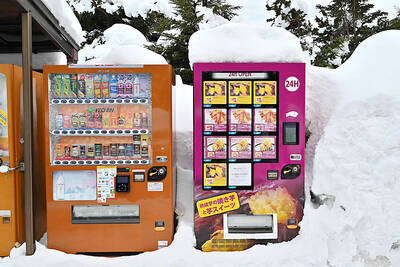
From post offices and parks to stations and even the summit of Mount Fuji, Japan’s vending machines are ubiquitous, but with the rapid pace of inflation cooling demand for their drinks, operators are being forced to rethink the business. Last month beverage giant DyDo Group Holdings announced it would remove about 20,000 vending machines — about 7 percent of their stock nationwide — by January next year, to “reconstruct a profitable network.” Pokka Sapporo Food & Beverage, based in Nagoya, also said last month it would sell its 40,000-machine operation to Osaka-based Lifedrink Co. “The strength of the vending machine
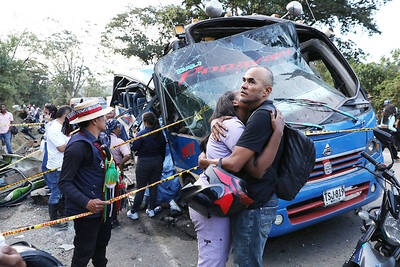
A highway bomb attack in a restive region of southwestern Colombia on Saturday killed 14 people and injured at least 38, the latest spate of violence ahead of next month’s presidential election. Authorities blamed the attack in the Cauca department — a conflict-ridden, coca-growing region — on dissidents of the now-disbanded FARC guerrilla army, who have been sowing violence across the country. “Those who carried out this attack ... are terrorists, fascists and drug traffickers,” Colombian President Gustavo Petro said on social media. “I want our very best soldiers to confront them,” he added. The leftist leader blamed the bombing


 RSS
RSS