


Tens of thousands of LGBTQ South Koreans and their supporters yesterday gathered in central Seoul for annual Pride celebrations, despite the event’s traditional venue being banned by authorities for the second consecutive year.
Same-sex marriage remains unrecognized in Asia’s fourth-largest economy, and advocates have long emphasized the need for legislation outlawing discrimination on the basis of sexual orientation.
This year’s Pride Parade, marking its 25th anniversary and one of the largest in Asia, was denied permission to gather at the Seoul Plaza in front of city hall, where the main festivities have traditionally been held.
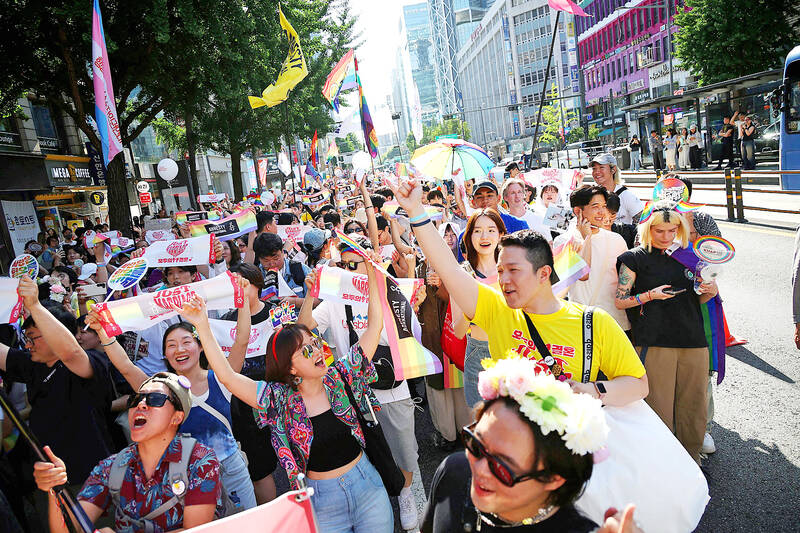
Photo: Reuters
Seoul Mayor Oh Se-hoon has said he “personally can’t agree with homosexuality,” but municipal authorities blamed a scheduling conflict and said the venue had already been reserved for an outdoor event themed around books.
It instead took place in the streets in central Seoul, with companies and organizations including the US embassy, IKEA and Amnesty International participating to show support.
Areas surrounding Seoul’s major thoroughfares Namdaemun-ro and Ujeongguk-ro were packed with excited participants wearing rainbow-themed costumes and makeup, some blowing bubbles and many waving orange balloons — the theme color for this year’s edition.
Pride organizers said that three other venues managed by the Seoul City Government, including the Seoul Museum of History, were also prohibited from being used for side events due to “causing social conflict.”
The authorities’ decision was “nonsensical,” but it does not diminish the pride that LGBTQ individuals feel for the annual event, participant Na Joo-youn said.
“I’m openly queer, which means I often have to fight for what I believe, which sometimes makes it hard to live as myself,” Na, 26, said. “Today, I get to enjoy being myself. Those who oppose the Pride Parade have been around for a long time, but whatever they do or say, they cannot erase our existence.”
Nearly one-quarter of South Korea’s 52 million population is Christian and churches remain a significant political arena, particularly for legislators.
In addition to the festival still facing difficulties in securing venues, attempts to pass laws banning discrimination on the basis of sexuality have languished since about 2007, with lawmakers coming under pressure from conservative and religious organizations.
“It would not be an exaggeration to say that the human rights of sexual minorities in South Korean society are regressing, [rather than meeting] the global standards,” said Hyeonju, one of the festival’s organizers.
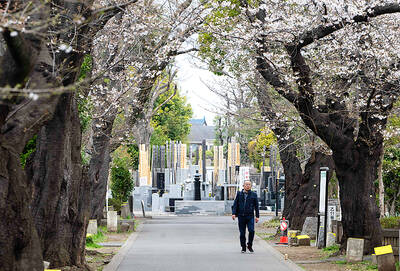
ROCKY RELATIONS: The figures on residents come as Chinese tourist numbers drop following Beijing’s warnings to avoid traveling to Japan The number of Chinese residents in Japan has continued to rise, even as ties between the two countries have become increasingly fractious, data released on Friday showed. As of the end of December last year, the number of Chinese residents had increased by 6.5 percent from the previous year to 930,428. Chinese people accounted for 22.6 percent of all foreign residents in Japan, making them by far the largest group, Japanese Ministry of Justice data showed. Beijing has criticized Tokyo in increasingly strident terms since Japanese Prime Minister Sanae Takaichi last year suggested that a military conflict around Taiwan could
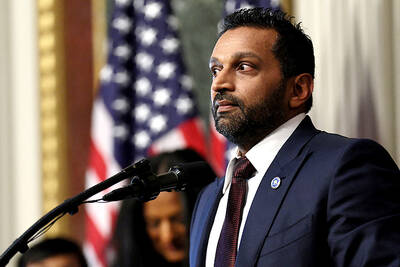
A pro-Iran hacking group claimed to breach FBI Director Kash Patel’s personal e-mail inbox and posted some of the contents online. The e-mails provided by the hacking group include travel details, correspondence with leasing agents in Washington and global entry, and loyalty account numbers. The e-mail address the hackers claim to have compromised has been previously tied to Patel’s personal details, and the leaked e-mails contain photos of Patel and others, in addition to correspondence with family members and colleagues. “The FBI is aware of malicious actors targeting Director Patel’s personal email information,” the agency said in a statement on
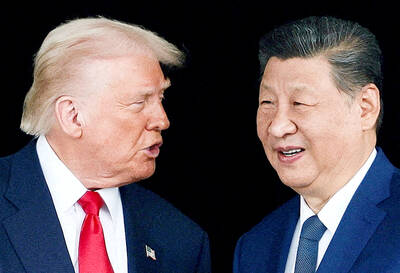
RIVALRY: ‘We know that these are merely symbolic investigations initiated by China, which is in fact the world’s most profligate disrupter of supply chains,’ a US official said China has started a pair of investigations into US trade practices, retaliating against similar probes by US President Donald Trump’s administration as the superpowers stake out positions before an expected presidential summit in May. The move, announced by the Chinese Ministry of Commerce on Friday, is a direct mirror of steps Trump took to revive his tariff agenda after the US Supreme Court last month struck down some of his duties. “China expresses its strong dissatisfaction and firm opposition to these actions,” a ministry spokesperson said in a statement, referring to the so-called Section 301 investigations initiated on March 11.

When a hiker fell from a 55m waterfall in wild New Zealand bush, rescuers were forced to evacuate the badly hurt woman without her dog, which could not be found. After strangers raised thousands of dollars for a search, border collie Molly was flown to safety by a helicopter pilot who was determined to reunite the pet and the owner. A week earlier, an emergency rescue helicopter found the woman with bruises and lacerations after a fall at a rocky spot at the waterfall on the South Island’s West Coast. She was airlifted on March 24, but they were forced to


 RSS
RSS