


At least four people were yesterday killed in the southern Philippines as millions turned out to vote for village leaders following months of deadly poll-related violence.
Security forces were on high alert across the country for the long-delayed nationwide vote for more than 336,000 council positions.
While villages are the lowest-level government unit, the council posts are hotly contested because they are used by political parties to cultivate grassroots networks and build a support base for local and general elections.
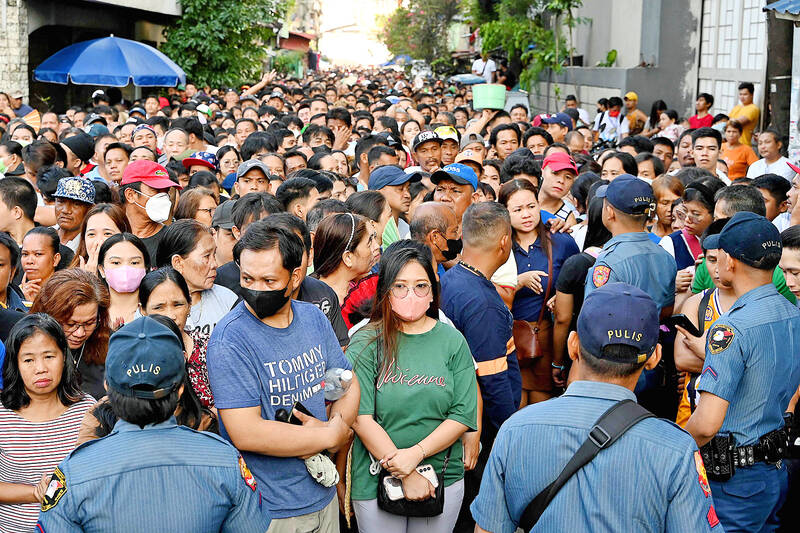
Photo: AFP
More than 300,000 police officers and soldiers were deployed to secure polling stations in more than 42,000 villages.
In the capital, Manila, voters waited in long lines to cast their ballots at schools being used as polling venues.
“This is important for the people... We need to be able to consult someone over our problems,” said Rosemarie Garcia in the neighborhood of Tondo. “We need somebody who is easily approachable to his or her constituents.”
Elections are a traditionally volatile time in the Philippines, which has lax gun laws and a violent political culture.
Philippine Commission on Elections Chairman George Garcia said that voting had been “generally peaceful,” except for several incidents on the southern island of Mindanao.
Two people were killed and five were wounded outside a polling station in Maguindanao del Norte province, police said.
The shootout happened during a confrontation between supporters of rival candidates for village captain, said Lieutenant-Colonel Esmail Madin, the police chief of Datu Odin Sinsuat municipality.
In another incident on Mindanao, a woman was killed when a gunfight broke out after a van carrying a village captain and her supporters was stopped on a road by people backing her rival in Lanao del Norte province, the army said.
The husband of a village captain in Lanao del Sur province died after he was shot in the chest during a confrontation with his wife’s rival, police said.
In the run-up to yesterday’s vote, there were 30 confirmed incidents of election-related violence, compared with 35 in 2018, the Philippine National Police said on Sunday, without providing an updated breakdown for the number of dead and injured.
About one-third of the incidents happened in the Bangsamoro Autonomous Region in Muslim Mindanao.
Previous police data showed that eight people were killed and seven injured in poll-related violence between Aug. 28 and Wednesday last week.
More than 67 million people were registered to vote in the elections, which Philippine President Ferdinand Marcos Jr yesterday described as “very important” for higher-level politicians.
“What happens here in the barangay [village] ... are going to have an effect on the results of the mid-term elections and subsequently at the national elections,” Marcos said after casting his vote in his family’s stronghold of Batac City in the northern province of Ilocos Norte.
“If other barangays tell you: ‘I will deliver 350 votes for you in my barangay,’ rest assured, you will get 350. That’s why the result is very important,” he said.
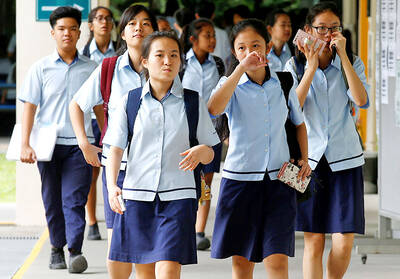
School bullies in Singapore are to face caning under new guidelines, but the education minister on Tuesday said it would be meted out only as a last resort with strict safeguards. Human rights groups regularly criticize Singapore for the use of corporal punishment, which remains part of the school and criminal justice systems, but authorities have defended it as a deterrent to crime and serious misconduct. Caning was discussed in the parliament after legislators asked how it would be used in relation to bullying in schools. The debate followed stricter guidelines on serious student misconduct, including bullying, unveiled by the Singaporean Ministry of
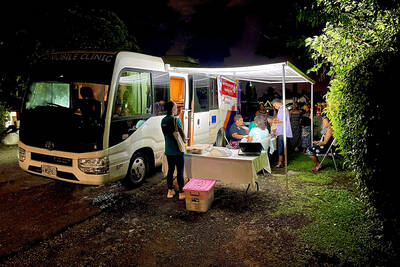
As evening falls in Fiji’s capital, a steady stream of people approaches a makeshift clinic that is a first line of defense against one of the world’s fastest-growing HIV epidemics. In the South Pacific nation — a popular tourist destination of just under a million people — more than 2,000 new HIV cases were recorded last year, a 26 percent increase from 2024. The government has declared an HIV outbreak and described it as a national crisis. “It’s spreading like wildfire,” said Siteri Dinawai, 46, who came to be tested. The Moonlight Clinic, a converted minibus parked in a suburban cul-de-sac in Suva, is
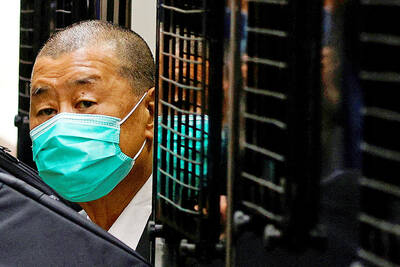
Jailed media entrepreneur Jimmy Lai (黎智英) has been awarded Deutsche Welle’s (DW) freedom of speech award for his contribution to Hong Kong’s pro-democracy movement. The German public broadcaster on Thursday said Lai would be presented in absentia with the 12th iteration of the award on June 23 at the DW Global Media Forum in Bonn. Deutsche Welle director-general Barbara Massing praised the 78-year-old founder of the now-shuttered news outlet Apple Daily for standing “unwaveringly for press freedom in Hong Kong at great personal risk.” “With Apple Daily, he gave journalists a platform for free reporting and a voice to the democracy movement in
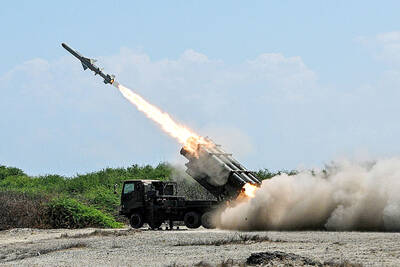
A MESSAGE: Japan’s participation in the Balikatan drills is a clear deterrence signal to China not to attack Taiwan while the US is busy in the Middle East, an analyst said The Japan Self-Defense Forces yesterday fired a Type 88 anti-ship missile during a joint maritime exercise with US, Australian and Philippine forces, hitting a decommissioned Philippine Navy ship in waters facing the disputed South China Sea, in drills that underscore Tokyo’s rising willingness to project military power on China’s doorstep. The drill took place as Manila and Tokyo began talks on a potential defense equipment transfer, made possible by Japan’s decision to scrap restrictions on military exports. The discussions include the possible early transfer of Abukuma-class destroyers and TC-90 aircraft to the Philippines, Japanese Minister of Defense Shinjiro Koizumi said. Philippine Secretary of


 RSS
RSS