


A recent open day at a Japanese military base near Tokyo was a fun family outing, but despite the games and snacks, the army recruitment stand was bereft of visitors.
“This is the reality. The festival is always packed, but no one comes,” one of the two soldiers on duty said, with unwanted leaflets on the table next to a green armored vehicle.
Japan has massively increased its defense spending in the past few years, alarmed by China’s growing assertiveness in the region and the frequency of North Korea’s missile tests.
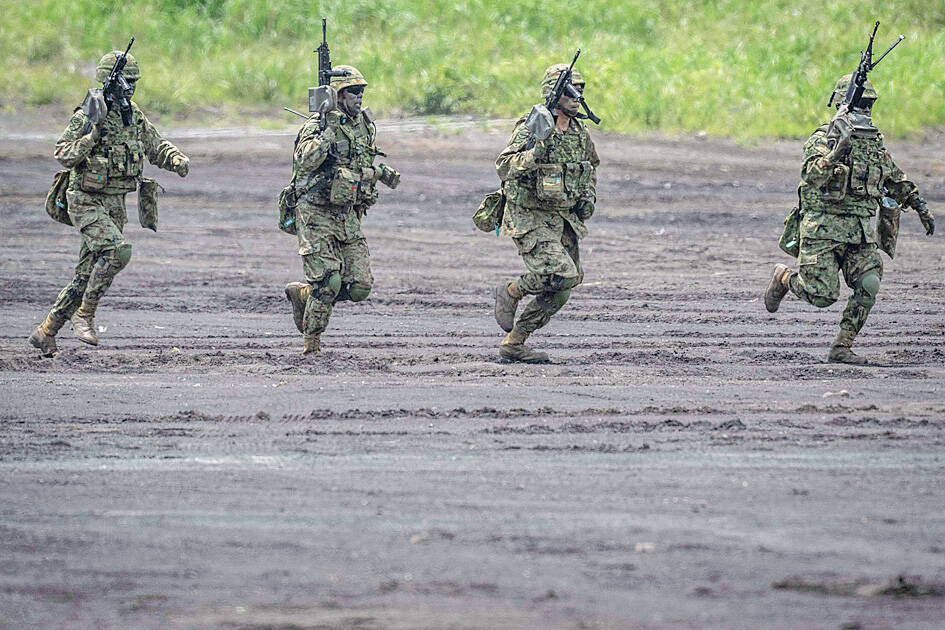
Photo: AFP
However, a report by a panel of experts in July highlighted an “extremely high” risk that the armed forces would be weakened because of a lack of personnel.
Although numbers fluctuate from year to year, since 1990 the strength of the Japan Self-Defense Forces has fallen by more than 7 percent to fewer than 230,000.
Last year, fewer than 4,000 people joined up, undershooting the target by more than half. The last time its objective was met was in 2013.
Many advanced economies are having problems recruiting enough people, with the situation particularly acute in Japan, where one in 10 people is 80 or older.
However, current and former soldiers say it is not just demographics to blame.
“I was ashamed to say that I was in the Self-Defense Forces. It didn’t make me proud at all,” said Yuichi Kimura, 45, a former parachutist who now runs a firm helping former soldiers get civilian jobs.
Morale is “low” due to “poor pay” and a “lack of ambition” on the part of the armed forces, he said.
Many join up hoping to help during natural disasters, but are dismayed to find themselves doing military tasks.
“Most soldiers weren’t thinking at all about national defense” when they joined, former sergeant Kohei Kondo, 25, said.
The Japanese Ministry of Defense says it only recruits suitable candidates, but according to media reports, standards have fallen, including when it comes to psychological tests.
In June, two people were killed by a new recruit in a shooting incident at a military firing range.
Japan “recruits just about anybody because no one expects an actual armed conflict,” Kimura said.
In an effort to halt the decline, in 2018 Japan increased the maximum age for new soldiers to 32 from 26.
Another solution is to use more uncrewed vehicles in the air, on sea and on land, the July report said.
The army is even reportedly considering allowing recruits with tattoos — markings traditionally associated with yakuza gangsters.
Japan also aims to increase the proportion of women by 2030 to 13 percent, from 9 percent at present.
Featuring photographs of smiling servicewomen, the defense ministry Web site promises “an environment adapted to women.”
However, there is a considerable gap with “reality on the ground,” said Fumika Sato, professor of military sociology and gender sociology at Hitotsubashi University.
The army is “an environment conducive to harassment and sexual violence,” she said.
The army has been roiled for the past year by a series of damaging revelations of sexual assault within its ranks.
They started when former soldier Rina Gonoi went public with explosive allegations of abuse that drew major attention.
There is no concrete evidence of a link, but in the year to March, the number of female recruits fell 12 percent, having previously risen every year since 2017.
“Things were happening in my company that could have had the same repercussions,” former soldier Kodai Suzuki, 27, said.
“What parents would let their daughter join such an institution?” a serving junior officer said on condition of anonymity.

An American scientist convicted of lying to US authorities about payments from China while he was at Harvard University has rebuilt his research lab in Shenzhen, China, to pursue technology the Chinese government has identified as a national priority: embedding electronics into the human brain. Charles Lieber, 67, is among the world’s leading researchers in brain-computer interfaces. The technology has shown promise in treating conditions such as amyotrophic lateral sclerosis and restoring movement in paralyzed people. It also has potential military applications: Scientists at the Chinese People’s Liberation Army have investigated brain interfaces as a way to engineer super soldiers by boosting

Indonesian police have arrested 13 people after shocking images of alleged abuse against small children at a daycare center went viral, sparking outrage across the nation, officials said on Monday. Police on Friday last week raided Little Aresha, a daycare center in Yogyakarta on Java island, following a report from a former employee. CCTV footage circulating on social media showed children, most younger than two, lying on the floor wearing only diapers, their hands and feet bound with rags. The police have confirmed that the footage is authentic. Police said they also found 20 children crammed into a room just 3m by 3m. “So
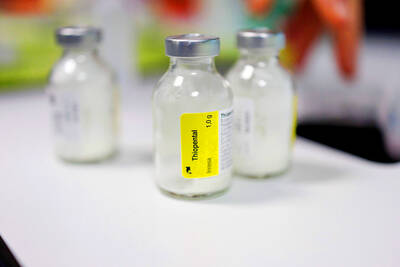
A grieving mother has ended her life at a clinic in Switzerland four years after the death of her only child. Wendy Duffy, 56, a physically healthy woman, died at the Pegasos clinic in Basel after struggling to cope with the death of her 23-year-old son, Marcus. The former care worker, from the West Midlands, England, had previously attempted to take her own life. The case comes as assisted dying would not become law in England and Wales after proposed legislation, branded “hopelessly flawed” by opponents, ran out of time. Ruedi Habegger, the founder of Pegasos, described Duffy’s death as
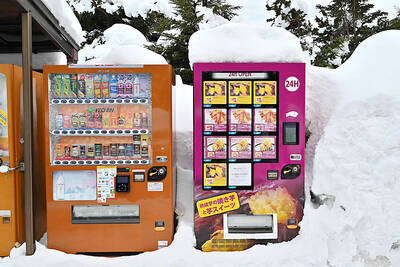
From post offices and parks to stations and even the summit of Mount Fuji, Japan’s vending machines are ubiquitous, but with the rapid pace of inflation cooling demand for their drinks, operators are being forced to rethink the business. Last month beverage giant DyDo Group Holdings announced it would remove about 20,000 vending machines — about 7 percent of their stock nationwide — by January next year, to “reconstruct a profitable network.” Pokka Sapporo Food & Beverage, based in Nagoya, also said last month it would sell its 40,000-machine operation to Osaka-based Lifedrink Co. “The strength of the vending machine


 RSS
RSS