


The lake behind the Hartbeespoort Dam in South Africa used to be brimming with people enjoying scenic landscapes and recreational water sports. Now, the visitors are greeted to the sight of boats stuck in a sea of invasive green water hyacinth weed.
The spike in Harties — as Hartbeespoort is known — can be attributed to pollution, with sewage, industrial chemicals, heavy metals and litter flowing on rivers from Johannesburg and Pretoria.
“In South Africa, we are faced with highly polluted waters,” said Julie Coetzee, a professor who has studied water hyacinths for more than 20 years and manages the aquatic weeds program at the Centre for Biological Control at Rhodes University in Makhanda.
Nutrients in the pollutants act as perfect fertilizers for the weed, a big concern for nearby communities due to its devastating effect on livelihoods.
Dion Mostert, 53, is on the verge of laying off 25 workers at his recreational boat company after his business came to a standstill because of the carpet of water hyacinths.
“The boats aren’t going anywhere. It’s affecting tourism in our town ... tourist jobs,” said Mostert, pointing toward his luxury cruise boat Alba marooned in the weeds.
He has considered using herbicides, but said it would only be a quick fix against the weed.
However, scientists and community members have found a unique way to deal with the invasion by introducing a water hyacinth-eating bug called Megamelus scutellaris.
The tiny phloem-feeding insects are the natural enemy to the plants. Both are originally from the Amazon basin in South America.
The insects destroy the weed by attacking tissue that transports nutrients produced in the leaves during photosynthesis to the rest of the plant.
The insect army has previously reduced the expanse of water hyacinths to a mere 5 percent in the dam-created lake, Coetzee said.
At times the weed has covered at least 50 percent of it.
Environmentalist Patrick Ganda, 41, mass rears the bugs at the Grootvaly Blesbokspruit wetland conservancy southeast of Harties, once home to more than a hundred species of birds that attracted a lot of tourists.
However, unable to find food such as fish and small plants with much of the wetland’s water covered in plants, there are only two to three species of birds left, he said.
Scientists warn that while the insects have been fairly successful in controlling the situation, more needs to be done to treat its cause, which authorities could tackle by tightening regulations on wastewater management.
“We are only treating the symptom of a much larger problem,” said Kelby English, a scientist at Rhodes University.

Packed crowds in India celebrating their cricket team’s victory ended in a deadly stampede on Wednesday, with 11 mainly young fans crushed to death, the local state’s chief minister said. Joyous cricket fans had come out to celebrate and welcome home their heroes, Royal Challengers Bengaluru, after they beat Punjab Kings in a roller-coaster Indian Premier League (IPL) cricket final on Tuesday night. However, the euphoria of the vast crowds in the southern tech city of Bengaluru ended in disaster, with Indian Prime Minister Narendra calling it “absolutely heartrending.” Karnataka Chief Minister Siddaramaiah said most of the deceased are young, with 11 dead
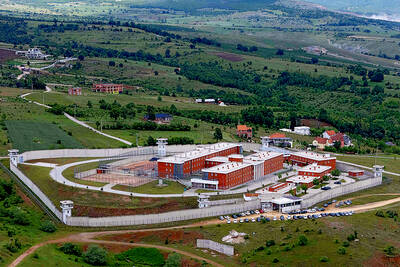
By 2027, Denmark would relocate its foreign convicts to a prison in Kosovo under a 200-million-euro (US$228.6 million) agreement that has raised concerns among non-governmental organizations (NGOs) and residents, but which could serve as a model for the rest of the EU. The agreement, reached in 2022 and ratified by Kosovar lawmakers last year, provides for the reception of up to 300 foreign prisoners sentenced in Denmark. They must not have been convicted of terrorism or war crimes, or have a mental condition or terminal disease. Once their sentence is completed in Kosovan, they would be deported to their home country. In

Brazil, the world’s largest Roman Catholic country, saw its Catholic population decline further in 2022, while evangelical Christians and those with no religion continued to rise, census data released on Friday by the Brazilian Institute of Geography and Statistics (IBGE) showed. The census indicated that Brazil had 100.2 million Roman Catholics in 2022, accounting for 56.7 percent of the population, down from 65.1 percent or 105.4 million recorded in the 2010 census. Meanwhile, the share of evangelical Christians rose to 26.9 percent last year, up from 21.6 percent in 2010, adding 12 million followers to reach 47.4 million — the highest figure

LOST CONTACT: The mission carried payloads from Japan, the US and Taiwan’s National Central University, including a deep space radiation probe, ispace said Japanese company ispace said its uncrewed moon lander likely crashed onto the moon’s surface during its lunar touchdown attempt yesterday, marking another failure two years after its unsuccessful inaugural mission. Tokyo-based ispace had hoped to join US firms Intuitive Machines and Firefly Aerospace as companies that have accomplished commercial landings amid a global race for the moon, which includes state-run missions from China and India. A successful mission would have made ispace the first company outside the US to achieve a moon landing. Resilience, ispace’s second lunar lander, could not decelerate fast enough as it approached the moon, and the company has


 RSS
RSS