


The UN General Assembly on Thursday approved a nonbinding resolution that calls for Russia to end hostilities in Ukraine and withdraw its forces, sending a strong message on the eve of the first anniversary of the invasion that Moscow’s aggression must stop.
The resolution, drafted by Ukraine in consultation with its allies, passed 141-7, with 32 abstentions, including China.
Ukrainian Minister of Foreign Affairs Dmytro Kuleba said the vote was more evidence that not only the West backs his country.
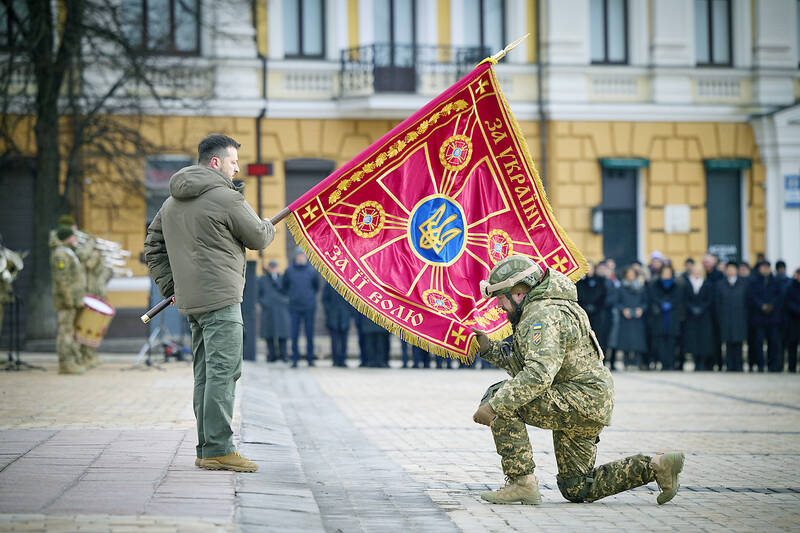
Photo: AP
“This vote defies the argument that the Global South does not stand on Ukraine’s side,” Kuleba said. “Many countries representing Latin America, Africa, Asia voted in favor.”
US National Security Adviser Jake Sullivan called the vote “an overwhelming demonstration of support for Ukraine — and a clear defense of freedom for people everywhere.”
The General Assembly has become the most important UN body dealing with Ukraine because the UN Security Council, which is charged with maintaining international peace and security, is paralyzed by Russia’s veto power.
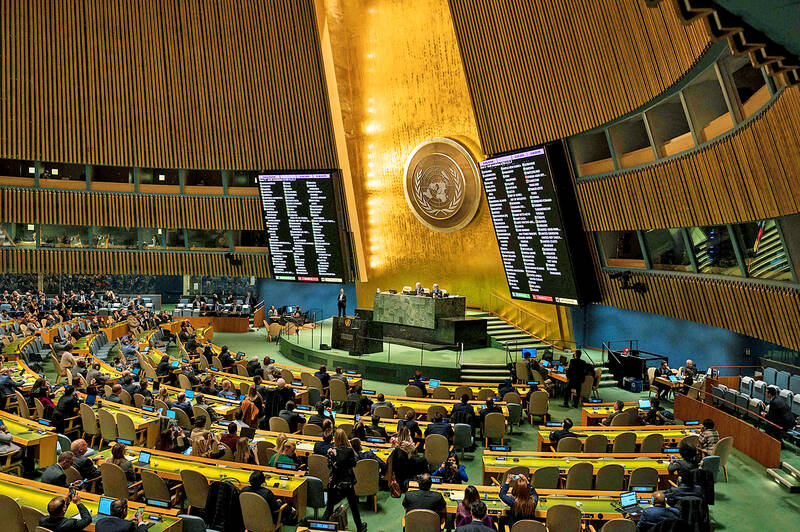
Photo: AFP
General Assembly resolutions are not legally binding, unlike Security Council resolutions, but serve as a barometer of world opinion.
The seven countries voting against Thursday’s resolution were Belarus, Eritrea, Nicaragua, Russia, Syria, North Korea and Mali, which has developed close military ties with Russia.
Amendments proposed by Belarus would have stripped much of the language, but were resoundingly defeated.
The vote was slightly below the highest total for the five previous resolutions approved by the 193-member world body since Russia sent troops and tanks across the border into its smaller neighbor on Feb. 24 last year.
Foreign ministers and diplomats from more than 75 countries addressed the assembly during two days of debate, with many urging support for the resolution that upholds Ukraine’s territorial integrity, a basic principle of the UN Charter that all countries must subscribe to when they join the world organization.
The war has killed tens of thousands on both sides and has reduced entire cities to ruins. Its impact has been felt worldwide in higher food and fuel costs, and rising inflation.
In Kyiv, Ukrainian President President Volodymyr Zelenski yesterday pledged to push for victory as he and other Ukrainians marked the somber first anniversary of the Russian invasion.
As dawn broke on a day of commemorations, Zelenskiy wrote on Twitter that Ukrainians had proven themselves to be “invincible” in what he called “a year of pain, sorrow, faith and the unity.”
“We know that 2023 will be the year of our victory,” he added.
Meanwhile, US Secretary of State Antony Blinken on Thursday said that India and South Africa, which have not joined the West in denouncing Russia’s invasion, were likely on a trajectory away from alignment with Moscow, but that process would not happen “in one fell swoop.”
“There are countries that have long-standing, decades-long relationships with Russia, with the Soviet Union before, that are challenging to break off in one fell swoop. It’s not flipping a light switch, it’s moving an aircraft carrier,” Blinken said in an interview with The Atlantic.
Additional reporting by Reuters

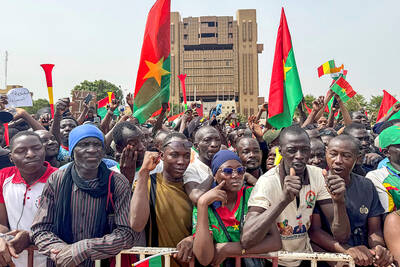
Kehinde Sanni spends his days smoothing out dents and repainting scratched bumpers in a modest autobody shop in Lagos. He has never left Nigeria, yet he speaks glowingly of Burkina Faso military leader Ibrahim Traore. “Nigeria needs someone like Ibrahim Traore of Burkina Faso. He is doing well for his country,” Sanni said. His admiration is shaped by a steady stream of viral videos, memes and social media posts — many misleading or outright false — portraying Traore as a fearless reformer who defied Western powers and reclaimed his country’s dignity. The Burkinabe strongman swept into power following a coup in September 2022
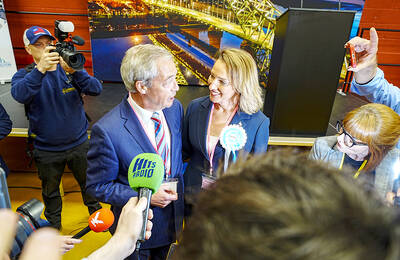
‘FRAGMENTING’: British politics have for a long time been dominated by the Labor Party and the Tories, but polls suggest that Reform now poses a significant challenge Hard-right upstarts Reform UK snatched a parliamentary seat from British Prime Minister Keir Starmer’s Labor Party yesterday in local elections that dealt a blow to the UK’s two establishment parties. Reform, led by anti-immigrant firebrand Nigel Farage, won the by-election in Runcorn and Helsby in northwest England by just six votes, as it picked up gains in other localities, including one mayoralty. The group’s strong showing continues momentum it built up at last year’s general election and appears to confirm a trend that the UK is entering an era of multi-party politics. “For the movement, for the party it’s a very, very big
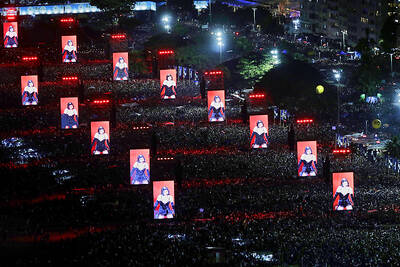
ENTERTAINMENT: Rio officials have a history of organizing massive concerts on Copacabana Beach, with Madonna’s show drawing about 1.6 million fans last year Lady Gaga on Saturday night gave a free concert in front of 2 million fans who poured onto Copacabana Beach in Rio de Janeiro for the biggest show of her career. “Tonight, we’re making history... Thank you for making history with me,” Lady Gaga told a screaming crowd. The Mother Monster, as she is known, started the show at about 10:10pm local time with her 2011 song Bloody Mary. Cries of joy rose from the tightly packed fans who sang and danced shoulder-to-shoulder on the vast stretch of sand. Concert organizers said 2.1 million people attended the show. Lady Gaga
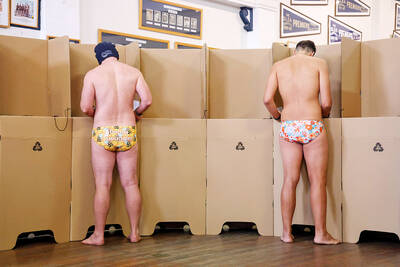
SUPPORT: The Australian prime minister promised to back Kyiv against Russia’s invasion, saying: ‘That’s my government’s position. It was yesterday. It still is’ Left-leaning Australian Prime Minister Anthony Albanese yesterday basked in his landslide election win, promising a “disciplined, orderly” government to confront cost-of-living pain and tariff turmoil. People clapped as the 62-year-old and his fiancee, Jodie Haydon, who visited his old inner Sydney haunt, Cafe Italia, surrounded by a crowd of jostling photographers and journalists. Albanese’s Labor Party is on course to win at least 83 seats in the 150-member parliament, partial results showed. Opposition leader Peter Dutton’s conservative Liberal-National coalition had just 38 seats, and other parties 12. Another 17 seats were still in doubt. “We will be a disciplined, orderly


 RSS
RSS