


Designated Israeli prime minister Benjamin Netanyahu on Sunday issued a rare rebuke of his new coalition allies for saying they would advance laws allowing discrimination against LGBTQ people, and pledging that there would be no harm done to their rights by his upcoming government.
Netanyahu is set to form the most ultranationalist and religious government in Israel’s history between his Likud movement and several openly anti-LGBTQ parties. This has raised fears among Israel’s LGBTQ community that the new government, expected to take office in the coming week, could roll back gains they have made in the past few years.
Orit Struck, a Religious Zionist member of the Knesset, Israel’s parliament, said her party seeks a change to the country’s anti-discrimination law that would include allowing people to avoid acts that go against their religious beliefs, meaning LGBTQ people could be discriminated against in hospitals.

Photo: Reuters
Struck said in an interview on Sunday with Kan public radio that “so long as there are enough other doctors to provide care,” religious healthcare providers should be able refuse to treat LGBTQ people.
Simcha Rotman, another member of the party, said that private business owners, such as hotel operators, should be allowed to refuse service to LGBTQ people “if it harms their religious feelings.”
Netanyahu issued two statements repudiating Struck’s comments.
Netanyahu said that Struck’s remarks “are unacceptable to me and to members of Likud,” and that the coalition agreement “does not allow discrimination against LGBTQ or harming their right to receive services like all other Israeli citizens.”
As the controversy continued to rage, he later issued a second videotaped statement saying that he “completely rejects” Struck’s remarks.
“In the country that I will lead, there will be no situation where a person — whether he is LGBT, Arab or ultra-Orthodox or any other person — will enter a hotel and not receive service, enter a doctor and not receive service,” he said.
The controversy came days after the Yediot Ahronot daily reported that another member of the Religious Zionism alliance, the far-right Noam faction, once compiled a list of LGBTQ journalists and said that the “LGBT media” amounted to a lobby of “incomparable strength.”
Israeli President Isaac Herzog had his own concerns. Herzog’s is a largely figurehead position who is meant to serve as a moral compass and unifying force for the country.
“A situation in which Israeli citizens feel threatened due to their identity or faith undermines the basic democratic and moral values of the State of Israel,” Herzog said. “The racist statements heard in recent days against the LGBT community and in general against different sectors and publics — worry and disturb me a lot.”
It was the latest sign of trouble for Netanyahu’s emerging coalition, which is dominated by far-right and Orthodox partners pushing for dramatic changes that could alienate large swaths of the Israeli public, raise the risk of conflict with the Palestinians and put Israel on a collision course with some of its closest supporters, including the US and the Jewish American community.
The outgoing government took several steps to advance LGBTQ rights, including rescinding a ban on blood donations by gay men, streamlining access to gender reassignment surgery and taking a clear stand against “conversion therapy,” the scientifically discredited practice of “converting” LGBTQ people to heterosexuality or traditional gender expectations.
The incoming government includes two Orthodox parties that do not allow female candidates, and Religious Zionism, an umbrella movement whose leaders are vocally homophobic.
Members of the LGBTQ community serve openly in Israel’s military and parliament, and many popular artists and entertainers as well as several former government ministers are openly gay.
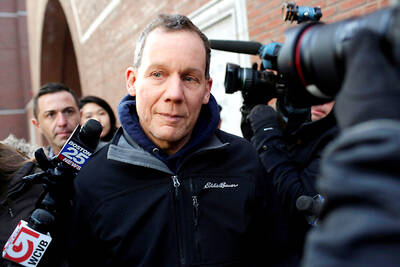
An American scientist convicted of lying to US authorities about payments from China while he was at Harvard University has rebuilt his research lab in Shenzhen, China, to pursue technology the Chinese government has identified as a national priority: embedding electronics into the human brain. Charles Lieber, 67, is among the world’s leading researchers in brain-computer interfaces. The technology has shown promise in treating conditions such as amyotrophic lateral sclerosis and restoring movement in paralyzed people. It also has potential military applications: Scientists at the Chinese People’s Liberation Army have investigated brain interfaces as a way to engineer super soldiers by boosting
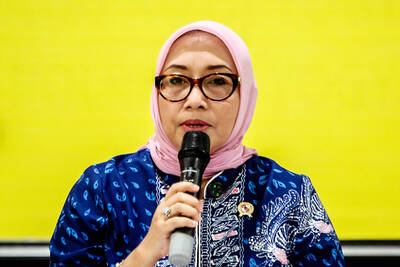
Indonesian police have arrested 13 people after shocking images of alleged abuse against small children at a daycare center went viral, sparking outrage across the nation, officials said on Monday. Police on Friday last week raided Little Aresha, a daycare center in Yogyakarta on Java island, following a report from a former employee. CCTV footage circulating on social media showed children, most younger than two, lying on the floor wearing only diapers, their hands and feet bound with rags. The police have confirmed that the footage is authentic. Police said they also found 20 children crammed into a room just 3m by 3m. “So
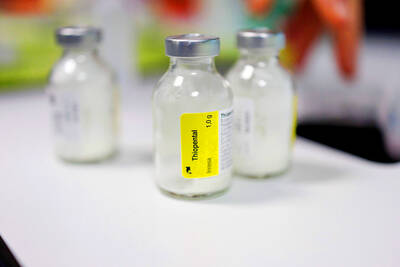
A grieving mother has ended her life at a clinic in Switzerland four years after the death of her only child. Wendy Duffy, 56, a physically healthy woman, died at the Pegasos clinic in Basel after struggling to cope with the death of her 23-year-old son, Marcus. The former care worker, from the West Midlands, England, had previously attempted to take her own life. The case comes as assisted dying would not become law in England and Wales after proposed legislation, branded “hopelessly flawed” by opponents, ran out of time. Ruedi Habegger, the founder of Pegasos, described Duffy’s death as
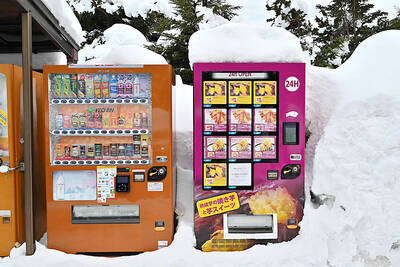
From post offices and parks to stations and even the summit of Mount Fuji, Japan’s vending machines are ubiquitous, but with the rapid pace of inflation cooling demand for their drinks, operators are being forced to rethink the business. Last month beverage giant DyDo Group Holdings announced it would remove about 20,000 vending machines — about 7 percent of their stock nationwide — by January next year, to “reconstruct a profitable network.” Pokka Sapporo Food & Beverage, based in Nagoya, also said last month it would sell its 40,000-machine operation to Osaka-based Lifedrink Co. “The strength of the vending machine


 RSS
RSS