


Retired US Air Force colonel Joseph Kittinger, whose 1960 parachute jump from 31.3km above the Earth stood as a world record for more than 50 years, died in Florida on Friday. He was 94.
His death was announced by former US representative John Mica and other friends. The cause was lung cancer.
Kittinger, then an air force captain and pilot, gained worldwide fame when he completed three jumps over 10 months from a gondola that was hoisted into the stratosphere by large helium balloons. Project Excelsior was aimed at helping design ejection systems for military pilots flying high-altitude missions.
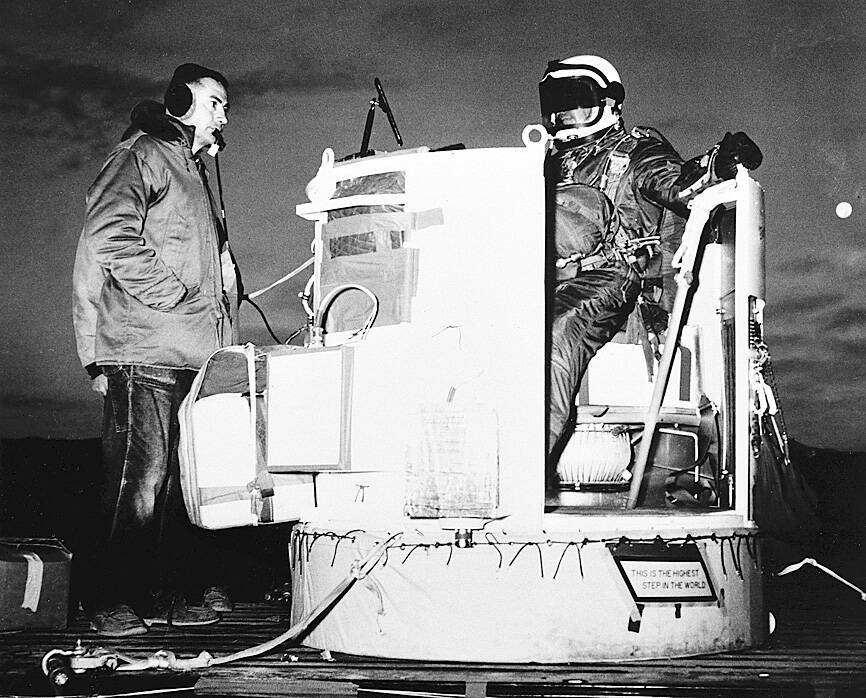
Photo: AP
Wearing a pressure suit and 27kg of equipment, Kittinger almost died during the project’s first jump in November 1959 when his gear malfunctioned after he jumped from 23km. He lost consciousness as he went into a spin that was 22 times the force of gravity. He was saved when his automatic chute opened.
Four weeks later, Kittinger made his second jump from just more than 22km above the surface. This time, there were no problems.
Kittinger’s record jump came on Aug. 16, 1960, in the New Mexico desert. His pressure suit malfunctioned as he rose, failing to seal off his right hand, which swelled to twice normal size before he jumped from 31.3km above the surface.
Free falling in the thin atmosphere, the Tampa native exceeded 965kph before the gradually thickening air slowed his fall to about 241kph when his parachute deployed at 5.5km above the Earth.
“There’s no way you can visualize the speed,” Kittinger told Florida Trend magazine in 2011. “There’s nothing you can see to see how fast you’re going. You have no depth perception. If you’re in a car driving down the road and you close your eyes, you have no idea what your speed is. It’s the same thing if you’re free falling from space... You know you are going very fast, but you don’t feel it. You don’t have a 614mph [988kph] wind blowing on you. I could only hear myself breathing in the helmet.”
His record stood until 2012, when Austrian Felix Baumgartner jumped from 38.6km above the New Mexico desert, reaching the supersonic speed of 1,360kph. Kittinger served as an adviser.
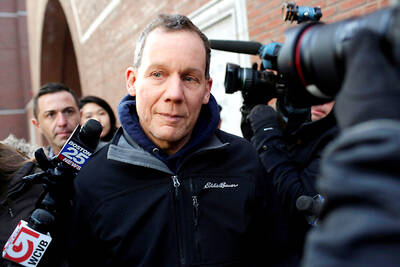
An American scientist convicted of lying to US authorities about payments from China while he was at Harvard University has rebuilt his research lab in Shenzhen, China, to pursue technology the Chinese government has identified as a national priority: embedding electronics into the human brain. Charles Lieber, 67, is among the world’s leading researchers in brain-computer interfaces. The technology has shown promise in treating conditions such as amyotrophic lateral sclerosis and restoring movement in paralyzed people. It also has potential military applications: Scientists at the Chinese People’s Liberation Army have investigated brain interfaces as a way to engineer super soldiers by boosting

Indonesian police have arrested 13 people after shocking images of alleged abuse against small children at a daycare center went viral, sparking outrage across the nation, officials said on Monday. Police on Friday last week raided Little Aresha, a daycare center in Yogyakarta on Java island, following a report from a former employee. CCTV footage circulating on social media showed children, most younger than two, lying on the floor wearing only diapers, their hands and feet bound with rags. The police have confirmed that the footage is authentic. Police said they also found 20 children crammed into a room just 3m by 3m. “So
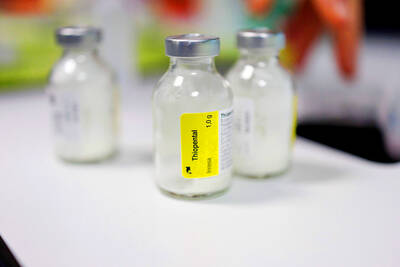
A grieving mother has ended her life at a clinic in Switzerland four years after the death of her only child. Wendy Duffy, 56, a physically healthy woman, died at the Pegasos clinic in Basel after struggling to cope with the death of her 23-year-old son, Marcus. The former care worker, from the West Midlands, England, had previously attempted to take her own life. The case comes as assisted dying would not become law in England and Wales after proposed legislation, branded “hopelessly flawed” by opponents, ran out of time. Ruedi Habegger, the founder of Pegasos, described Duffy’s death as
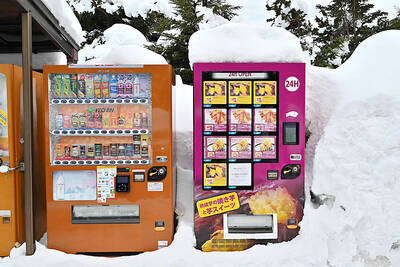
From post offices and parks to stations and even the summit of Mount Fuji, Japan’s vending machines are ubiquitous, but with the rapid pace of inflation cooling demand for their drinks, operators are being forced to rethink the business. Last month beverage giant DyDo Group Holdings announced it would remove about 20,000 vending machines — about 7 percent of their stock nationwide — by January next year, to “reconstruct a profitable network.” Pokka Sapporo Food & Beverage, based in Nagoya, also said last month it would sell its 40,000-machine operation to Osaka-based Lifedrink Co. “The strength of the vending machine


 RSS
RSS