


Medibank client data was yesterday published by an extortionist, including details of individuals’ medical procedures, after Australia’s largest health insurer refused to pay a ransom for the personal records of almost 10 million current and former customers.
The release of information on the dark Web appeared to be a sample of the data that Medibank had previously determined had been stolen last month, the company said.
Medibank expected the thief would continue releasing data.

Photo: Reuters
“This is a criminal act designed to harm our customers and cause distress,” Medibank chief executive officer David Koczkar said in a statement that reiterated a previous apology to customers.
“We take seriously our responsibility to safeguard our customers and we stand ready to support them,” he said.
Australian Minister for Cybersecurity Clare O’Neil, who is a Medibank customer and has had personal data stolen, urged social and traditional media companies to prevent their platforms from being used to share people’s stolen medical histories.
“If you do so, you will be aiding and abetting the scumbags who are at the heart of these criminal acts, and I know that you would not do that to your own country and your own citizens,” O’Neil told parliament.
She said that the number of people whose medical information had been compromised was “small at this stage.”
“But I want the Australian people to understand that that is likely to change and we are going through a difficult period now that may last for weeks, possibly months, not days and hours,” O’Neil said.
Australian Prime Minister Anthony Albanese, who is also a Medibank customer, welcomed the company’s refusal to pay the hacker to have the records returned.
“This is really tough for people. I’m a Medibank Private customer as well, and it will be of concern that some of this information has been put out there,” Albanese told reporters, referring to a Medibank brand.
“The company has followed the guidelines effectively, the advice, which is to not engage in a ransom payment. If you go down this road, then you end up with more difficulties potentially across a wider range,” Albanese said.
The thieves had reportedly threatened to expose the diagnoses and treatments of high-profile customers unless a ransom of an undisclosed amount was paid, but Medibank decided there was “only a limited chance” that a ransom would prevent the data from being published.
A blogger using the name “Extortion Gang” on Monday night posted on the dark Web that “data will be publish [sic] in 24 hours.”
Medibank this week updated its estimate of the number of people whose personal information was stolen from 4 million two weeks ago to 9.7 million.
The stolen data included health claims of almost 500,000 people including diagnoses and treatments, the company said.
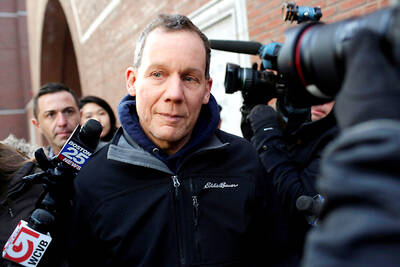
An American scientist convicted of lying to US authorities about payments from China while he was at Harvard University has rebuilt his research lab in Shenzhen, China, to pursue technology the Chinese government has identified as a national priority: embedding electronics into the human brain. Charles Lieber, 67, is among the world’s leading researchers in brain-computer interfaces. The technology has shown promise in treating conditions such as amyotrophic lateral sclerosis and restoring movement in paralyzed people. It also has potential military applications: Scientists at the Chinese People’s Liberation Army have investigated brain interfaces as a way to engineer super soldiers by boosting
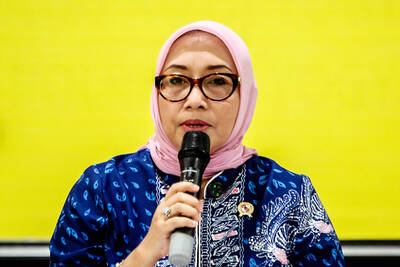
Indonesian police have arrested 13 people after shocking images of alleged abuse against small children at a daycare center went viral, sparking outrage across the nation, officials said on Monday. Police on Friday last week raided Little Aresha, a daycare center in Yogyakarta on Java island, following a report from a former employee. CCTV footage circulating on social media showed children, most younger than two, lying on the floor wearing only diapers, their hands and feet bound with rags. The police have confirmed that the footage is authentic. Police said they also found 20 children crammed into a room just 3m by 3m. “So
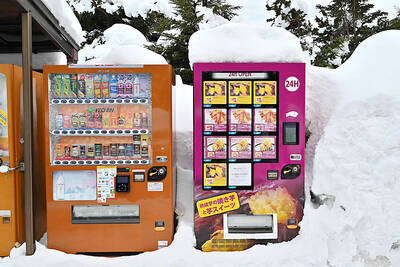
From post offices and parks to stations and even the summit of Mount Fuji, Japan’s vending machines are ubiquitous, but with the rapid pace of inflation cooling demand for their drinks, operators are being forced to rethink the business. Last month beverage giant DyDo Group Holdings announced it would remove about 20,000 vending machines — about 7 percent of their stock nationwide — by January next year, to “reconstruct a profitable network.” Pokka Sapporo Food & Beverage, based in Nagoya, also said last month it would sell its 40,000-machine operation to Osaka-based Lifedrink Co. “The strength of the vending machine
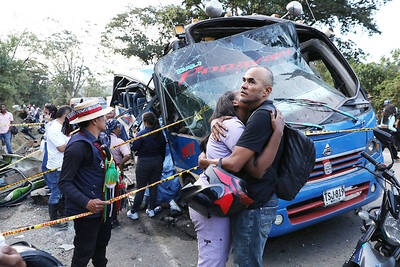
A highway bomb attack in a restive region of southwestern Colombia on Saturday killed 14 people and injured at least 38, the latest spate of violence ahead of next month’s presidential election. Authorities blamed the attack in the Cauca department — a conflict-ridden, coca-growing region — on dissidents of the now-disbanded FARC guerrilla army, who have been sowing violence across the country. “Those who carried out this attack ... are terrorists, fascists and drug traffickers,” Colombian President Gustavo Petro said on social media. “I want our very best soldiers to confront them,” he added. The leftist leader blamed the bombing


 RSS
RSS