


Senegal was holding legislative elections yesterday, a vital test for opposition parties which are trying to minimize the ruling party’s influence before the 2024 presidential election amid worries that Senegalese President Macky Sall might seek a third term.
About 7 million voters were eligible to elect 165 deputies in the National Assembly amid a politically tense atmosphere in the West African nation. Violent protests broke out last year after Sall’s main opponent, Ousmane Sonko, was arrested on rape charges and more than a dozen people were killed. Sonko, who came in third in the 2019 election, denies the allegations and his supporters have been vocal about their opposition to the president.
This year, he and another of Sall’s major opponents were disqualified as candidates, which sparked more widespread anger and protests in which three people died in June.
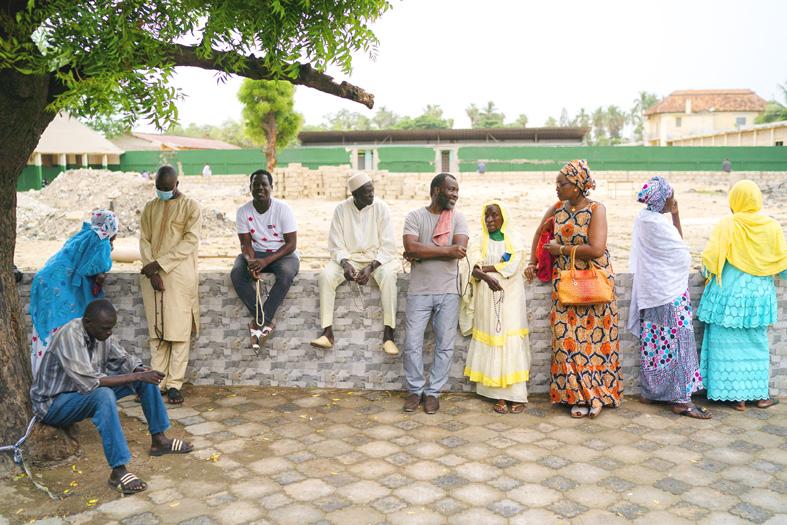
Photo: AP
Senegal, with a population of 17 million, is known for its stability in a region that has seen coups in three countries since 2020 and where leaders have changed laws to remain in power for third terms.
Yesterday’s election would give a clearer indication of what could happen in 2024.
“For [the ruling party], it is a question of doing everything to maintain an absolute majority in the National Assembly in order to be able to govern quietly until 2024 ... and guarding the possibility of passing certain laws to prepare for all eventualities at the end of Sall’s second term,” political analyst Mame Ngor Ngom said.
Even though Sonko’s candidacy was rejected by the Constitutional Council, he has organized opposition supporters across Senegal.
A victory for the opposition “would be synonymous with the rejection of a possible third candidacy for Sall and a probable victory in the next presidential election,” Ngom said.
Sall’s Benno Bokk Yakaar ruling party holds 75 percent of the legislature’s seats.
Serigne Thiam, a political science expert at Cheikh Anta Diop University in Dakar, said the opposition is pushing the subject of a possible third term over other issues.
“If the opposition wins, the president will no longer be able to think of a third term. On the other hand, if the ruling power wins the ballot, its supporters can push the president toward a third term,” he said.
Sall has not talked about a third term, but has promised to speak today.
Dissatisfaction with Sall has risen as possible adversaries — including the popular former mayor of Dakar, Khalifa Sall, and ex-president Abdoulaye Wade’s son Karim Wade — have been targeted by the judiciary and disqualified from running for office. Many accuse Sall of using his power to eliminate opponents.
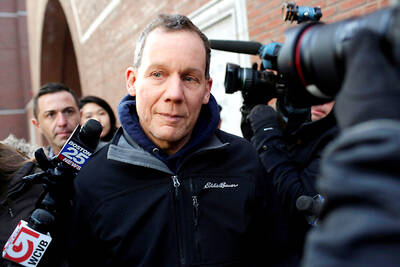
An American scientist convicted of lying to US authorities about payments from China while he was at Harvard University has rebuilt his research lab in Shenzhen, China, to pursue technology the Chinese government has identified as a national priority: embedding electronics into the human brain. Charles Lieber, 67, is among the world’s leading researchers in brain-computer interfaces. The technology has shown promise in treating conditions such as amyotrophic lateral sclerosis and restoring movement in paralyzed people. It also has potential military applications: Scientists at the Chinese People’s Liberation Army have investigated brain interfaces as a way to engineer super soldiers by boosting
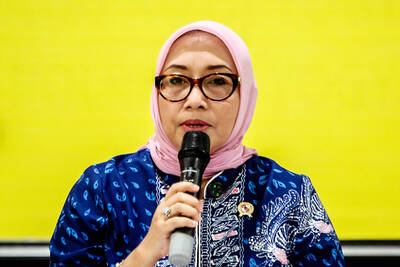
Indonesian police have arrested 13 people after shocking images of alleged abuse against small children at a daycare center went viral, sparking outrage across the nation, officials said on Monday. Police on Friday last week raided Little Aresha, a daycare center in Yogyakarta on Java island, following a report from a former employee. CCTV footage circulating on social media showed children, most younger than two, lying on the floor wearing only diapers, their hands and feet bound with rags. The police have confirmed that the footage is authentic. Police said they also found 20 children crammed into a room just 3m by 3m. “So
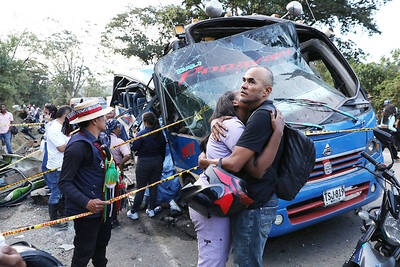
A highway bomb attack in a restive region of southwestern Colombia on Saturday killed 14 people and injured at least 38, the latest spate of violence ahead of next month’s presidential election. Authorities blamed the attack in the Cauca department — a conflict-ridden, coca-growing region — on dissidents of the now-disbanded FARC guerrilla army, who have been sowing violence across the country. “Those who carried out this attack ... are terrorists, fascists and drug traffickers,” Colombian President Gustavo Petro said on social media. “I want our very best soldiers to confront them,” he added. The leftist leader blamed the bombing
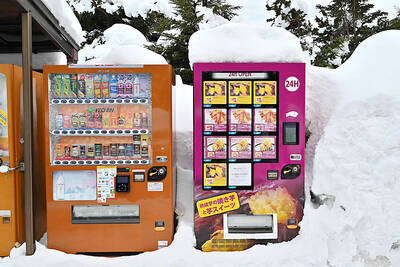
From post offices and parks to stations and even the summit of Mount Fuji, Japan’s vending machines are ubiquitous, but with the rapid pace of inflation cooling demand for their drinks, operators are being forced to rethink the business. Last month beverage giant DyDo Group Holdings announced it would remove about 20,000 vending machines — about 7 percent of their stock nationwide — by January next year, to “reconstruct a profitable network.” Pokka Sapporo Food & Beverage, based in Nagoya, also said last month it would sell its 40,000-machine operation to Osaka-based Lifedrink Co. “The strength of the vending machine


 RSS
RSS