


Singapore is bracing for a shortage of its de facto national dish, chicken rice, as major supplier Malaysia yesterday halted all chicken exports.
Restaurants and street stalls in the city-state are faced with hiking prices of the staple food or shutting down altogether as their supplies dwindle from Malaysia, where production has been disrupted by a global feed shortage.
Malaysia’s export ban is the latest sign of growing global food shortages, as countries, reeling from the effects of Russia’s invasion of Ukraine, extreme weather, and COVID-19 pandemic-related supply disruptions, scramble to shore up domestic supplies and tame food inflation.
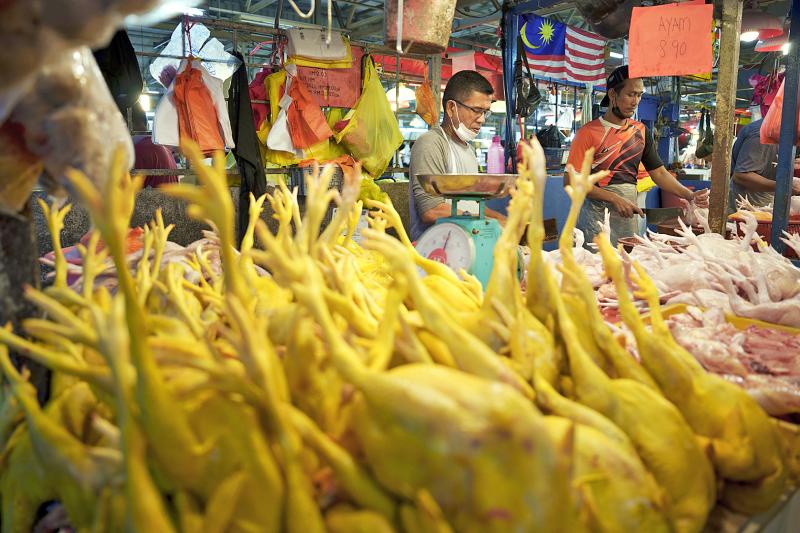
Photo: AP
Rising prices for basic food items have fueled protests in countries such as Argentina, Indonesia, Greece and Iran.
Daniel Tan, owner of a chain of seven stalls called OK Chicken Rice, said that Malaysia’s ban would be “catastrophic” for vendors like him.
“The ban would mean we are no longer able to sell. It’s like McDonald’s with no burgers,” he said.
His stalls usually source live birds from Malaysia, but would have to switch to using frozen chicken within this week and are expecting a “strong hit to sales” as customers react to the change in quality of the dish, Tan said.
Singapore, although among the wealthiest countries in Asia, has a heavily urbanized land area of just 730km2 and relies largely on imported food, energy and other goods.
Nearly all of its chicken is imported — 34 percent from Malaysia, 49 percent from Brazil and 12 percent from the US, Singapore Food Agency (SFA) data showed.
A plate of simple poached chicken and white rice cooked in broth served with a side of greens is a dish beloved by the country’s 5.5 million people and is usually widely available for about S$4 (US$2.92) at eateries known as hawker centers.
The SFA has said that the shortfall can be offset by frozen chicken from Brazil and has urged people to opt for other protein sources, such as fish.
Malaysia, itself facing soaring prices, has halted chicken exports until local production and costs stabilize.
Prices have been capped since February at 8.90 ringgit (US$2.03) per bird, and a subsidy of 729.43 million ringgit has been set aside for poultry farmers.
Chicken feed typically consists of grain and soybean, which Malaysia imports.
However, the government is having to consider alternatives amid a global feed shortage.
Lower quality feed means the birds are not growing as fast as usual, slowing down the entire supply chain, poultry farmer Syaizul Abdullah Syamil Zulkaffly said.
Previously, Syaizul’s farm of broiler chicken was harvested as many as seven times a year, with 45,000 birds harvested per cycle.
This year he expects only five harvest cycles.
Syaizul, who started feeling the pinch of higher operating costs during the pandemic, said that the export ban would only make things worse for poultry farmers.
“I don’t know if this industry can sustain me ... for the next five or 10 years,” he said, adding that he has had to go into debt to keep up with costs.
“Maybe I should go work at a petrol station or something is even better,” Syaizul said. “Less headache than actually managing a chicken farm.”
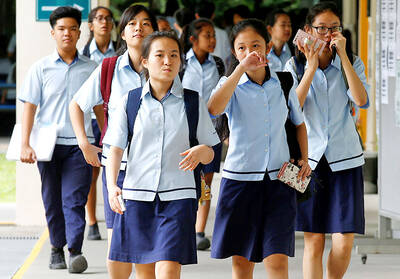
School bullies in Singapore are to face caning under new guidelines, but the education minister on Tuesday said it would be meted out only as a last resort with strict safeguards. Human rights groups regularly criticize Singapore for the use of corporal punishment, which remains part of the school and criminal justice systems, but authorities have defended it as a deterrent to crime and serious misconduct. Caning was discussed in the parliament after legislators asked how it would be used in relation to bullying in schools. The debate followed stricter guidelines on serious student misconduct, including bullying, unveiled by the Singaporean Ministry of
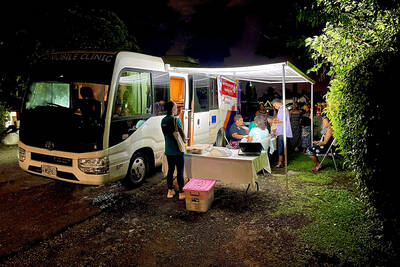
As evening falls in Fiji’s capital, a steady stream of people approaches a makeshift clinic that is a first line of defense against one of the world’s fastest-growing HIV epidemics. In the South Pacific nation — a popular tourist destination of just under a million people — more than 2,000 new HIV cases were recorded last year, a 26 percent increase from 2024. The government has declared an HIV outbreak and described it as a national crisis. “It’s spreading like wildfire,” said Siteri Dinawai, 46, who came to be tested. The Moonlight Clinic, a converted minibus parked in a suburban cul-de-sac in Suva, is
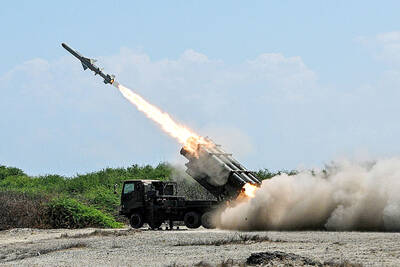
A MESSAGE: Japan’s participation in the Balikatan drills is a clear deterrence signal to China not to attack Taiwan while the US is busy in the Middle East, an analyst said The Japan Self-Defense Forces yesterday fired a Type 88 anti-ship missile during a joint maritime exercise with US, Australian and Philippine forces, hitting a decommissioned Philippine Navy ship in waters facing the disputed South China Sea, in drills that underscore Tokyo’s rising willingness to project military power on China’s doorstep. The drill took place as Manila and Tokyo began talks on a potential defense equipment transfer, made possible by Japan’s decision to scrap restrictions on military exports. The discussions include the possible early transfer of Abukuma-class destroyers and TC-90 aircraft to the Philippines, Japanese Minister of Defense Shinjiro Koizumi said. Philippine Secretary of
Separatists in Alberta are preparing to submit a petition tomorrow that they said has enough signatures to force a referendum on independence for the oil-rich Canadian province. Polls indicate the pro-independence camp remains a minority among Alberta’s 5 million people, but has hit a historic high of roughly 30 percent. Alberta separatists are also closer than ever to forcing a referendum, riding momentum fueled by intensifying grievances over Ottawa’s control of the provincial oil industry. They have also undeniably gotten a boost from the return to power of US President Donald Trump. After launching a petition in January, Stay Free Alberta, the group


 RSS
RSS