


AUSTRALIA
Sydney warns of ‘slime’
Booming growth of moss and algae, falling autumn leaves and persistent wet weather have created a slippery threat to Sydney’s safety that has sparked increased footpath cleaning and a warning for people to be careful. The City of Sydney said the issue of slippery paths around the central business district had become so serious that it had changed its seasonal routines. The Royal Botanic Gardens’ chief scientist, Brett Summerall, said he had never seen growth like it. “There’s a lot of slimy stuff everywhere,” he said. “Mosses are really, really loving the conditions at the moment.”
NEPAL
Plane goes missing
A passenger plane with 22 people on board went missing yesterday. The Twin Otter aircraft operated by Tara Air took off from the western town of Pokhara bound for Jomsom at 9:55am, but air traffic control lost contact after 15 minutes. “We are trying to locate the possible area where the aircraft might be,” said Sudarshan Bartaula, spokesman for Tara Air. “Search and rescue teams from both the police and the army are heading toward that direction.” He said there were 19 passengers on board and three crew members. The passengers included two Germans and four Indians, with the remainder Nepali. Ministry of Home Affairs spokesman Phanindra Mani Pokharel said two helicopters had been deployed for a search operation, but “the bad weather is likely to hamper the search operation. The visibility is so poor that nothing can be seen.”
DR CONGO
Rebels kill 27 civillians
At least 27 civilians were killed by members of the notorious Allied Democratic Forces (ADF) rebel group in the east of the country on Saturday, the army and Red Cross said. The Kivu Security Tracker, which monitors violence in the region via a team of experts on the ground, posted on Twitter to say that at least 27 civilians had been killed in the attack. “We heard bullets at dawn in the village of Beu Manyama,” army spokesman Anthony Mualushayi said earlier on Saturday. “When we arrived, it was already too late, because the enemy ADF had already killed more than a dozen of our fellow citizens with machetes.”
NIGERIA
Thirty die in stampede
Thirty-one people were on Saturday killed in the south of the country after a stampede erupted during a crowded church charity event where food was being distributed. Shoes and slippers lay scattered on the ground after the disaster in Port Harcourt city in southern Rivers State when people tried to force their way into the event, police and witnesses said. A local Kings Assembly church organization was offering food and gifts for the impoverished at the Port Harcourt Polo Club when a “mammoth” crowd got out of control, Rivers State police said.
UNITED KINGDOM
Imperial system to return
Prime Minister Boris Johnson is reportedly to announce the return of imperial measurements to mark the queen’s platinum jubilee. Britain currently uses a mix of imperial and metric measurements, with speed limits in miles per hour and milk and beer bought in pints. Johnson is expected to announce next week that British shops would be allowed to sell products in pounds and ounces. While it is currenlty legal to price goods in pounds and ounces, these have to be displayed alongside the price in grams and kilograms.
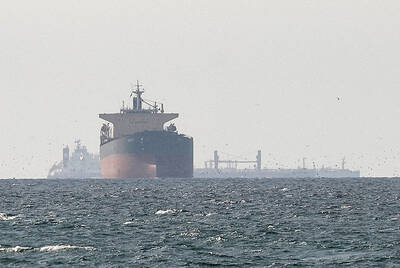
A ship that appears to be taking on the identity of a scrapped gas carrier exited the Strait of Hormuz on Friday, showing how strategies to get through the waterway are evolving as the Middle East war progresses. The vessel identifying as liquefied natural gas (LNG) carrier Jamal left the Strait on Friday morning, ship-tracking data show. However, the same tanker was also recorded as having beached at an Indian demolition yard in October last year, where it is being broken up, according to market participants and port agent’s reports. The ship claiming to be Jamal is likely a zombie vessel that
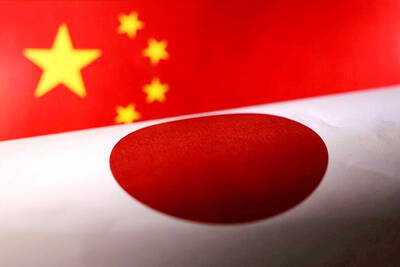
Japan is to downgrade its description of ties with China from “one of its most important” in an annual diplomatic report, according to a draft reviewed by Reuters, as relations with Beijing worsen. This year’s Diplomatic Bluebook, which Japanese Prime Minister Sanae Takaichi’s government is expected to approve next month, would instead describe China as an important neighbor and the relationship as “strategic” and “mutually beneficial.” The draft cites a series of confrontations with Beijing over the past year, including export controls on rare earths, radar lock-ons targeting Japanese military aircraft and increased pressure around Taiwan. The shift in tone underscores a deterioration

LAW CONSTRAINTS: The US has been pressing allies to send warships to open the Strait, but Tokyo’s military actions are limited under its postwar pacifist constitution Japan could consider deploying its military for minesweeping in the Strait of Hormuz if a ceasefire is reached in the war on Iran, Japanese Minister of Foreign Affairs Toshimitsu Motegi said yesterday. “If there were to be a complete ceasefire, hypothetically speaking, then things like minesweeping could come up,” Motegi said. “This is purely hypothetical, but if a ceasefire were established and naval mines were creating an obstacle, then I think that would be something to consider.” Japan’s military actions are limited under its postwar pacifist constitution, but 2015 security legislation allows Tokyo to use its Self-Defense Forces overseas if an attack,

German Chancellor Friedrich Merz’s conservative Christian Democratic Union (CDU) yesterday faced a regional election battle in Rhineland-Palatinate, now held by the center-left Social Democratic Party (SPD). Merz’s CDU has enjoyed a narrow poll lead over the SPD — their coalition partners at the national level — who have ruled the mid-sized state for 35 years. Polling third is the far-right Alternative for Germany (AfD), which spells a greater threat to the two centrist parties in several state elections in September in the country’s ex-communist east. The picturesque state of Rhineland-Palatinate, bordering France, Belgium and Luxembourg and with a population of about 4 million,


 RSS
RSS