


The US and EU yesterday led an international outcry after Israeli police charged the funeral procession in Jerusalem of Palestinian journalist Shireen Abu Akleh and beat pallbearers who almost dropped her coffin.
Thousands of people packed Jerusalem’s Old City on Friday for the burial of the veteran al-Jazeera journalist, two days after she was killed in an Israeli army raid in the occupied West Bank.
Television footage showed the pallbearers struggling to stop Abu Akleh’s casket from falling to the ground as baton-wielding police officers charged toward them, grabbing Palestinian flags from mourners.
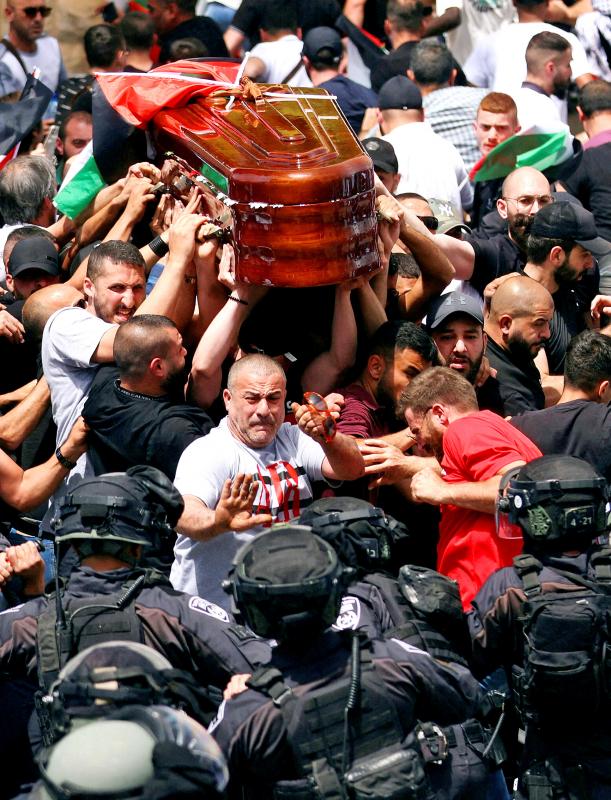
Photo: Reuters
The Jerusalem Red Crescent said that 33 people were injured, of whom six were hospitalized.
Six arrests were made after mourners had thrown “rocks and glass bottles,” Israeli authorities said.
Israel and Palestinians on Wednesday traded blame for the death of Abu Akleh, who was shot in the head during an Israeli army raid on the Jenin refugee camp.
An interim investigation could not determine who fired the fatal bullet, the Israeli army said, adding that stray Palestinian gunfire or Israeli sniper fire aimed at militants were also possible causes.
However, the Palestinian prosecutor’s office in the West Bank city of Ramallah said later that the initial results of an investigation showed “the only origin of the shooting was the Israeli occupation forces.”
Al-Jazeera has said Israel killed her “deliberately” and “in cold blood.”
In a rare, unanimous statement, the UN Security Council condemned the killing and called for “an immediate, thorough, transparent and impartial investigation,” diplomats said.
Abu Akleh, a Christian and a Palestinian-American, was a star reporter and her funeral drew massive crowds.
As her body left St Joseph’s hospital in Israeli-annexed east Jerusalem, Israeli police stormed mourners who had hoisted Palestinian flags.
Police said about “300 rioters” had arrived at the hospital for the procession and “prevented the family members from loading the coffin onto the hearse to travel to the cemetery — as had been planned and coordinated with the family in advance.”
Police said they intervened “to disperse the mob and prevent them from taking the coffin, so that the funeral could proceed as planned.”
Glass bottles and other objects were thrown at police, they added in a statement.
The US was “deeply troubled to see the images of Israeli police intruding into her funeral procession today,” US Secretary of State Antony Blinken said. “Every family deserves to be able to lay their loved ones to rest in a dignified and unimpeded manner.”
The EU said it was “appalled by the violence in the St Joseph Hospital compound and the level of unnecessary force exercised by Israeli police throughout the funeral procession.”
UN Secretary-General Antonio Guterres was also “deeply disturbed” by the violence, according to a spokesman.
Thousands of Palestinian mourners attempted to follow the coffin toward the cemetery just outside the walled Old City.
Police briefly attempted to prevent them, but ultimately relented, allowing thousands to stream toward the graveside, and did not intervene as Palestinian flags were waved, Agence France-Presse reporters said.
In a sign of Abu Akleh’s prominence, she was given what was described as a full state memorial service on Thursday at Palestinian President Mahmoud Abbas’ compound in Ramallah before her body was transferred to Jerusalem.
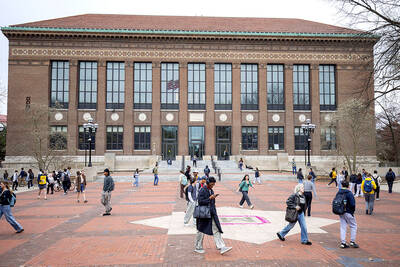
A Chinese scientist was arrested while arriving in the US at Detroit airport, the second case in days involving the alleged smuggling of biological material, authorities said on Monday. The scientist is accused of shipping biological material months ago to staff at a laboratory at the University of Michigan. The FBI, in a court filing, described it as material related to certain worms and requires a government permit. “The guidelines for importing biological materials into the US for research purposes are stringent, but clear, and actions like this undermine the legitimate work of other visiting scholars,” said John Nowak, who leads field

Brazil, the world’s largest Roman Catholic country, saw its Catholic population decline further in 2022, while evangelical Christians and those with no religion continued to rise, census data released on Friday by the Brazilian Institute of Geography and Statistics (IBGE) showed. The census indicated that Brazil had 100.2 million Roman Catholics in 2022, accounting for 56.7 percent of the population, down from 65.1 percent or 105.4 million recorded in the 2010 census. Meanwhile, the share of evangelical Christians rose to 26.9 percent last year, up from 21.6 percent in 2010, adding 12 million followers to reach 47.4 million — the highest figure

Swedish campaigner Greta Thunberg was deported from Israel yesterday, the Israeli Ministry of Foreign Affairs said, the day after the Israeli navy prevented her and a group of fellow pro-Palestinian activists from sailing to Gaza. Thunberg, 22, was put on a flight to France, the ministry said, adding that she would travel on to Sweden from there. Three other people who had been aboard the charity vessel also agreed to immediate repatriation. Eight other crew members are contesting their deportation order, Israeli rights group Adalah, which advised them, said in a statement. They are being held at a detention center ahead of a
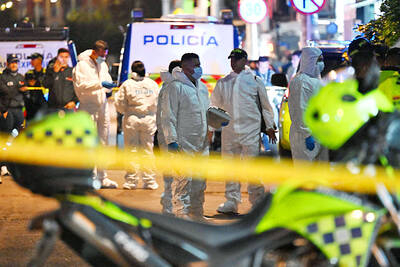
‘THE RED LINE’: Colombian President Gustavo Petro promised a thorough probe into the attack on the senator, who had announced his presidential bid in March Colombian Senator Miguel Uribe Turbay, a possible candidate in the country’s presidential election next year, was shot and wounded at a campaign rally in Bogota on Saturday, authorities said. His conservative Democratic Center party released a statement calling it “an unacceptable act of violence.” The attack took place in a park in the Fontibon neighborhood when armed assailants shot him from behind, said the right-wing Democratic Center, which was the party of former Colombian president Alvaro Uribe. The men are not related. Images circulating on social media showed Uribe Turbay, 39, covered in blood being held by several people. The Santa Fe Foundation


 RSS
RSS