


Yvonne Wallech loves the digital respite and sense of community in her tiny US town, where cellphone service is effectively barred and outsiders come seeking the shelter of that quiet.
She has Internet at her property in Green Bank, West Virginia, but as soon as she leaves home — and is not on someone else’s connection — there are no pings, dings or rings.
“Coming here and being able — if you want — to get away from it [Internet], there is a certain cleansing that comes to you, that gives you time to clear your mind,” the 59-year-old owner of a gift shop said.
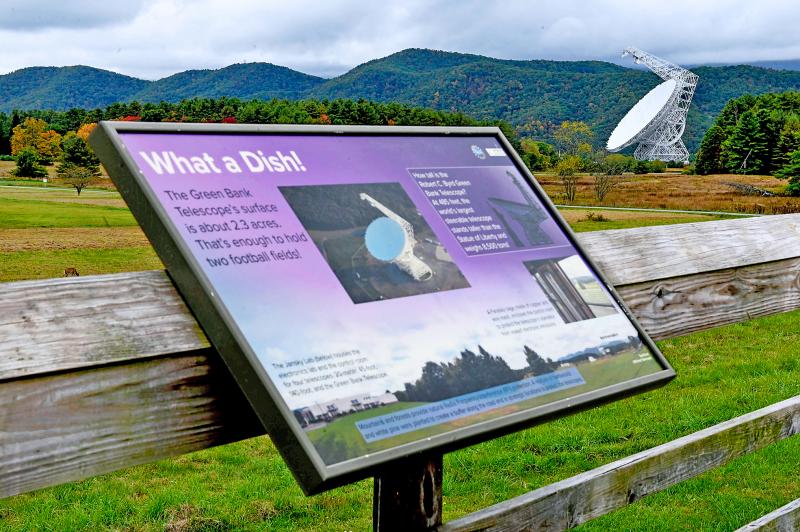
Photo: AFP
Green Bank is changing: Wi-Fi is officially discouraged, but has become common, property values are climbing and not everyone agrees about what comes next for this seeming digital age refuge that is fraught with complexity.
Despite its population of fewer than 200 people and remote location among rolling hills, and dense forests and farms about four hours’ drive from the US capital, Washington, it is a place of international fascination.
That is because it is home to the more than 60-year-old Green Bank Observatory, which requires radio silence to be able to peer deep into space to observe stars and black holes.
To protect the observatory’s work, as well as the operations of a nearby spy installation, the US government created the National Radio Quiet Zone in 1958.
The zone imposes limits and oversight on radio waves in the almost 34,000km2 area that surround Green Bank, where restrictions are officially supposed to be tightest on electronic noise makers such as Wi-Fi routers.
Locals said that wireless Internet has become widespread in the past few years and that they had not faced any sanctions, despite rules that technically allow fining contraveners US$50.
Even before Wi-Fi’s proliferation, locals access Netflix or Facebook through hardwired connections, yet cell service has remained nonexistent under the rules.
West Virginia state tourism officials promote this quirk of the area as the “ultimate digital detox.”
“In a world today where we can never go more than a minute or two without hearing the beep or the buzz of a technology device, it is the place you can go to get away from all of this,” West Virginia Department of Tourism Secretary Chelsea Ruby said.
It is a pitch that resonates in the US, where Pew Research data shows that 85 percent of US adults say they have a smartphone and nearly one-third report they are “almost constantly” online.
While visiting Green Bank Observatory, tourist Nancy Showalter was surprised to learn why her phone could not find a signal, but she also said she had quickly come to like the silence.
“You visit, you listen to other people,” said the 78-year-old from Indiana. “I think it’s wonderful. I think more people should do it.”
Not everyone agrees, of course. Green Bank native Patrick Coleman, 69, said that the lack of cell service is dangerous and needs to end.
“People that live in this area are denied a safety net,” the bed and breakfast owner said, adding that an accident in a remote area could become serious without the ability to call for help.
He added that cell service is already available at nearby Snowshoe Mountain ski resort, a key economic driver locally that draws floods of tourists in the snowy months.
As the resort has grown to include high-end lodging, restaurants and shops, property values in surrounding Pocahontas County have by some measures increased at almost triple the national rate over the past decade.
“They may very well want to get a Walmart right here and Kroger’s right here, and all the things that they’ve spent their life being used to,” said long-time local George Deike, referring to the influx of outsiders.
“I don’t know whether the whole world has to be like that,” added Deike, who runs an equestrian retreat.
Recent arrival Ned Dougherty came to Green Bank because he was intrigued by its less-connected lifestyle that he had read about in news reports.
“I came here hoping for a quieter zone, a place without Wi-Fi,” the 38-year-old teacher said. “Everybody wishes this was the Shangri La of quiet.”
He said that there is a more direct way to gain control of one’s digital life.
“I don’t have to use my phone, no matter where I live,” he said. “It’s not solved by arriving in a zip code. If I want to turn off, I have to do it myself ... and I think we all know we should.”
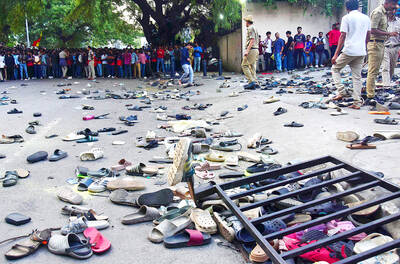
Packed crowds in India celebrating their cricket team’s victory ended in a deadly stampede on Wednesday, with 11 mainly young fans crushed to death, the local state’s chief minister said. Joyous cricket fans had come out to celebrate and welcome home their heroes, Royal Challengers Bengaluru, after they beat Punjab Kings in a roller-coaster Indian Premier League (IPL) cricket final on Tuesday night. However, the euphoria of the vast crowds in the southern tech city of Bengaluru ended in disaster, with Indian Prime Minister Narendra calling it “absolutely heartrending.” Karnataka Chief Minister Siddaramaiah said most of the deceased are young, with 11 dead
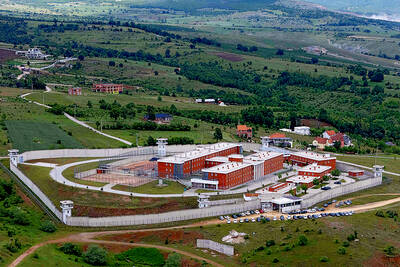
By 2027, Denmark would relocate its foreign convicts to a prison in Kosovo under a 200-million-euro (US$228.6 million) agreement that has raised concerns among non-governmental organizations (NGOs) and residents, but which could serve as a model for the rest of the EU. The agreement, reached in 2022 and ratified by Kosovar lawmakers last year, provides for the reception of up to 300 foreign prisoners sentenced in Denmark. They must not have been convicted of terrorism or war crimes, or have a mental condition or terminal disease. Once their sentence is completed in Kosovan, they would be deported to their home country. In

Brazil, the world’s largest Roman Catholic country, saw its Catholic population decline further in 2022, while evangelical Christians and those with no religion continued to rise, census data released on Friday by the Brazilian Institute of Geography and Statistics (IBGE) showed. The census indicated that Brazil had 100.2 million Roman Catholics in 2022, accounting for 56.7 percent of the population, down from 65.1 percent or 105.4 million recorded in the 2010 census. Meanwhile, the share of evangelical Christians rose to 26.9 percent last year, up from 21.6 percent in 2010, adding 12 million followers to reach 47.4 million — the highest figure

LOST CONTACT: The mission carried payloads from Japan, the US and Taiwan’s National Central University, including a deep space radiation probe, ispace said Japanese company ispace said its uncrewed moon lander likely crashed onto the moon’s surface during its lunar touchdown attempt yesterday, marking another failure two years after its unsuccessful inaugural mission. Tokyo-based ispace had hoped to join US firms Intuitive Machines and Firefly Aerospace as companies that have accomplished commercial landings amid a global race for the moon, which includes state-run missions from China and India. A successful mission would have made ispace the first company outside the US to achieve a moon landing. Resilience, ispace’s second lunar lander, could not decelerate fast enough as it approached the moon, and the company has


 RSS
RSS