


The number of people living with high blood pressure has more than doubled since 1990, said a major study published yesterday, which found that half of all sufferers — about 720 million people — went untreated in 2019.
Hypertension is linked to more than 8.5 million deaths each year, and is the leading risk factor for strokes, and heart and liver disease.
To find out how hypertension rates have developed globally over the past 30 years, an international team from Non-Communicable Disease Risk Factor Collaboration analyzed data from more than 1,200 national studies covering nearly every country in the world. They used modeling to estimate high blood pressure rates across populations, as well as the number of people taking medication for the condition.
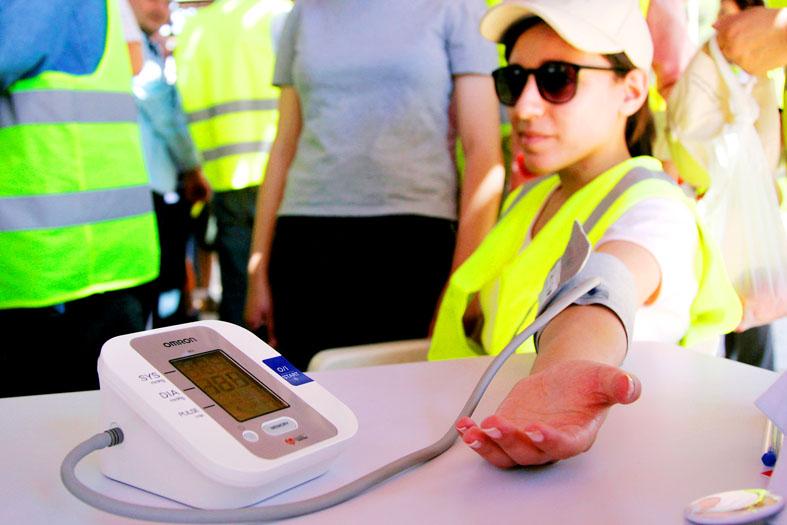
Photo: Reuters
The study found that in 2019 there were 626 million women and 652 million men living with hypertension.
That represented about double the estimated 331 million women and 317 million men with the condition in 1990.
Forty-one percent of women and 51 percent of men with high blood pressure were unaware of their condition, meaning hundreds of millions of people were missing out on effective treatment, the study found.
“Despite medical and pharmacological advances over decades, global progress in hypertension management has been slow, and the vast majority of people with hypertension remain untreated,” said Majid Ezzati, a professor at Imperial College London’s School of Public Health and senior study author.
In the study, published in The Lancet medical journal, Canada and Peru had the lowest proportion of high blood pressure among adults in 2019, with about one in four people living with the condition.
Taiwan, Japan, South Korea, Spain, Switzerland and the UK had the lowest hypertension rates in women at less than 24 percent, while Bangladesh, Eritrea, Ethiopia and the Solomon Islands had the lowest rates in men at less than 25 percent.
At the other end of the spectrum, more than half of women in Paraguay and Tuvalu had hypertension; more than half of men in Argentina, Paraguay and Tajikistan also have the condition, the study showed.
Robert Storey, professor of cardiology at the University of Sheffield, said that COVID-19 had distracted governments from hypertension.
“The pandemic of cardiovascular disease has received less attention in the last 18 months, but reflects concerning worldwide trends in unhealthy lifestyle choices such as high fat, sugar, salt and alcohol intake, sedentary lifestyles with avoidance of exercise and smoking,” said Storey, who was not involved in the study. “It is essential that best practice in government policy is adopted by all countries in order to avoid a time bomb of heart disease and stroke.”

An American scientist convicted of lying to US authorities about payments from China while he was at Harvard University has rebuilt his research lab in Shenzhen, China, to pursue technology the Chinese government has identified as a national priority: embedding electronics into the human brain. Charles Lieber, 67, is among the world’s leading researchers in brain-computer interfaces. The technology has shown promise in treating conditions such as amyotrophic lateral sclerosis and restoring movement in paralyzed people. It also has potential military applications: Scientists at the Chinese People’s Liberation Army have investigated brain interfaces as a way to engineer super soldiers by boosting
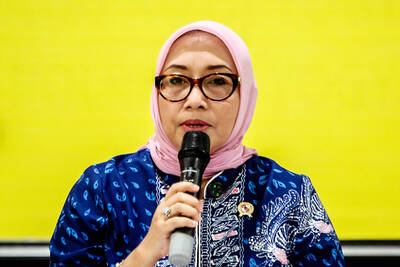
Indonesian police have arrested 13 people after shocking images of alleged abuse against small children at a daycare center went viral, sparking outrage across the nation, officials said on Monday. Police on Friday last week raided Little Aresha, a daycare center in Yogyakarta on Java island, following a report from a former employee. CCTV footage circulating on social media showed children, most younger than two, lying on the floor wearing only diapers, their hands and feet bound with rags. The police have confirmed that the footage is authentic. Police said they also found 20 children crammed into a room just 3m by 3m. “So
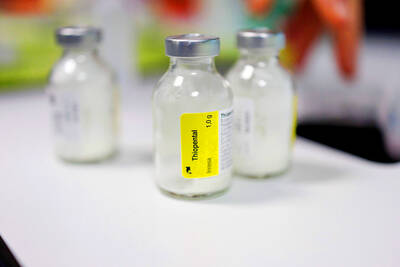
A grieving mother has ended her life at a clinic in Switzerland four years after the death of her only child. Wendy Duffy, 56, a physically healthy woman, died at the Pegasos clinic in Basel after struggling to cope with the death of her 23-year-old son, Marcus. The former care worker, from the West Midlands, England, had previously attempted to take her own life. The case comes as assisted dying would not become law in England and Wales after proposed legislation, branded “hopelessly flawed” by opponents, ran out of time. Ruedi Habegger, the founder of Pegasos, described Duffy’s death as

From post offices and parks to stations and even the summit of Mount Fuji, Japan’s vending machines are ubiquitous, but with the rapid pace of inflation cooling demand for their drinks, operators are being forced to rethink the business. Last month beverage giant DyDo Group Holdings announced it would remove about 20,000 vending machines — about 7 percent of their stock nationwide — by January next year, to “reconstruct a profitable network.” Pokka Sapporo Food & Beverage, based in Nagoya, also said last month it would sell its 40,000-machine operation to Osaka-based Lifedrink Co. “The strength of the vending machine


 RSS
RSS