


The Indonesian government has said it is satisfied with the effectiveness of the Chinese COVID-19 vaccine it has been using, after China’s top disease control official said that current vaccines offer low protection against the novel coronavirus.
Siti Nadia Tarmizi, a spokesperson for Indonesia’s COVID-19 vaccine program, on Monday said the WHO had found that the Chinese vaccines had met requirements by being more than 50 percent effective.
Clinical trials in Indonesia for the vaccine from Chinese drugmaker Sinovac showed that it was 65 percent effective, she said.
“It means ... the ability to form antibodies in our bodies is still very good,” she added.
Researchers who conducted Sinovac’s clinical trials in Brazil released new data that confirmed the company’s previously announced efficacy rate of about 50 percent.
The paper, which was published on a Web site for scientists and has not yet been peer reviewed, showed that the vaccine was 50.7 percent effective against symptomatic COVID-19 cases and much stronger against severe ones.
Chinese Center for Disease Control and Prevention Director Gao Fu (高福) told a conference on Saturday that existing COVID-19 vaccines had low effectiveness rates and mixing vaccines is among strategies being considered to boost their effectiveness.
Those comments appeared to run counter to China’s official narrative that has tried to promote the country’s vaccines and at times discredit its Western counterparts.
China has distributed hundreds of millions of doses of domestically made vaccines abroad and is relying on them for its own mass immunization campaign.
Tarmizi said Indonesia would wait to see the results of any clinical trials before considering mixing vaccines.
“We are going to wait, waiting for the clinical trial to ensure the idea or innovation will have better effectiveness, immunogenicity, and efficacy level compared to the current condition,” she said.
Experts have said mixing vaccines, or sequential immunization, might boost effectiveness.
Researchers in the UK are studying a possible combination of the Pfizer and the AstraZeneca vaccines.

Packed crowds in India celebrating their cricket team’s victory ended in a deadly stampede on Wednesday, with 11 mainly young fans crushed to death, the local state’s chief minister said. Joyous cricket fans had come out to celebrate and welcome home their heroes, Royal Challengers Bengaluru, after they beat Punjab Kings in a roller-coaster Indian Premier League (IPL) cricket final on Tuesday night. However, the euphoria of the vast crowds in the southern tech city of Bengaluru ended in disaster, with Indian Prime Minister Narendra calling it “absolutely heartrending.” Karnataka Chief Minister Siddaramaiah said most of the deceased are young, with 11 dead
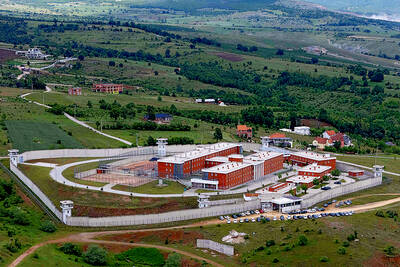
By 2027, Denmark would relocate its foreign convicts to a prison in Kosovo under a 200-million-euro (US$228.6 million) agreement that has raised concerns among non-governmental organizations (NGOs) and residents, but which could serve as a model for the rest of the EU. The agreement, reached in 2022 and ratified by Kosovar lawmakers last year, provides for the reception of up to 300 foreign prisoners sentenced in Denmark. They must not have been convicted of terrorism or war crimes, or have a mental condition or terminal disease. Once their sentence is completed in Kosovan, they would be deported to their home country. In

Brazil, the world’s largest Roman Catholic country, saw its Catholic population decline further in 2022, while evangelical Christians and those with no religion continued to rise, census data released on Friday by the Brazilian Institute of Geography and Statistics (IBGE) showed. The census indicated that Brazil had 100.2 million Roman Catholics in 2022, accounting for 56.7 percent of the population, down from 65.1 percent or 105.4 million recorded in the 2010 census. Meanwhile, the share of evangelical Christians rose to 26.9 percent last year, up from 21.6 percent in 2010, adding 12 million followers to reach 47.4 million — the highest figure

LOST CONTACT: The mission carried payloads from Japan, the US and Taiwan’s National Central University, including a deep space radiation probe, ispace said Japanese company ispace said its uncrewed moon lander likely crashed onto the moon’s surface during its lunar touchdown attempt yesterday, marking another failure two years after its unsuccessful inaugural mission. Tokyo-based ispace had hoped to join US firms Intuitive Machines and Firefly Aerospace as companies that have accomplished commercial landings amid a global race for the moon, which includes state-run missions from China and India. A successful mission would have made ispace the first company outside the US to achieve a moon landing. Resilience, ispace’s second lunar lander, could not decelerate fast enough as it approached the moon, and the company has


 RSS
RSS