


Hong Kong Chief Executive Carrie Lam (林鄭月娥) has responded to concerns that young children are being separated from their parents in quarantine centers as the territory seeks to control its latest COVID-19 outbreak.
More than 120 cases have been recorded so far in a cluster linked to a high-end Hong Kong gym popular with the expat and finance community. It has prompted the temporary closure of the US consulate, sudden lockdowns of residential buildings for mass testing, and hundreds have been quarantined, giving rise to allegations of alarming family separations.
Under Hong Kong’s quarantine rules, which are among the strictest in the world and have been in place since last year, any positive case is sent to hospital for isolation and all close contacts are quarantined in a government facility for two weeks, including children.
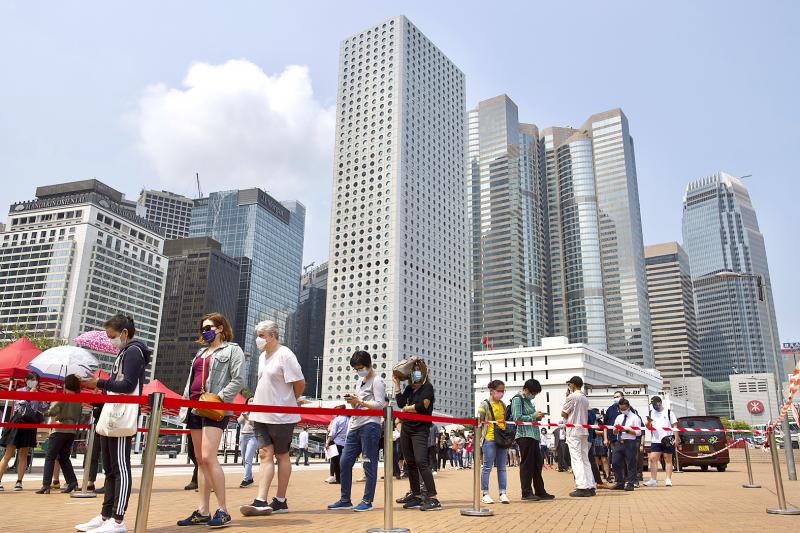
Photo: AP
Subject to case-by-case assessment, caretakers might be arranged by the family to accompany those with special needs, such as infants, the government said.
At a regular briefing yesterday, Lam said the government had “no policy to deliberately separate children from their parents,” but that public health concerns had to be respected.
“Where the close contacts are young children of the parents ... we will exceptionally allow the admission of the children into hospital as well, where there will be appropriate arrangements,” she said.
However, Shahana Hoque-Ali, who moderates the Hong Kong Quarantine support group on Facebook, said that it had assisted in more than 100 cases of children who had faced separation from their parents in the past year, including dozens in the past week.
“It’s crazy,” said one mother, who said that she had to abruptly stop breastfeeding after being separated from her seven-month-old son last week when she was diagnosed with COVID-19.
“I got [a] fever last night because I have gone from breastfeeding to 100 percent pumping,” said the woman, who asked not to be identified.
Others have described quarantine centers without facilities such as refrigeration or baby amenities.
At least 750 people have been sent to quarantine facilities in the latest outbreak, including 118 children as of Monday, the South China Morning Post reported.
Eight babies and parents who attended a childcare group last week with one of the parents who later tested positive were also quarantined in a government facility.
The US consulate said it was aware that many US citizens in Hong Kong are “concerned about local government testing, quarantine, and hospitalization procedures, particularly in regard to the possible separation of children from their parents.”
It said it was “actively addressing” the concerns, “at the highest level of the Hong Kong government.”
A petition calling for young people to be allowed to isolate at home has received about 5,000 signatures, but has also prompted concern about different rules or exemptions for some groups based on nationality.
Lam confirmed the children of a US couple — who both worked in the consulate and who tested positive — had been allowed to stay in hospital isolation with them, but denied there was “special treatment,” saying that it was in line with the arrangements for exceptional circumstances.
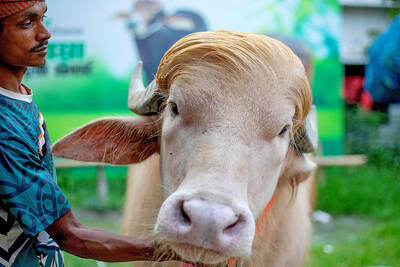
Crowds in Bangladesh are flocking to snap photographs with an unlikely social media star — an albino buffalo with flowing blond hair nicknamed “Donald Trump” that is due to be sacrificed within days. Owner Zia Uddin Mridha, 38, said his brother named the 700kg bull over its flowing helmet of hair resembling the signature look of the US president. “My younger brother picked this name because of the buffalo’s extraordinary hair,” he said at his farm in Narayanganj, just outside the capital, Dhaka. Mridha said that a constant stream of curious visitors — social media fans, onlookers and children — have come throughout

It began as a satirical online project. Now millions of young people in India are flocking to it as an outlet for their frustration. A parody political party called the Cockroach Janta Party, with the insect as its symbol, has exploded across India’s social media by turning absurdist humor into protest. Memes and short videos mocking corruption, joblessness and political dysfunction have flooded social media sites, where millions of users are embracing the cockroach — known for its ability to survive harsh conditions — as a tongue-in-cheek symbol of endurance. The online movement’s rise has been unusually rapid. The Cockroach Janta Party (CJP)

BIGGER ROLE: Beijing has said it maintains an impartial stance on the war in Ukraine, but by training Russian troops, China is far more involved than previously known China’s armed forces secretly trained about 200 Russian military personnel in China late last year, and some have since returned to fight in Ukraine, according to three European intelligence agencies and documents seen by Reuters. While China and Russia have held a number of joint military exercises since Moscow’s full-scale invasion of Ukraine in 2022, Beijing has repeatedly said that it is neutral in the conflict and presents itself as a peace mediator. The covert training sessions, which predominantly focused on the use of drones, were outlined in a dual-language Russian-Chinese agreement signed by senior Russian and Chinese officers in Beijing on
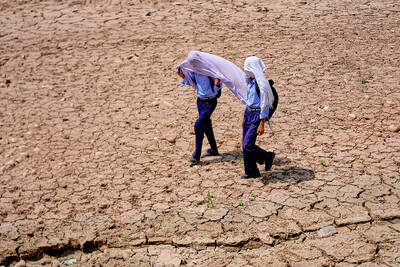
HOTTER: While Indians are accustomed to summer heat, climate change has caused northwestern India to warm faster than other parts of the country, an academic said Roads and markets have emptied during afternoons and some farmers have switched to nighttime work to avoid scorching temperatures as a heat wave grips large parts of India. The India Meteorological Department forecast maximum temperatures for yesterday of about 45°C in the capital, New Delhi, where authorities have opened temporary “cooling zones” to help people cope. The weather department warned that conditions would likely persist across several northern regions in the coming days, with temperatures staying well above seasonal averages. Authorities urged people to stay indoors during the hottest hours and take precautions against heat-related illnesses. India declares a heat wave whenever maximum temperatures


 RSS
RSS