


A decision to block a shipment of 250,000 doses of AstraZeneca’s COVID-19 vaccine destined for Australia was “not a hostile act,” Italian officials said on Friday.
Italian Minister of Foreign Affairs Luigi Di Maio made the remark while speaking at a news conference after a meeting with French Minister of Europe and Foreign Affairs Jean-Yves Le Drian.
“All of Europe is now ravaged by the British variant and by the concern for the increase in infections,” he said. “In coordination with the European institutions, we have decided not to allow the export of these 250,000 doses.”
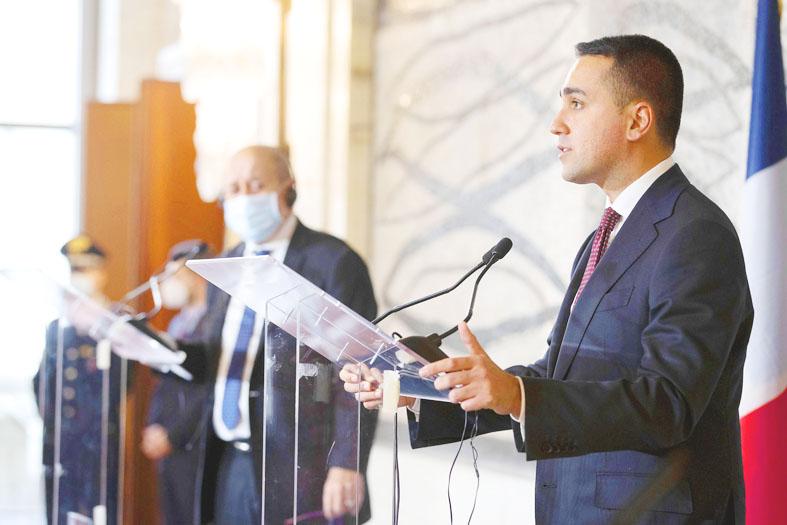
Photo: EPA-EFE
“It is not a hostile act towards Australia. We have only applied an EU regulation approved on Jan. 30,” he said.
The Italian government rejected AstraZeneca’s request to export doses to Australia on the grounds that the Anglo-Swedish company was failing to fulfil its promises on deliveries to the EU.
The EU has been engaged in a high-profile row with AstraZeneca since it informed officials of a shortfall in deliveries this quarter, owing to a production problem at one of its EU sites.
The company has said it can supply only about 40 million doses by the end of this month, compared with the 90 million foreseen in its contract.
A mechanism under which vaccine suppliers would need to gain authorization for exports out of the EU was drawn up in January, amid concerns that doses made in the bloc were being delivered to the UK.
Di Maio said that coronavirus vaccination campaigns needed to be sped up across the EU.
Australian Minister of Health Greg Hunt said that Italy’s move did not affect the pace of its COVID-19 vaccine rollout, because that shipment “had not been factored in to our distribution to the states and territories.”
The Australian government had “raised the issue with the European Commission through multiple channels, and in particular, we have asked the European Commission to review this decision,” he said.
German Minister of Health Jens Spahn has expressed caution over the long-term impact on global vaccine supplies after Italy’s move to reject the onward movement of doses, with the European Commission’s backing.
“With a measure like that, in the short term there’s a win, but we have to be careful that it doesn’t cause us problems in the medium term by disrupting the supply chains for vaccines and everything that’s needed in terms of precursors,” Spahn said.
French Minister of Health Olivier Veran said that his government could follow suit, given the shortage of doses in Europe.
In Italy, there were more than 24,000 new cases recorded on Friday and about 300 deaths.
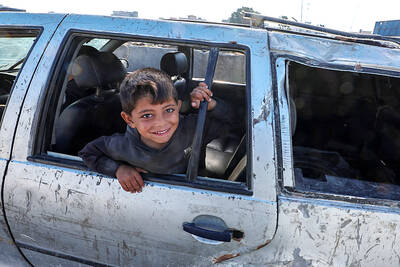
Gaza is rapidly running out of its limited fuel supply and stocks of food staples might become tight, officials said, after Israel blocked the entry of fuel and goods into the war-shattered territory, citing fighting with Iran. The Israeli military closed all Gaza border crossings on Saturday after announcing airstrikes on Iran carried out jointly with the US. Israeli authorities late on Monday night said that they would reopen the Kerem Shalom crossing from Israel to Gaza yesterday, for “gradual entry of humanitarian aid” into the strip, without saying how much. Israeli authorities previously said the crossings could not be operated safely during
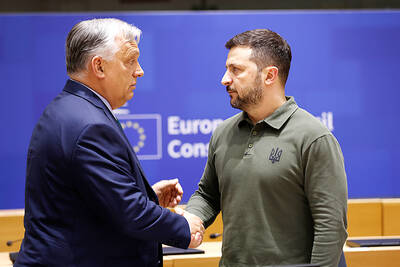
Hungarian authorities temporarily detained seven Ukrainian citizens and seized two armored cars carrying tens of millions of euros in cash across Hungary on suspicion of money laundering, officials said on Friday. The Ukrainians were released on Friday, following their detention on Thursday, but Hungarian officials held onto the cash, prompting Ukraine to accuse Hungary’s Russia-friendly government of illegally seizing the money. “We will not tolerate this state banditism,” Ukrainian Minister of Foreign Affairs Andrii Sybiha said. The seven detained Ukrainians were employees of the Ukrainian state-owned Oschadbank, who were traveling in the two armored cars that were carrying the money between Austria and

Kosovar President Vjosa Osmani on Friday after dissolving the Kosovar parliament said a snap election should be held as soon as possible to avoid another prolonged political crisis in the Balkan country at a time of global turmoil. Osmani said it is important for Kosovo to wrap up the upcoming election process and form functional institutions for political stability as the war rages in the Middle East. “Precisely because the geopolitical situation is that complex, it is important to finish this electoral process which is coming up,” she said. “It is very hard now to imagine what will happen next.” Kosovo, which declared

MORE BANS: Australia last year required sites to remove accounts held by under-16s, with a few countries pushing for similar action at an EU level and India considering its own ban Indonesia on Friday said it would ban social media access for children under 16, citing threats from online pornography, cyberbullying, online fraud and Internet addiction. “Accounts belonging to children under 16 on high-risk platforms will start to be deactivated, beginning with YouTube, TikTok, Facebook, Instagram, Threads, X, Bigo Live and Roblox,” Indonesian Minister of Communications and Digital Meutya Hafid said. “The government is stepping in so that parents no longer have to fight alone against the giants of the algorithm. Implementation will begin on March 28, 2026,” she said. The social media ban would be introduced in stages “until all platforms fulfill their


 RSS
RSS