


Thailand’s coconut-picking monkeys, long a popular tourist attraction, have become a sensitive trade issue as British advocates claim that the animals are abused and push for a boycott of the nation’s coconut products.
Thai Minister of Commerce Jurin Laksanawisit rejected the allegations made by People for the Ethical Treatment of Animals (PETA) and declared that coconut harvesting by monkeys is not a major part of the industry.
He said the animals are mostly a tourist attraction and are not harmed.
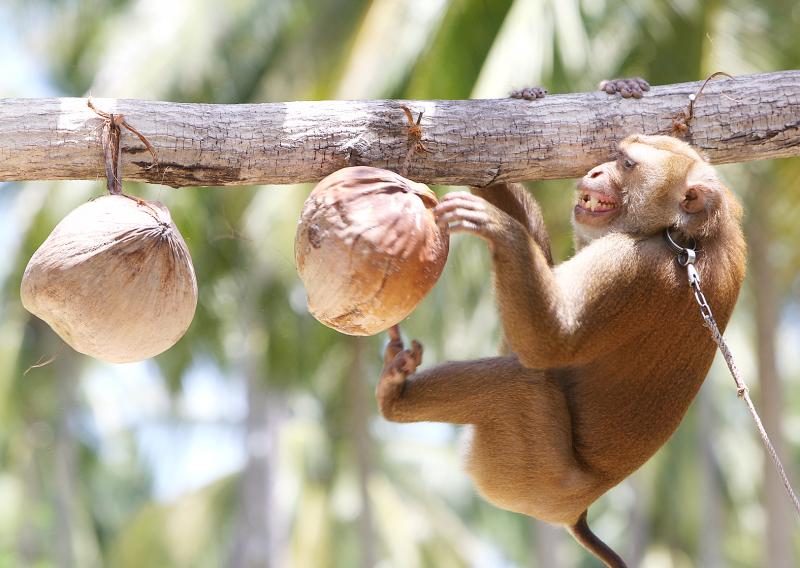
Photo: EPA-EFE
Jurin on Monday said that PETA’s campaign was affecting sales in the UK as well as other European countries.
Thailand last year exported 12.3 billion baht (US$395 million) of coconut milk, including 2.2 billion baht to the EU and UK, according to the Thai government.
PETA said an undercover investigation of eight Thai farms found that monkeys are forced to gather as many as 1,000 coconuts a day and treated cruelly.
It said its campaign has led several major retail outlets to remove products from companies alleged to use Thai coconuts harvested by monkeys.
The PETA campaign has drawn extra attention after it was publicly applauded by Carrie Symonds, the fiancee of British Prime Minister Boris Johnson.
PETA senior vice president Jason Baker rejected the Thai minister’s denial of monkey abuse in the industry.
“The government can lead the industry to operate humanely, with an animal-free method that the rest of the region has already adopted, or it can be responsible for the industry’s downfall, because the writing is on the wall,” he said in an e-mailed statement. “Increasing numbers of consumers are speaking with their wallets, and retailers are listening.”
Jurin said his ministry would hold a meeting today with coconut industry representatives and he would invite foreign diplomats to see for themselves how harvesting is carried out.
Somjai Saekow, a monkey trainer in the southern province of Surat Thani, told reporters that although monkeys are still used for gathering coconuts, there is less demand for them.
“I still think monkeys are useful tools in picking coconuts,” she said. “But I can tell you that things are changing.”
She said over the years shorter trees have been cultivated to facilitate picking coconuts by other methods.
She said most owners take good care of their monkeys and treat them just like pets, although there were sure to be some exceptions.
“We have to point out those commit the wrongs and correct them,” she said. “But I truly believe that most people treat their monkeys right. And that’s the best way to do get them to work.”

ROCKY RELATIONS: The figures on residents come as Chinese tourist numbers drop following Beijing’s warnings to avoid traveling to Japan The number of Chinese residents in Japan has continued to rise, even as ties between the two countries have become increasingly fractious, data released on Friday showed. As of the end of December last year, the number of Chinese residents had increased by 6.5 percent from the previous year to 930,428. Chinese people accounted for 22.6 percent of all foreign residents in Japan, making them by far the largest group, Japanese Ministry of Justice data showed. Beijing has criticized Tokyo in increasingly strident terms since Japanese Prime Minister Sanae Takaichi last year suggested that a military conflict around Taiwan could
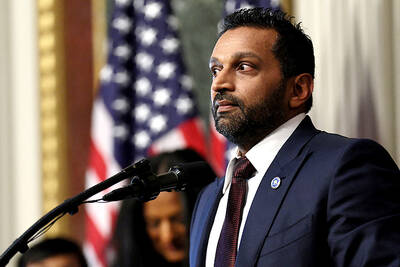
A pro-Iran hacking group claimed to breach FBI Director Kash Patel’s personal e-mail inbox and posted some of the contents online. The e-mails provided by the hacking group include travel details, correspondence with leasing agents in Washington and global entry, and loyalty account numbers. The e-mail address the hackers claim to have compromised has been previously tied to Patel’s personal details, and the leaked e-mails contain photos of Patel and others, in addition to correspondence with family members and colleagues. “The FBI is aware of malicious actors targeting Director Patel’s personal email information,” the agency said in a statement on
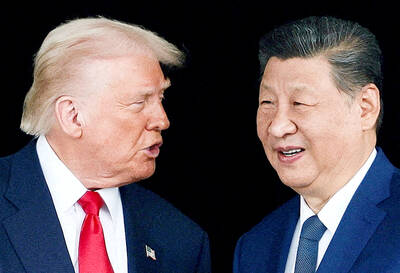
RIVALRY: ‘We know that these are merely symbolic investigations initiated by China, which is in fact the world’s most profligate disrupter of supply chains,’ a US official said China has started a pair of investigations into US trade practices, retaliating against similar probes by US President Donald Trump’s administration as the superpowers stake out positions before an expected presidential summit in May. The move, announced by the Chinese Ministry of Commerce on Friday, is a direct mirror of steps Trump took to revive his tariff agenda after the US Supreme Court last month struck down some of his duties. “China expresses its strong dissatisfaction and firm opposition to these actions,” a ministry spokesperson said in a statement, referring to the so-called Section 301 investigations initiated on March 11.

When a hiker fell from a 55m waterfall in wild New Zealand bush, rescuers were forced to evacuate the badly hurt woman without her dog, which could not be found. After strangers raised thousands of dollars for a search, border collie Molly was flown to safety by a helicopter pilot who was determined to reunite the pet and the owner. A week earlier, an emergency rescue helicopter found the woman with bruises and lacerations after a fall at a rocky spot at the waterfall on the South Island’s West Coast. She was airlifted on March 24, but they were forced to


 RSS
RSS