


US Secretary of State Mike Pompeo on Wednesday threatened to seek to reimpose UN sanctions on Iran if the UN Security Council does not approve a resolution that would indefinitely extend the arms embargo on Tehran, which is set to expire in October.
Pompeo told a news conference at the US Department of State in Washington that without extending the arms embargo, “Iran will be able to purchase advanced weapons systems and become an arms dealer of choice for terrorists and rogue regimes all throughout the world. This is unacceptable.”
He spoke ahead of a closed video briefing to Security Council members on a US draft resolution to maintain the arms embargo by US Special Representative for Iran Brian Hook and US Ambassador to the UN Kelly Craft.
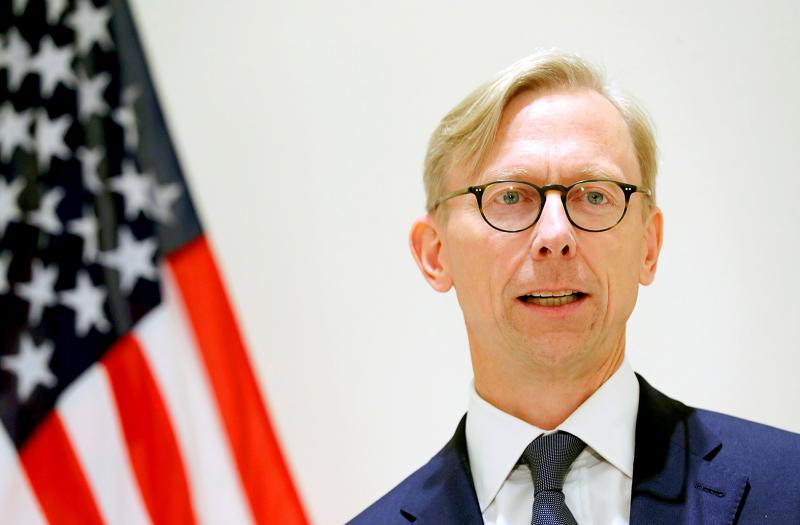
Photo: Reuters
Tensions between Iran and the US have escalated since Washington in 2018 withdrew from the 2015 nuclear deal between Tehran and six major powers and reimposed US sanctions.
A year ago, the US sent thousands more troops, long-range bombers and an aircraft carrier to the Middle East in response to what it called a growing threat of Iranian attacks on US interests in the region.
The five other powers that signed the nuclear deal — Russia, China, the UK, France and Germany — remain committed to it, saying that the agreement is key to continuing inspections by the International Atomic Energy Agency and preventing Iran from pursuing nuclear weapons.
Lifting the arms embargo is part of the 2015 Security Council resolution endorsing the nuclear agreement. The council is scheduled to discuss the resolution’s implementation on Tuesday next week.
Calling Iran “the leading state sponsor of terror,” Pompeo said that the US focus is to work with the council to pass the resolution.
“But, in the event that doesn’t happen, I would remind the world that the [former US president Barack] Obama administration’s officials said very clearly that the United States has the unilateral ability to snap back sanctions into place,” he said.
The 2015 nuclear deal includes a “snap back” provision that would restore all UN sanctions against Iran that had been lifted or eased if the nuclear deal is violated.
The State Department said that in his briefing, Hook pointed to Iranian arms transfers and “the full range of Iran’s malign activity, including its September 2019 direct attack on Saudi Arabia,” which violate current restrictions.
Drone strikes hit two Saudi Arabian oil installations on Sept. 14, which the US blamed on Iran.
Russian Ambassador to the UN Vassily Nebenzia said that Moscow opposes a new arms embargo and has dismissed as “ridiculous” the possibility of Washington using the “snap back” provision.
Nebenzia said that the US pulled out of the agreement and “they have no right” to its provisions.
However, Pompeo and Craft said the resolution makes it clear that the US retains to right to use the “snap back” provision.

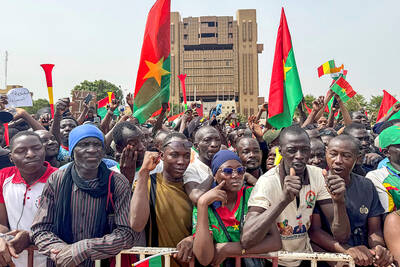
Kehinde Sanni spends his days smoothing out dents and repainting scratched bumpers in a modest autobody shop in Lagos. He has never left Nigeria, yet he speaks glowingly of Burkina Faso military leader Ibrahim Traore. “Nigeria needs someone like Ibrahim Traore of Burkina Faso. He is doing well for his country,” Sanni said. His admiration is shaped by a steady stream of viral videos, memes and social media posts — many misleading or outright false — portraying Traore as a fearless reformer who defied Western powers and reclaimed his country’s dignity. The Burkinabe strongman swept into power following a coup in September 2022
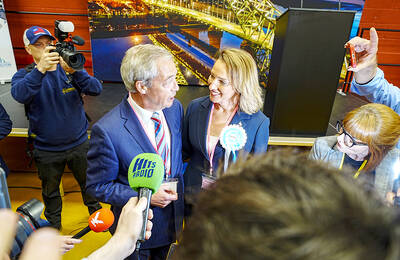
‘FRAGMENTING’: British politics have for a long time been dominated by the Labor Party and the Tories, but polls suggest that Reform now poses a significant challenge Hard-right upstarts Reform UK snatched a parliamentary seat from British Prime Minister Keir Starmer’s Labor Party yesterday in local elections that dealt a blow to the UK’s two establishment parties. Reform, led by anti-immigrant firebrand Nigel Farage, won the by-election in Runcorn and Helsby in northwest England by just six votes, as it picked up gains in other localities, including one mayoralty. The group’s strong showing continues momentum it built up at last year’s general election and appears to confirm a trend that the UK is entering an era of multi-party politics. “For the movement, for the party it’s a very, very big
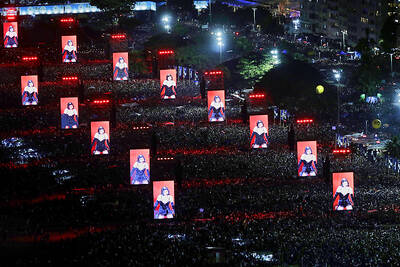
ENTERTAINMENT: Rio officials have a history of organizing massive concerts on Copacabana Beach, with Madonna’s show drawing about 1.6 million fans last year Lady Gaga on Saturday night gave a free concert in front of 2 million fans who poured onto Copacabana Beach in Rio de Janeiro for the biggest show of her career. “Tonight, we’re making history... Thank you for making history with me,” Lady Gaga told a screaming crowd. The Mother Monster, as she is known, started the show at about 10:10pm local time with her 2011 song Bloody Mary. Cries of joy rose from the tightly packed fans who sang and danced shoulder-to-shoulder on the vast stretch of sand. Concert organizers said 2.1 million people attended the show. Lady Gaga
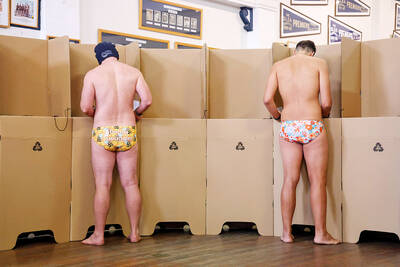
SUPPORT: The Australian prime minister promised to back Kyiv against Russia’s invasion, saying: ‘That’s my government’s position. It was yesterday. It still is’ Left-leaning Australian Prime Minister Anthony Albanese yesterday basked in his landslide election win, promising a “disciplined, orderly” government to confront cost-of-living pain and tariff turmoil. People clapped as the 62-year-old and his fiancee, Jodie Haydon, who visited his old inner Sydney haunt, Cafe Italia, surrounded by a crowd of jostling photographers and journalists. Albanese’s Labor Party is on course to win at least 83 seats in the 150-member parliament, partial results showed. Opposition leader Peter Dutton’s conservative Liberal-National coalition had just 38 seats, and other parties 12. Another 17 seats were still in doubt. “We will be a disciplined, orderly


 RSS
RSS