


As he watched the play about two girls wrestling with lingering trauma, Afghan student Hussain began to sob, the performance igniting memories of his own brush with death.
“I couldn’t stop crying,” said the 22-year-old, who survived a suicide bombing in Kabul that killed 57 people in 2018.
“I still have nightmares about the scene, blood, body parts and injured people crying for help,” he said.
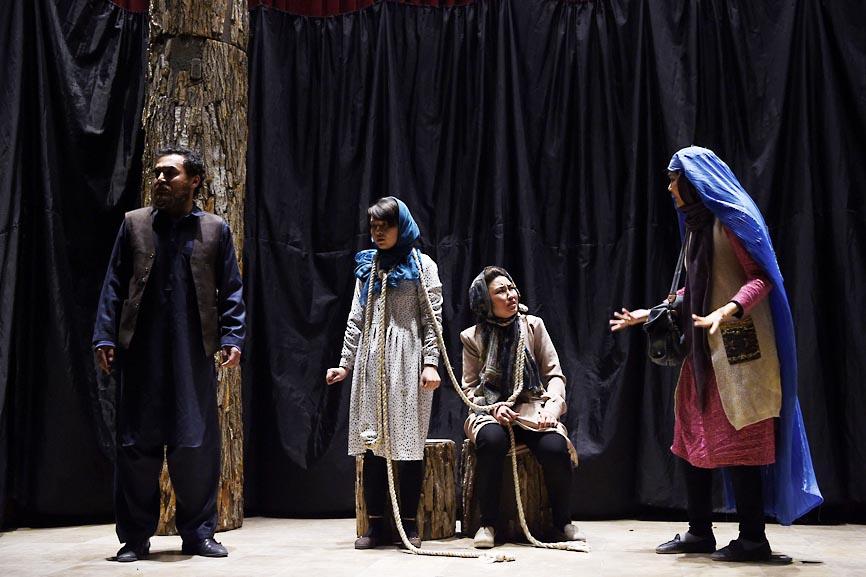
Photo: AFP
Hussain, who only wanted to give his first name, spoke to Agence France-Presse after seeing Tanhayee (Loneliness), a play that tells the story of two girls — a suicide blast survivor and a victim of sexual assault.
In a conservative country that has seen decades of war, displacement and poverty, the producers hope the play — which was touring just before the COVID-19 pandemic hit, but now is paused — will raise awareness about psychological stress and the enduring impact of traumatic events.
“Every individual in this country has been somehow affected by mental trauma from the war or related violence,” said Jebrael Amin, a spokesman for Peace of Mind Afghanistan, which is sponsoring the play.
“Theater is a good way to raise awareness, as people witness the pain they perhaps didn’t know many around them share”, he said.
A 2018 EU survey found that 85 percent of Afghans had experienced or witnessed at least one traumatic event, while data from the Ministry of Health showed that about one in two Afghans suffer from psychological distress.
“No doubt the war and related violence are the biggest factors in mental distress and trauma in Afghanistan,” Department of Mental Health and Substance Abuse Director Bashir Ahmad Sarwari said.
However, fewer than 10 percent of Afghans have received sufficient psychosocial support from the state, according to a recent Human Rights Watch report based on government data. The situation is even worse outside major cities, with large parts of rural Afghanistan now under the control of Taliban extremists and lacking health infrastructure.
The Afghan government has trained about 850 mental health counselors over the past decade, but the fear of social stigma in a conservative patriarchal culture means many people refrain from seeking help.
“This is a big problem as people suffering from mental health problems are labelled as weak, stupid or even crazy,” Sarwari said.
The impact can be devastating.
Najib, who declined to give his full name due to the stigma associated with mental illness, began suffering from depression and anxiety after losing his mother to a truck bombing in Kabul in 2017.
When he opened up about his struggles, people dismissed it as a sign of frailty. Some called him a madman.
Najib felt helpless and isolated for years, until a friend persuaded him to meet a psychologist.
With many Afghans still suffering in secret, mental health experts are now turning to unconventional means to raise awareness, including public art projects and theatrical performances.
Peace of Mind Afghanistan has so far sponsored 15 performances of Tanhayee, which showcases the life-changing impact of therapy when its two protagonists meet a psychologist.
More than 2 million Afghans in the country of 35 million visited mental health clinics last year, up from a few thousand a decade ago, the health ministry said.
“We are on the right path,” ministry senior adviser Wahid Majroh said. “But the pace of services or the awareness of mental health cannot keep up with the level of trauma from the conflict here.”
The experience of trauma is so widespread that the suffering portrayed in Tanhayee moved many in the Kabul audience to tears.
The catharsis cut both ways.
Actress Jamila Mahmoodi, who portrayed the victim of a terror attack, said the performance helped her come to terms with narrowly escaping a suicide bombing.
The 21-year-old battled post-traumatic stress disorder for months, haunted by the aftermath of the attack.
“I feel at peace while playing the role that I and thousands of others have painfully experienced in real life,” she said.
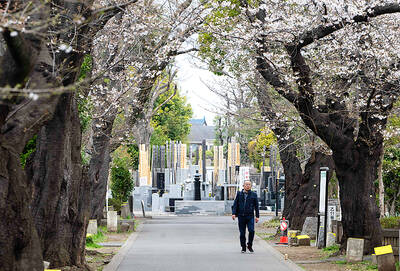
ROCKY RELATIONS: The figures on residents come as Chinese tourist numbers drop following Beijing’s warnings to avoid traveling to Japan The number of Chinese residents in Japan has continued to rise, even as ties between the two countries have become increasingly fractious, data released on Friday showed. As of the end of December last year, the number of Chinese residents had increased by 6.5 percent from the previous year to 930,428. Chinese people accounted for 22.6 percent of all foreign residents in Japan, making them by far the largest group, Japanese Ministry of Justice data showed. Beijing has criticized Tokyo in increasingly strident terms since Japanese Prime Minister Sanae Takaichi last year suggested that a military conflict around Taiwan could
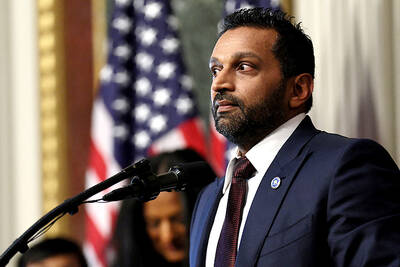
A pro-Iran hacking group claimed to breach FBI Director Kash Patel’s personal e-mail inbox and posted some of the contents online. The e-mails provided by the hacking group include travel details, correspondence with leasing agents in Washington and global entry, and loyalty account numbers. The e-mail address the hackers claim to have compromised has been previously tied to Patel’s personal details, and the leaked e-mails contain photos of Patel and others, in addition to correspondence with family members and colleagues. “The FBI is aware of malicious actors targeting Director Patel’s personal email information,” the agency said in a statement on
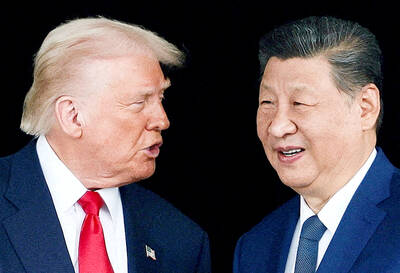
RIVALRY: ‘We know that these are merely symbolic investigations initiated by China, which is in fact the world’s most profligate disrupter of supply chains,’ a US official said China has started a pair of investigations into US trade practices, retaliating against similar probes by US President Donald Trump’s administration as the superpowers stake out positions before an expected presidential summit in May. The move, announced by the Chinese Ministry of Commerce on Friday, is a direct mirror of steps Trump took to revive his tariff agenda after the US Supreme Court last month struck down some of his duties. “China expresses its strong dissatisfaction and firm opposition to these actions,” a ministry spokesperson said in a statement, referring to the so-called Section 301 investigations initiated on March 11.

When a hiker fell from a 55m waterfall in wild New Zealand bush, rescuers were forced to evacuate the badly hurt woman without her dog, which could not be found. After strangers raised thousands of dollars for a search, border collie Molly was flown to safety by a helicopter pilot who was determined to reunite the pet and the owner. A week earlier, an emergency rescue helicopter found the woman with bruises and lacerations after a fall at a rocky spot at the waterfall on the South Island’s West Coast. She was airlifted on March 24, but they were forced to


 RSS
RSS