


From meditation to memory games, former political prisoners in Myanmar are dishing out tips on surviving isolation during a pandemic as the country once severed from the world again closes its borders.
The Southeast Asian state spent nearly half a century under a paranoid, secretive junta that violently suppressed dissent, jailed its critics and locked the country off as it drove the economy into ruin.
Pro-democracy activist Bo Kyi, 56, was one of thousands jailed, spending eight years behind bars in the 1990s. His punishment included 12 months in solitary confinement in a 2.5m by 3.5m cell furnished with just a bowl for a toilet and a mat to sleep on.
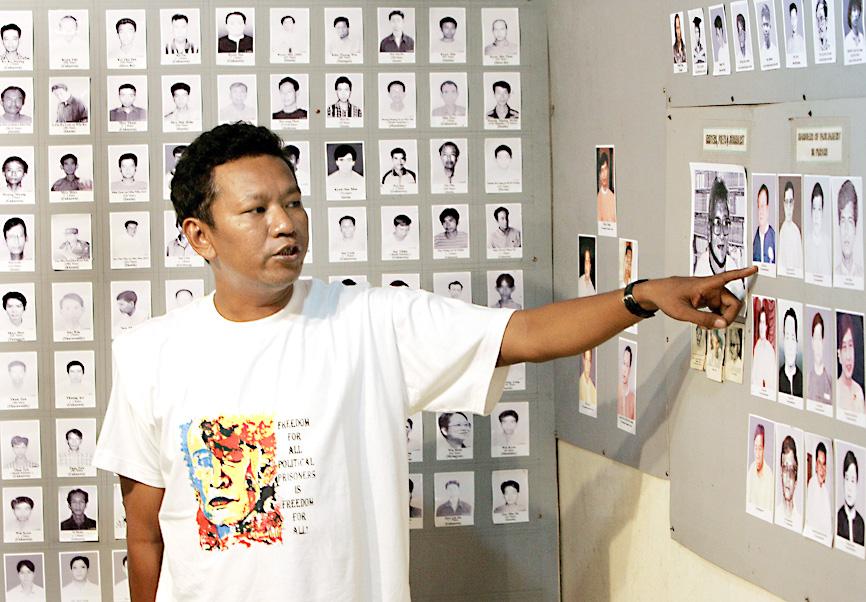
Photo: AFP
Last week he posted advice on Facebook about how to cope with isolation to his compatriots holed up at home, gripped by fears over the coronavirus in a country with a threadbare public health system.
“I wanted to make sure people don’t get too down,” Bo Kyi said.
“Do something! This is the best medicine when you are [in] isolation,” he wrote in the post, signed off “In Solidarity.”
During his detention, Bo Kyi devoted himself to learning English, helped by a friendly guard who each day smuggled in a page from a dictionary.
The prisoner would memorize every word, then eat the page to destroy the evidence.
Accepting his reality and avoiding negative news helped keep him sane, he said, adding he also used to meditate and walk 6,000 steps a day to keep healthy.
Myanmar has reported just 21 cases of COVID-19, including one death, but experts say the low number of people tested for the virus means the real figure is likely many times higher.
There are fears that the country’s health system would be easily overwhelmed when cases rise. Myanmar is thought to have fewer than 200 ventilators for a population of 55 million.
Borders and entry points are firmly shut as the country hunkers down, back in isolation sooner than many imagined possible after the end of outright military rule in 2011.
“We’re heading back to that situation again — and it’s not a happy one,” said analyst Khin Zaw Win, who also spent 11 years incarcerated.
State media have led cheerleading for a national spirit of self-reliance, championing those in self-imposed quarantine as “frontline prevention warriors.”
The upbeat jingle Go Away Corona, blasted from loudspeakers on trucks spraying disinfectant, urges people to wash their hands, eat healthily and stay inside.
“People are the key” is Myanmar’s motto of the moment, repeated in speeches by Burmese State Councilor Aung San Suu Kyi, the nation’s COVID-19 taskforce head.
She remains a heroine for most within Myanmar in spite of her tarnished reputation abroad.
A video of Suu Kyi demonstrating hand washing has clocked up likes online, while her supporters jumped to follow her new Facebook account, opened during the crisis to communicate better with a country addicted to the platform.
She is herself an authority on self-isolation, having languished under house arrest for 15 years in the junta era.
After her release in 2010, she described how she would meditate, listen to the radio and read voraciously.
“There is a very strong resilience embedded in Myanmar society,” Khin Zaw Win said.
He even asked whether older people might weather today’s isolation better than youngsters, saying: “My generation is used to this.”
Other ex-political prisoners contacted by reporters were similarly sanguine about today’s crisis.
They urged people to stay calm, support each other and devote time to neglected hobbies such as gardening or gaming.
Bo Kyi said he navigated the psychological torment of jail by not dwelling on his release date — a lesson for everyone during a pandemic with no immediate end in sight.
“Instead, focus on things in your control,” he said.
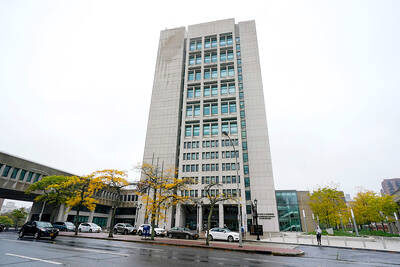
A coalition of civil rights groups on Tuesday asked a New York State judge to order one of its largest suburban counties to stop its deployment of nearly 600 license plate readers, calling it a warrantless and “indiscriminate surveillance system” that violates the state constitution. The class action lawsuit also alleged that Westchester County never got proper authorization to launch the program, which has amassed a database of 1.6 billion plate scans that has been shared with more than 50 outside law enforcement agencies. The complaint said the network “records the long-term travel patterns, daily habits, and intimate information of millions of

Pope Leo XIV on Wednesday blessed a giant new tower at Barcelona’s famed Sagrada Familia Basilica after celebrating mass inside what is now the world’s tallest church. A fireworks and light show illuminated the exterior of the temple at the end of the ceremony, bathing the unfinished basilica in shifting colours that highlighted its towering spires. A choir of 600 singers performed at the service which lasted around 90 minutes and was attended by Spanish Prime Minister Pedro Sanchez as well as King Felipe VI and Queen Letizia. The stained-glass windows in various colours shone brightly in between the tree-like

Voters in Switzerland yesterday cast their ballots on an initiative championed by the top right-wing party to cap the Alpine country’s population at 10 million. As of press time last night, early results showed that Swiss voters were leaning against it. The populist Swiss People’s Party, which has the most seats in parliament, has stirred up and fostered anti-migration sentiment over the years, notably about an influx of workers from the neighboring EU. Critics called the bid a self-inflicted wound, saying the boom in migration over the past generation has brought foreign labor and skills to sectors such as healthcare, finance, pharmaceuticals

Scientists have discovered communities of marine life — including jellyfish, tubeworms and brittle stars — thriving on a whale graveyard. The graveyards form when whale carcasses fall to the sea floor, becoming a sustaining snack for nearby critters. This one, which is up to 7km below the surface of the southeastern Indian Ocean, spans the largest area, and is so far the deepest found. A whale’s sheer size and the unique chemistry of its bones are the keys to forming these unique underwater neighborhoods, said Song Xikun (宋希坤), a biologist with the Chinese Academy of Sciences’ Institute of Deep-sea Science and Engineering


 RSS
RSS